

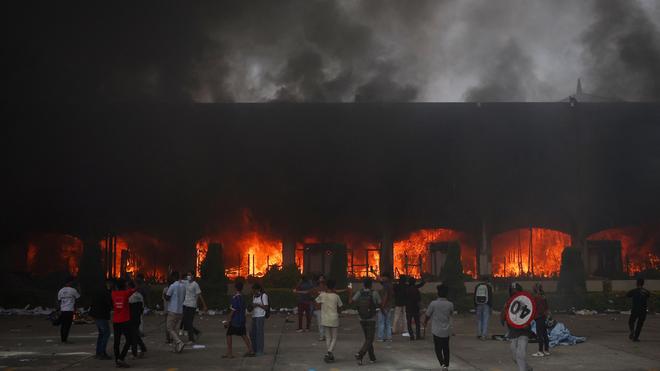
Nepal has entered a tense political phase following the resignation of Prime Minister K.P. Sharma Oli, triggering swift action by the country’s security establishment. In the wake of Oli’s exit, the Nepalese Army has been ordered to take charge of security across key regions to maintain order and prevent any outbreak of violence amid the political vacuum.
President Ram Chandra Paudel, addressing the nation shortly after Oli’s resignation, called for calm and restraint from all political parties, urging them to prioritize stability and democratic principles over confrontation. He stressed that while the army will ensure law and order, the solution to the crisis must come through political dialogue and consensus within Nepal’s democratic framework.
Reports from Kathmandu suggest heightened security measures have already been implemented around government offices, major intersections, and areas historically prone to protests. Political activists, however, remain on edge, with rival parties mobilizing their supporters to press for their agendas in the power struggle that has emerged.
Oli’s resignation, which followed weeks of mounting pressure and discontent over governance, has thrown Nepal’s political landscape into uncertainty. Analysts warn that prolonged instability could risk derailing the country’s fragile democratic institutions and divert attention from pressing economic challenges.
The President has convened urgent consultations with political leaders to explore pathways for forming a new government. The message from the head of state remains clear — Nepal must move forward through democratic means while avoiding any slide into violence or authoritarian overreach.
With the army now in control of security, the immediate priority is maintaining peace in the streets. But the larger challenge for Nepal’s leaders will be finding a political resolution that restores confidence among citizens while safeguarding the country’s democratic future.