

Opening Summary
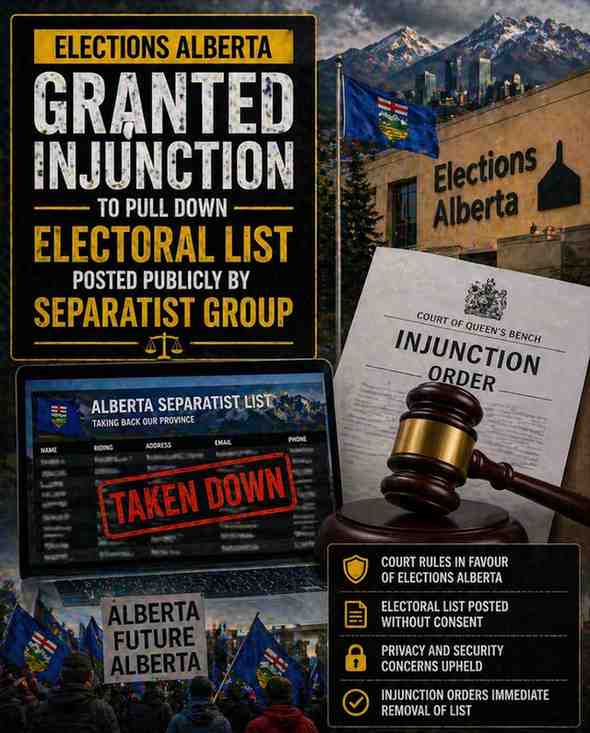
Elections Alberta has secured a court injunction ordering the removal of an electoral list that was publicly posted online by a separatist group. Officials said the release of voter information raised serious privacy and election security concerns. The development matters nationally as it involves the protection of personal data and confidence in Canada’s democratic institutions.
Background and Context
Voter lists in Canada contain sensitive personal information used for election administration, including names and addresses of registered voters.
Access to such information is strictly regulated under election laws, and unauthorized sharing or publication can raise serious legal and privacy concerns.
Election agencies across Canada are responsible for safeguarding electoral data and ensuring it is used only for authorized purposes.
In recent years, concerns about data misuse, political extremism, and election interference have increased the focus on protecting voter information.
Latest Developments
Elections Alberta successfully obtained a court injunction requiring the removal of an electoral list that had been publicly posted by a separatist organization.
Officials argued that the publication of the voter data posed risks to privacy, public trust, and the integrity of the electoral system.
The court agreed that immediate action was necessary and ordered the content to be taken down while legal proceedings continue.
Authorities are now reviewing how the data was obtained and whether additional legal action may be taken.
Why This Matters
The case highlights the importance of protecting voter information and maintaining public trust in democratic systems.
Unauthorized release of electoral data can expose citizens to privacy risks, harassment, or misuse of personal information.
For election officials, the incident underscores the need for strong safeguards against data breaches or politically motivated misuse.
The case also raises broader questions about online political activism and accountability under election laws.
What Happens Next
Investigations are expected to continue into how the electoral data was accessed and published.
Legal proceedings may determine whether individuals or organizations involved face penalties or further restrictions.
Election authorities may also review security protocols to prevent similar incidents in the future.
Conclusion
Elections Alberta’s successful court injunction marks a significant step in protecting voter information and election integrity.
As investigations continue, the case is likely to shape future discussions around privacy, political activism, and data security in Canada’s democratic process.