

Opening Summary
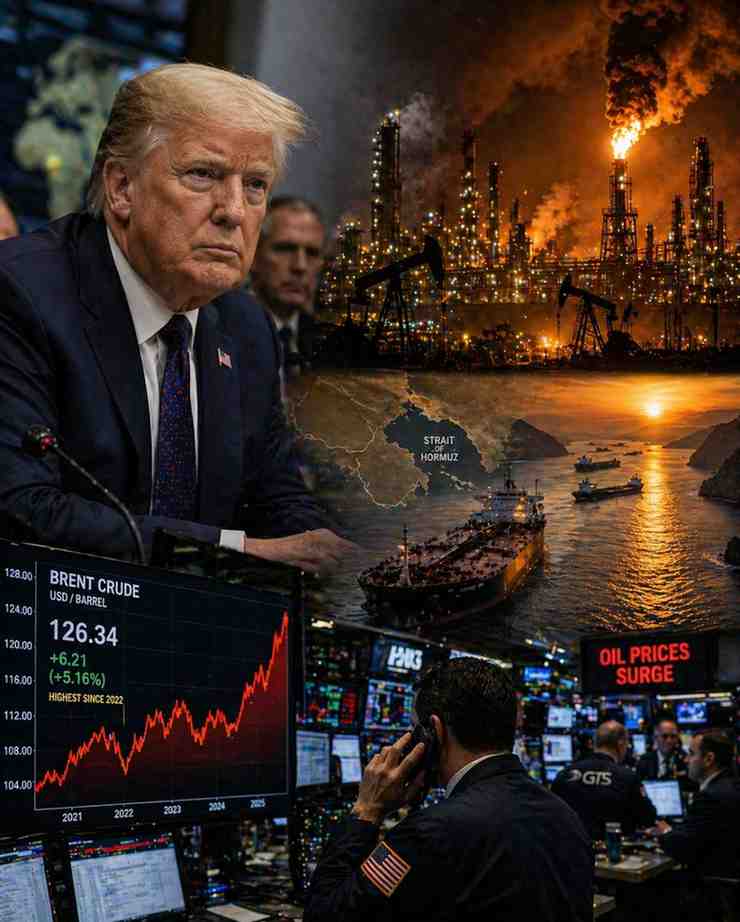
Global oil prices have surged to their highest level since 2022 after reports that U.S. President Donald Trump is expected to receive a military and strategic briefing on new options involving Iran. The sharp rise comes amid renewed fears of supply disruptions in the Middle East. The development matters globally as higher oil prices can impact fuel costs, inflation, and economic stability worldwide.
Background and Context
Oil markets have remained highly volatile in recent weeks due to the ongoing conflict involving Iran, the United States, and regional allies.
A major concern for traders has been the continued disruption around the Strait of Hormuz, one of the world’s most important shipping routes for crude oil exports.
The United States has maintained economic and naval pressure on Iran, while Tehran has responded with restrictions and warnings over shipping access.
These developments have created uncertainty in global energy markets, with investors closely watching any signs of military escalation or diplomatic progress.
Latest Developments
Brent crude briefly surged above $126 per barrel, marking its highest level since 2022 after reports that President Donald Trump is set to receive a briefing on new strategic options related to Iran.
Reports suggest the briefing may include military scenarios, energy infrastructure protection, and possible actions linked to restoring shipping access in the Strait of Hormuz.
Market concerns over potential escalation led to immediate buying activity in oil futures, pushing prices sharply higher during trading.
Analysts say the combination of stalled diplomacy, ongoing maritime tensions, and uncertainty over future U.S. actions has intensified pressure on energy markets.
Why This Matters
Higher oil prices can directly affect fuel costs, transportation expenses, and inflation across global economies.
Countries dependent on imported oil, including many in Europe and Asia, could face increased economic pressure if prices remain elevated.
For consumers in countries like Canada and India, rising crude prices often lead to higher gasoline and diesel prices.
The spike also reflects how geopolitical tensions in the Middle East continue to influence global markets.
What Happens Next
Markets will closely watch the outcome of Trump’s briefing and any signals regarding future U.S. strategy toward Iran.
Any military escalation or further disruption in the Strait of Hormuz could push oil prices even higher.
At the same time, renewed diplomatic efforts could ease market concerns and stabilize prices.
Conclusion
The surge in oil prices to their highest level since 2022 highlights the global impact of rising tensions between the United States and Iran.
As markets react to the possibility of new U.S. actions, energy prices and economic uncertainty are likely to remain in focus in the days ahead.