

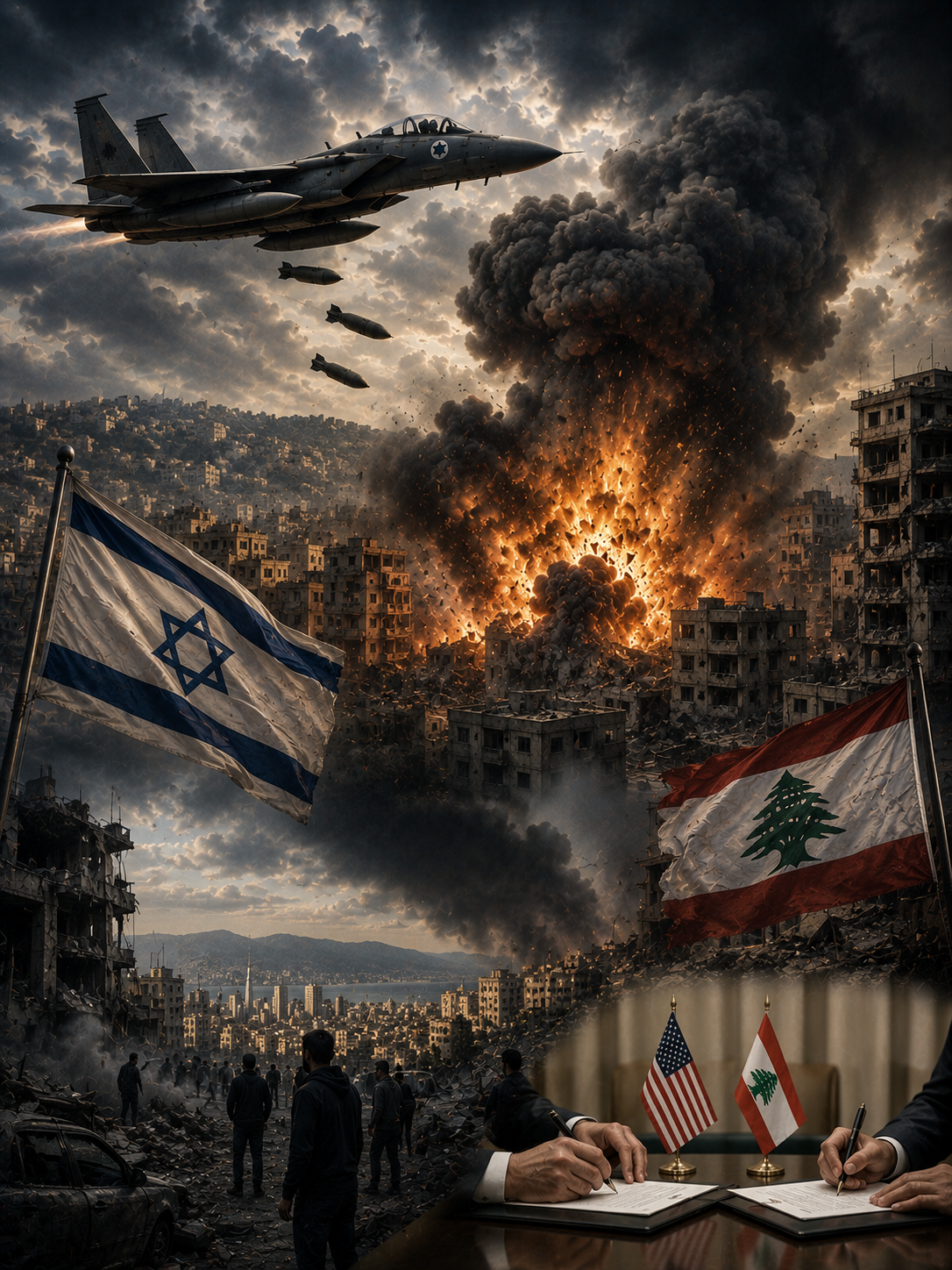
Israel has launched airstrikes on the southern suburbs of Beirut, just days after a U.S.-brokered ceasefire aimed at reducing tensions between Israel and Hezbollah. The attack has raised concerns that the fragile truce could unravel and lead to a new round of regional escalation. The development matters internationally as diplomatic efforts to stabilize the Middle East face a major test.
Background and Context
The ceasefire was negotiated with U.S. support following months of conflict involving Israel, Hezbollah, and broader regional tensions linked to Iran.
Although the agreement was intended to reduce violence, clashes and military incidents have continued in parts of Lebanon and along Israel’s northern border.
Israel has repeatedly accused Hezbollah of carrying out attacks against Israeli territory, while Hezbollah has argued that Israeli military operations in Lebanon violate the spirit of the truce.
Latest Developments
Israeli warplanes struck targets in Beirut’s southern suburbs, an area widely regarded as a Hezbollah stronghold.
Israeli officials said the operation targeted what they described as Hezbollah command and operational facilities and was carried out in response to attacks against northern Israel.
According to local reports, the strikes caused casualties and damage to buildings in the densely populated area. Emergency crews were deployed to affected neighborhoods as residents fled the scene.
The attack occurred only days after the ceasefire agreement took effect, prompting criticism from Lebanese officials and concern among international observers.
Why This Matters
The strike highlights the fragile nature of the current ceasefire and the risk of a wider conflict involving Lebanon, Israel, and regional powers.
Any collapse of the truce could trigger renewed fighting, increase civilian casualties, and complicate ongoing diplomatic efforts across the Middle East.
The situation is also closely tied to broader negotiations involving Iran and the United States, making regional stability increasingly uncertain.
What Happens Next
Diplomatic efforts are expected to intensify as mediators attempt to prevent further escalation.
Hezbollah and Lebanese officials are likely to respond politically and militarily to the latest strikes.
International governments will closely monitor whether both sides return to the ceasefire framework or move toward renewed conflict.
Conclusion
Israel’s strike on Beirut’s southern suburbs just days after a U.S.-brokered truce has placed the ceasefire under significant strain.
With tensions rising once again, the coming days will be critical in determining whether diplomacy can hold or whether the region faces another dangerous escalation.