

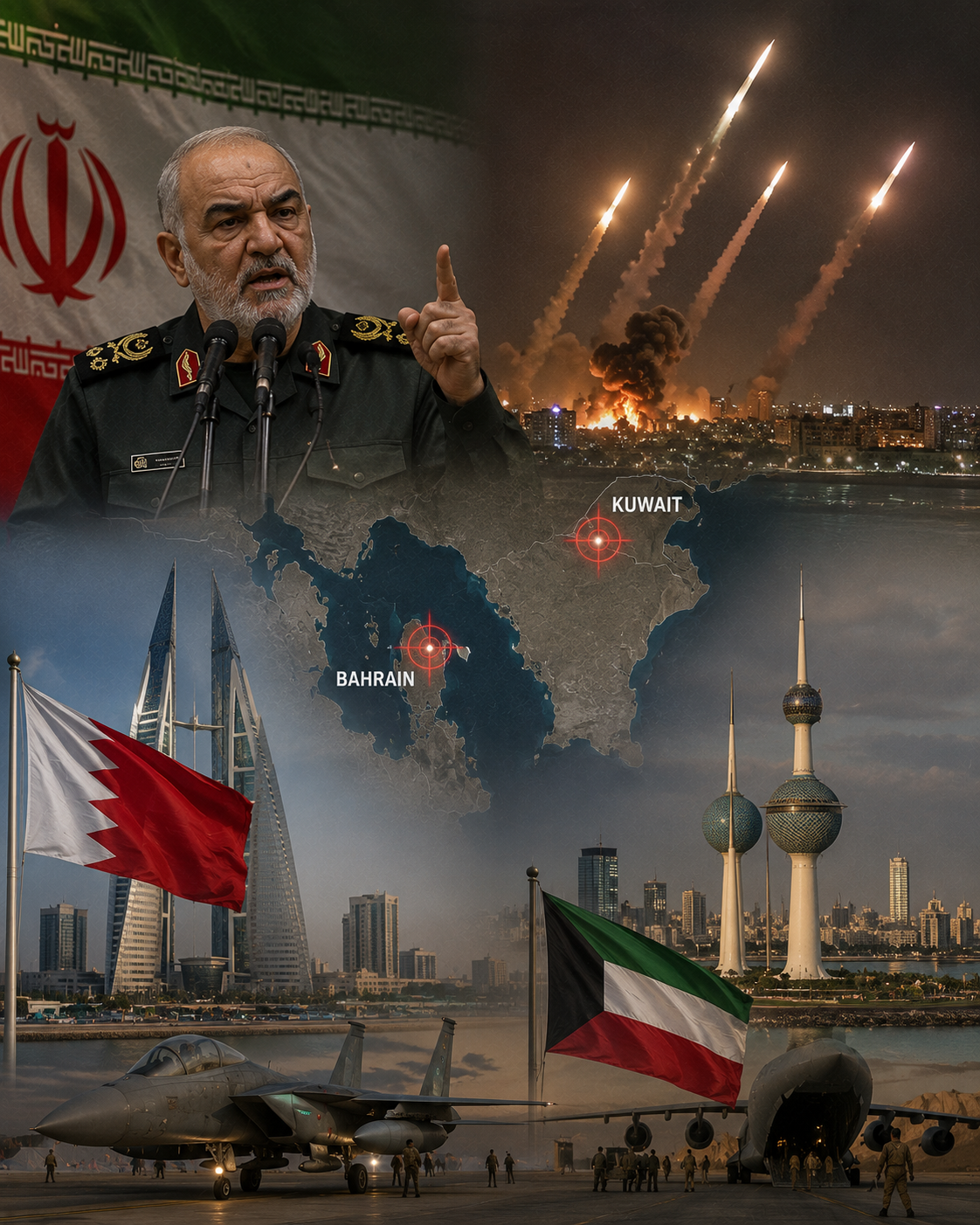
Iran has launched drone and missile attacks targeting Bahrain and Kuwait following fresh U.S. military strikes, marking a sharp escalation in tensions across the Middle East. Tehran has also warned that it could suspend negotiations aimed at ending the conflict if Washington continues its military operations.
Background and Context
The latest escalation comes despite ongoing diplomatic efforts to transform a fragile ceasefire into a broader peace agreement.
In recent weeks, negotiations involving regional and international mediators have sought to reduce hostilities, restore maritime security, and prevent a wider regional conflict.
However, repeated military exchanges between the United States, Iran, and regional allies have continued to undermine confidence in the peace process.
Bahrain and Kuwait both host key U.S. military facilities, making them strategically important in the ongoing confrontation.
Latest Developments
Iran’s Revolutionary Guard said it launched drone and missile strikes against targets in Bahrain and Kuwait in retaliation for fresh U.S. airstrikes on Iranian territory.
Authorities in Bahrain and Kuwait activated air defense systems, with officials reporting that several incoming projectiles were intercepted before reaching their intended targets.
Iranian officials warned that continued U.S. military action would lead to a complete suspension of negotiations aimed at ending the war.
The United States has defended its latest military operations, saying they were directed at Iranian military infrastructure and intended to protect regional security.
The renewed exchange of attacks has increased concerns that the already fragile ceasefire could collapse entirely.
Why This Matters
The attacks significantly raise the risk of a broader regional conflict involving multiple Gulf nations.
Any further escalation could threaten international shipping, disrupt global energy markets, and increase instability across the Middle East.
The possibility of Iran ending diplomatic negotiations also reduces hopes for a near-term political solution to the conflict.
Regional governments and international partners are closely monitoring the situation as tensions continue to rise.
What Happens Next
Diplomatic mediators are expected to intensify efforts to keep negotiations alive and prevent further military escalation.
Security forces across the Gulf region remain on high alert amid concerns over additional retaliatory strikes.
The coming days will be crucial in determining whether diplomacy can survive the latest exchange of attacks or whether the conflict moves toward a broader military confrontation.
Conclusion
Iran’s attacks on Bahrain and Kuwait, coupled with its threat to halt peace negotiations, represent one of the most serious setbacks to recent diplomatic efforts.
As military tensions continue to rise, the future of the ceasefire and broader regional stability remains increasingly uncertain.