

Summary
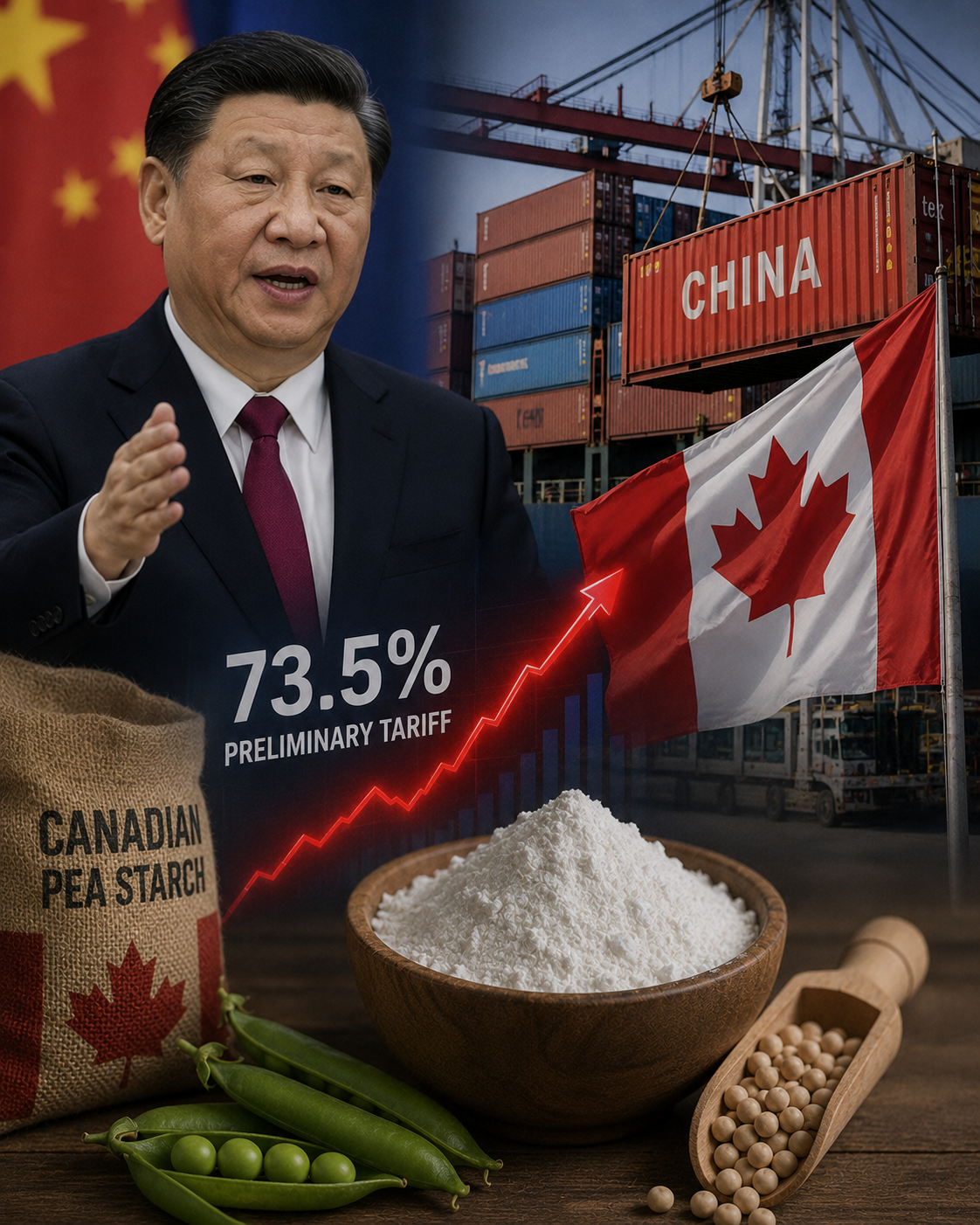
China has announced a 73.5% preliminary tariff on imports of Canadian pea starch, marking another significant development in the ongoing trade dispute between the two countries. The temporary anti-dumping measure, set to take effect from July 1, follows a lengthy investigation by Chinese authorities, who concluded that Canadian exporters were selling pea starch at unfairly low prices, causing harm to domestic producers.
The decision is expected to impact agricultural trade between China and Canada while adding fresh uncertainty to global commodity markets. Industry experts believe the move could affect exporters, food manufacturers, and supply chains that rely on cross-border agricultural products.
Investigation Leads to Preliminary Tariff
China’s Ministry of Commerce announced that its investigation found evidence of dumping by Canadian pea starch exporters. According to the ministry, the imported product was entering the Chinese market at prices that negatively affected local manufacturers, resulting in material injury to the domestic industry.
The investigation lasted for more than ten months before authorities reached a preliminary conclusion. As a result, Chinese importers will now be required to pay a 73.5% tariff on Canadian pea starch while the investigation continues.
Chinese officials described the measure as a temporary trade remedy intended to protect domestic businesses and ensure fair competition within the country’s agricultural processing sector.
Growing Trade Frictions
The latest tariff adds to a series of trade disputes that have strained relations between China and Canada over the past year. Both countries have imposed restrictions and tariffs on a range of agricultural and industrial products, reflecting broader disagreements over trade policies.
Agricultural products have increasingly become central to these disputes, with both sides taking measures they argue are necessary to protect domestic industries. While some trade barriers have been eased through diplomatic negotiations, the new tariff indicates that significant differences remain unresolved.
The decision also comes at a time when global trade is already facing challenges from shifting supply chains, geopolitical tensions, and changing market conditions.
Impact on Farmers and Industry
Canada is one of the world’s leading producers of peas and pea-based products, supplying ingredients used in food processing, plant-based proteins, and industrial applications. China has been an important market for several Canadian agricultural exports.
The new tariff could reduce the competitiveness of Canadian pea starch in the Chinese market, potentially leading exporters to seek alternative buyers or adjust production strategies. Businesses involved in food manufacturing may also experience higher costs if they depend on imported pea starch.
Meanwhile, Chinese domestic producers may benefit from reduced competition, allowing local manufacturers to strengthen their position in the market during the period in which the tariff remains in place.
Market Outlook
Trade analysts believe the preliminary tariff may influence future negotiations between Beijing and Ottawa. Although the measure is temporary, its long-term impact will depend on the final outcome of the anti-dumping investigation and any diplomatic efforts aimed at resolving trade disagreements.
Businesses on both sides are expected to closely monitor developments, particularly as agricultural exports remain an important part of bilateral trade. Investors and commodity markets may also react to any further policy changes that affect agricultural supply chains.
Conclusion
China’s decision to impose a 73.5% preliminary tariff on Canadian pea starch represents another chapter in the evolving trade relationship between the two nations. While Beijing maintains that the measure is necessary to protect domestic industries from unfair competition, the move is likely to place additional pressure on Canadian exporters and could further complicate economic ties. As the investigation continues, businesses and policymakers will be watching closely for signs of negotiation or further escalation in one of the world’s important agricultural trade relationships.