

Summary
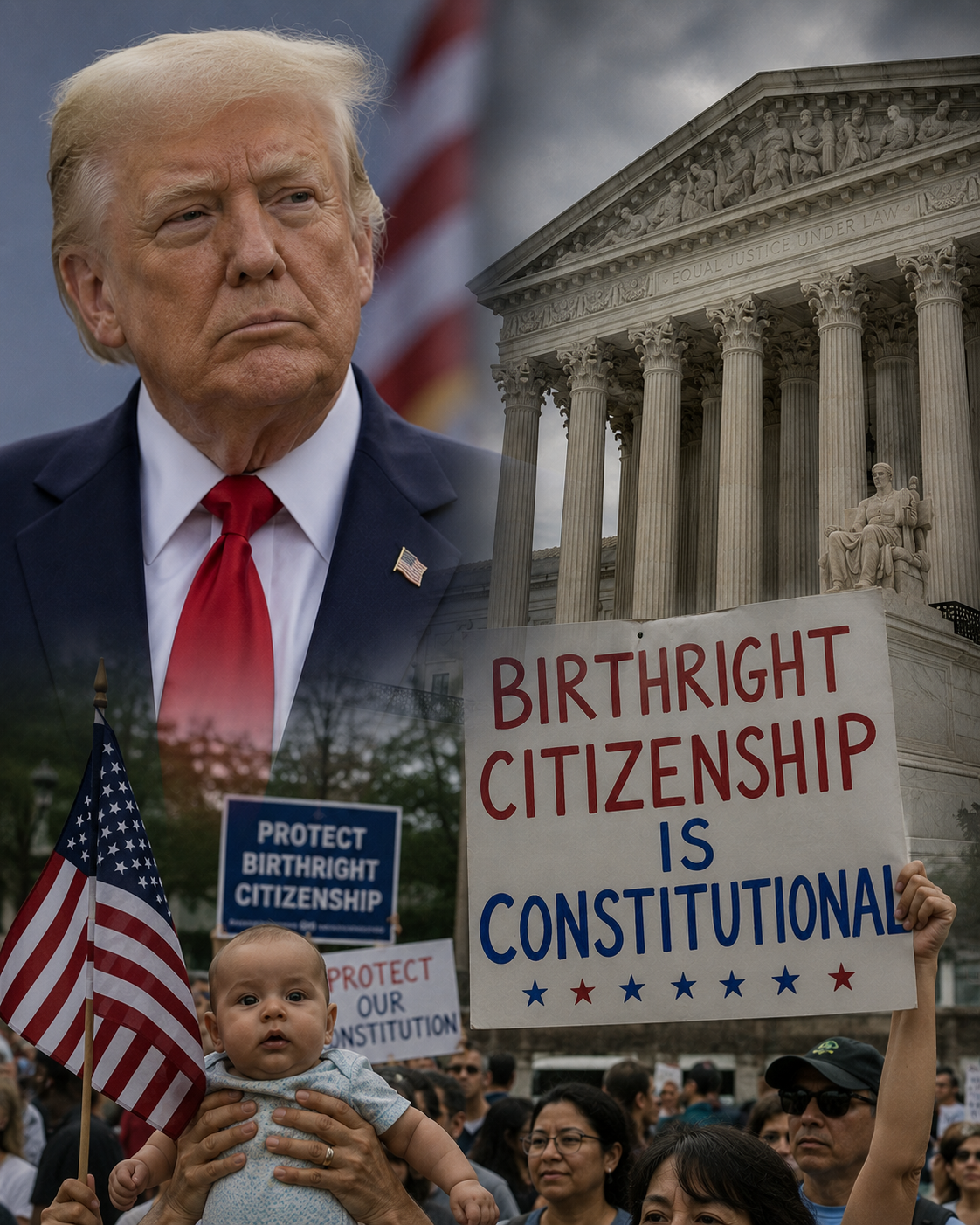
In a landmark ruling, the U.S. Supreme Court has rejected President Donald Trump’s effort to limit birthright citizenship, delivering a major legal and political setback to one of his administration’s most controversial immigration initiatives. The Court ruled that the Constitution continues to guarantee automatic U.S. citizenship to nearly all children born on American soil, regardless of their parents’ immigration status.
The decision reinforces the long-standing interpretation of the Fourteenth Amendment and confirms that any attempt to alter birthright citizenship cannot be achieved through executive action alone. Legal experts describe the ruling as a significant affirmation of constitutional protections that have remained in place for more than a century.
A Defining Legal Battle
The case centered on President Trump’s executive order, which sought to deny automatic citizenship to children born in the United States unless at least one parent was either a U.S. citizen or a lawful permanent resident. The administration argued that the existing interpretation of the Constitution encouraged illegal immigration and required a modern legal review.
However, multiple lower courts blocked the order shortly after it was introduced, concluding that it conflicted with the Constitution. The dispute eventually reached the Supreme Court, where justices were asked to determine whether the executive branch had the authority to redefine one of the country’s most established constitutional principles.
After reviewing the arguments, the Court ruled against the administration, stating that the Constitution clearly protects birthright citizenship and that such a fundamental right cannot be limited through executive orders.
Why Birthright Citizenship Matters
Birthright citizenship is rooted in the Fourteenth Amendment, adopted after the American Civil War. It states that all persons born in the United States and subject to its jurisdiction are citizens of the United States.
For decades, this provision has been interpreted to grant citizenship to nearly every child born on U.S. soil, regardless of the nationality or immigration status of their parents, with only a few narrow exceptions.
The Court’s latest decision preserves this long-standing legal framework and prevents any immediate changes to citizenship rules for future generations born in the country.
Political and National Impact
The ruling represents a significant obstacle for President Trump’s immigration agenda, which has focused heavily on stricter border security and immigration enforcement. While supporters of the administration argued that limiting birthright citizenship would discourage illegal immigration, opponents maintained that changing constitutional rights through executive action would set a dangerous precedent.
Civil rights organizations and immigration advocates welcomed the judgment, calling it an important victory for constitutional protections and equal treatment under the law. Meanwhile, supporters of the administration expressed disappointment, arguing that immigration policy should be reformed through legislative action.
The decision also highlights the continued independence of the Supreme Court, demonstrating that constitutional interpretation remains separate from political priorities, even when major national policies are involved.
What Comes Next?
Although the executive order has been struck down, immigration policy is expected to remain one of the most debated issues in American politics. Lawmakers may continue exploring legislative proposals related to citizenship and border security, but any attempt to fundamentally change birthright citizenship would likely require constitutional amendments or significant congressional action.
For now, the Supreme Court’s ruling preserves the legal principle that has defined American citizenship for generations and provides certainty for families across the country.
Conclusion
The Supreme Court’s decision marks a pivotal moment in the ongoing debate over immigration and constitutional rights in the United States. By rejecting President Trump’s effort to restrict birthright citizenship, the Court reaffirmed that one of America’s most enduring constitutional guarantees cannot be altered through executive authority alone. The ruling is expected to shape future legal and political discussions on immigration while reinforcing the enduring role of the Constitution in defining the rights of those born on U.S. soil.