

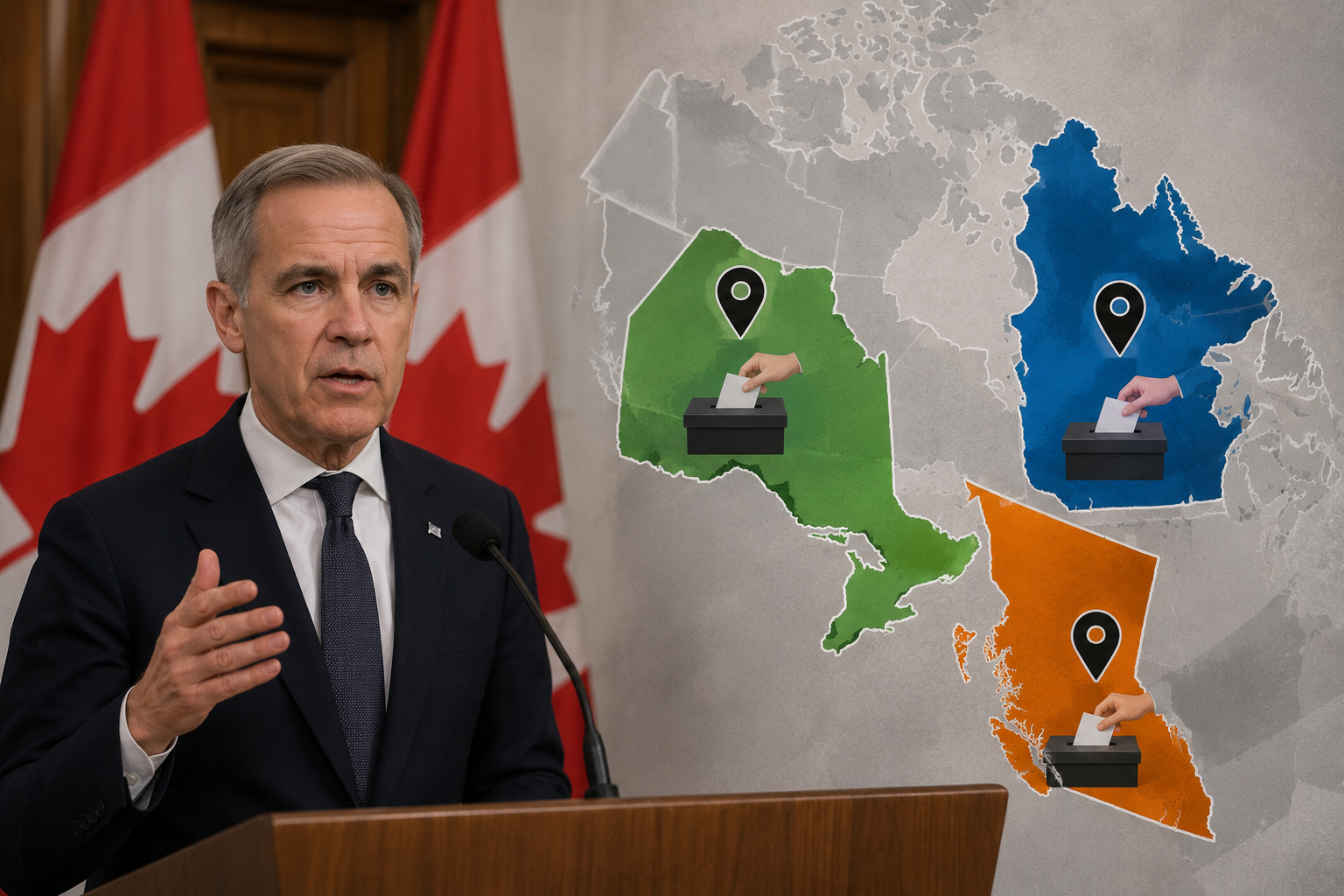
Voters in Ontario, Quebec and British Columbia to Head to the Polls on August 31 to Fill Vacant House of Commons Seats
Summary
Prime Minister Mark Carney has announced federal byelections for three vacant House of Commons seats in Ontario, Quebec and British Columbia, with voters scheduled to cast their ballots on August 31. The contests will take place in Beaches–East York (Ontario), Chicoutimi–Le Fjord (Quebec), and North Vancouver–Capilano (British Columbia) following the resignations of their former Members of Parliament. The byelections are expected to serve as an early political test for Carney’s Liberal government and opposition parties ahead of future national campaigns.
Three Ridings Head to the Polls
The federal government confirmed that election campaigns officially begin immediately, with voters in the three ridings set to choose new representatives on August 31.
The Beaches–East York seat became vacant after Liberal MP Nate Erskine-Smith resigned from Parliament. In North Vancouver–Capilano, the vacancy was created after former Liberal cabinet minister Jonathan Wilkinson left federal politics to become Canada’s ambassador to the European Union. Meanwhile, the Chicoutimi–Le Fjord seat opened after Conservative MP Richard Martel was appointed to the Senate.
Important Test for Political Parties
Although only three seats are at stake, the byelections are expected to provide valuable insight into public opinion just months after the last federal election.
The Liberal Party will seek to retain its two previously held ridings in Ontario and British Columbia while attempting to make gains in Quebec. The Conservative Party, meanwhile, will focus on defending Chicoutimi–Le Fjord and challenging the Liberals in the other two contests.
Political analysts note that byelections often attract lower voter turnout than general elections, but they can offer an important indication of voter sentiment and party momentum.
Campaigns Expected to Focus on Local Issues
Candidates are expected to campaign on a range of regional concerns, including housing affordability, healthcare, economic development, infrastructure, jobs, and the cost of living.
In Beaches–East York, housing and transit are likely to dominate discussions, while economic development and regional industries are expected to be key issues in Chicoutimi–Le Fjord. In North Vancouver–Capilano, environmental protection, housing, and transportation are anticipated to play central roles throughout the campaign.
Elections Canada Begins Preparations
Following the announcement, Elections Canada will begin opening local election offices, accepting candidate nominations, updating voter lists, and preparing advance voting arrangements.
Eligible voters will be able to cast ballots through advance polling stations or by mail before election day. Officials are encouraging residents in the affected ridings to verify their voter registration information well in advance of the vote.
Conclusion
Prime Minister Mark Carney’s decision to call byelections in Ontario, Quebec and British Columbia sets the stage for three closely watched federal contests on August 31. While the elections will fill vacant parliamentary seats, they are also expected to provide an important measure of public support for Canada’s major political parties. As campaigns begin, candidates will compete to win voters’ confidence on issues that matter most to their local communities while offering an early glimpse into Canada’s evolving political landscape.