

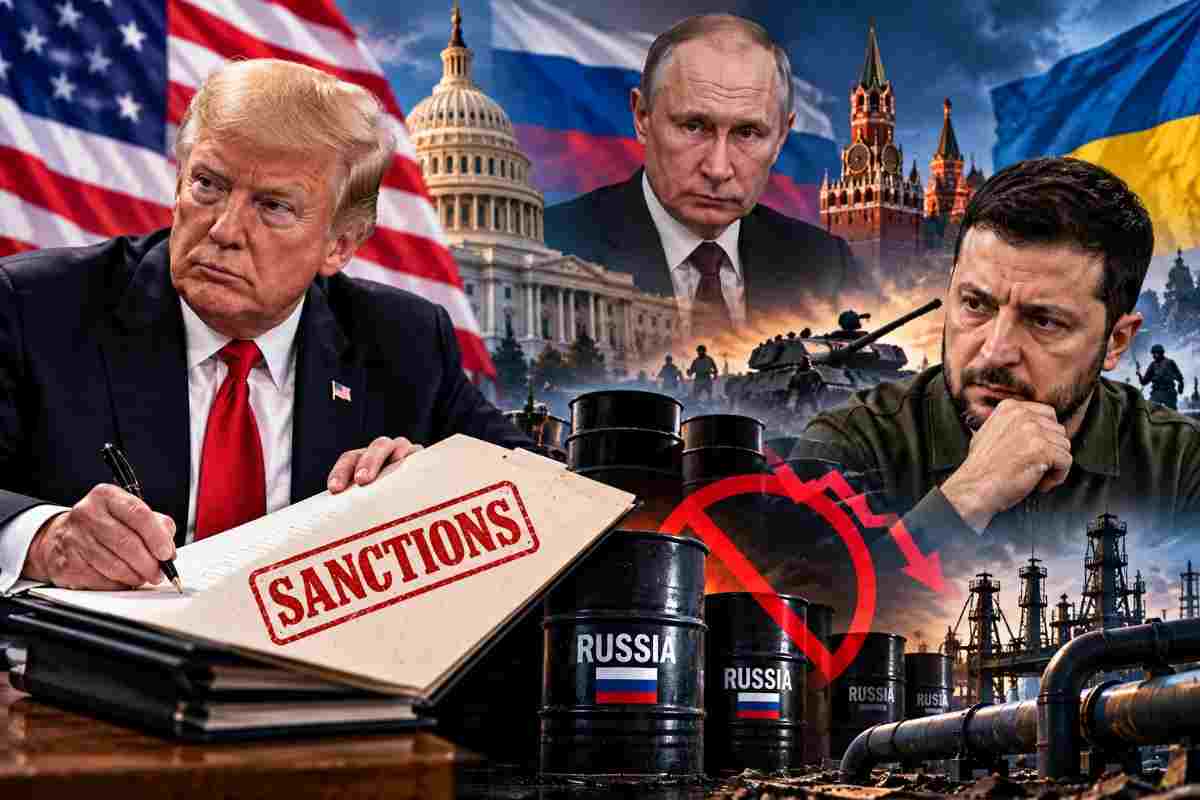
US President Donald Trump has waived a sweeping package of sanctions targeting Russia, citing American national interests, as his public dispute with Ukrainian President Volodymyr Zelensky intensifies over energy supplies, military support and the future of the war.
US President Donald Trump has suspended key sanctions and tariffs targeting Russia just days before the measures were due to take effect, triggering criticism from American lawmakers and renewed concern among Ukraine’s European allies.
On Friday, October 16, Trump signed an executive order waiving several provisions of legislation he had approved the previous month. The measures were designed to increase economic pressure on Moscow over its invasion of Ukraine, including penalties targeting Russian energy exports and countries purchasing Russian oil and gas.
Trump justified the decision by saying the suspension was in the national interests of the United States. The announcement came amid deteriorating relations between Washington and Kyiv, with Zelensky accusing the American administration of easing pressure on Russia while Ukraine continues to face Russian attacks.
Trump Suspends Sanctions Before Implementation
The sanctions package, known as the Lindsey Graham Act, was named after the late US senator who championed the legislation. It was intended to restrict Russia’s ability to generate revenue for its military campaign in Ukraine.
The law included provisions for additional sanctions against Russian officials, financial institutions and energy-related businesses. It also authorised the president to impose tariffs of up to 100% on goods from countries purchasing Russian oil and gas, subject to the legislation’s conditions.
Major purchasers of Russian energy, including China and India, could have faced increased trade pressure under the proposed measures.
However, the legislation also gave the president authority to waive sanctions and duties under specified circumstances. Trump used that authority to delay or suspend significant parts of the package before they became effective.
The decision represents a change in approach from the administration’s earlier support for legislation intended to increase economic pressure on Moscow. The precise future application of the waived provisions remains dependent on subsequent policy decisions.
Zelensky Criticises Washington’s Decision
Ukrainian President Volodymyr Zelensky criticised the suspension, arguing that reducing economic pressure on Russia could encourage Moscow to continue its military campaign.
In comments published on Saturday, Zelensky warned that easing sanctions would provide financial benefits to Russian President Vladimir Putin while Ukraine continues defending itself against Russian attacks.
The Ukrainian leader has repeatedly argued that sanctions are an important instrument for limiting Russia’s ability to finance its war effort. Kyiv has urged Washington and European governments to maintain economic pressure on Moscow rather than introduce measures that could increase Russian energy revenues.
Zelensky’s criticism comes as he seeks continued financial and military assistance from Western partners. Ukraine remains heavily dependent on international support for air defence, ammunition, military equipment and the financing of essential government services.
The suspension has therefore added another source of uncertainty to Ukraine’s relationship with its largest international supporters.
Energy Prices Play a Role in Trump’s Policy
The decision follows a controversial move by the Trump administration to facilitate the sale of Russian diesel in an effort to increase global fuel supplies and ease prices.
Energy costs have become a significant domestic political issue in the United States, particularly as rising fuel prices put pressure on households and businesses ahead of the November midterm elections.
The administration has faced pressure to address higher energy costs while maintaining its stated objective of ending the war in Ukraine.
Supporters of easing certain restrictions argue that increasing the availability of energy supplies could help stabilise markets. Critics, however, contend that allowing Russia to benefit from additional oil and gas sales could undermine efforts to restrict the resources available to its government.
The latest sanctions waiver reflects the difficulty of balancing domestic energy concerns with foreign-policy objectives. It also highlights the potential tension between economic measures intended to pressure Moscow and policies designed to increase the supply of fuel on international markets.
American Lawmakers Question the Suspension
Trump’s decision has drawn criticism from members of Congress who supported the sanctions legislation.
Democratic Representative Don Beyer accused the president of undermining the purpose of the law and weakening support for Ukraine. Senator Richard Blumenthal also criticised the waiver, arguing that it would reduce pressure on Russia.
Their objections centre on whether suspending the measures is consistent with the legislation’s original objective of limiting the financial resources available to Moscow.
The disagreement also raises questions about the relationship between Congress and the executive branch in determining US sanctions policy. Although Congress passed the legislation and Trump signed it into law, the waiver provisions gave the president discretion over the application of certain measures.
The administration has defended the suspension on national-interest grounds. However, the decision has intensified debate in Washington over how the United States should balance energy prices, diplomatic negotiations and support for Ukraine.
Russia Welcomes the Move as Ukraine Seeks European Support
Russian presidential envoy Kirill Dmitriev welcomed the suspension, describing it as a significant development for US-Russia economic relations.
The reaction contrasts with concerns expressed by Ukrainian officials and several European leaders, who have argued that continued economic pressure is necessary to encourage Moscow to change its course.
During meetings with European leaders in Brussels, Zelensky urged Ukraine’s partners to maintain financial assistance and strengthen military support. He also called for additional air-defence capabilities to protect Ukrainian cities and critical infrastructure against Russian missiles and drones.
European officials have reiterated that support for Ukraine remains important as the conflict continues. However, the extent to which European governments can compensate for any reduction in American assistance remains an important question for Kyiv.
The latest developments underline the differing approaches emerging among international partners over sanctions, energy policy and negotiations with Russia.
What the Decision Means for the War in Ukraine
The suspension does not itself end existing sanctions or establish a peace agreement between Russia and Ukraine. Instead, it changes the application of significant new restrictions that were intended to increase economic pressure on Moscow.
Its broader consequences will depend on which measures remain suspended, how the administration applies its waiver authority and whether further negotiations produce changes in US policy.
For Ukraine, the immediate concern is that reduced economic pressure could increase Russia’s access to revenue while Kyiv continues to require substantial international assistance.
For Washington, the challenge is to pursue its energy and diplomatic objectives while managing disagreements with European allies and Ukrainian officials.
The move also highlights the uncertainty surrounding the future of US policy toward the conflict, particularly as the administration weighs domestic economic pressures against its stated goal of bringing the war to an end.
Conclusion
Donald Trump’s decision to waive major Russia-related sanctions marks a significant development in US policy toward Moscow and has further strained relations with Ukraine.
By suspending measures designed to restrict Russian energy revenues and impose additional trade penalties, the administration has prioritised what it describes as American national interests. The decision has nevertheless raised concerns among Ukrainian leaders, European allies and American lawmakers who believe sustained economic pressure remains essential.
With the war continuing and disagreements over energy supplies and military assistance unresolved, the consequences of the suspension will depend on Washington’s next steps and the responses of Moscow, Kyiv and their international partners.
For now, the decision underscores the growing challenges facing efforts to coordinate sanctions policy, maintain support for Ukraine and find a diplomatic path toward ending the conflict.