

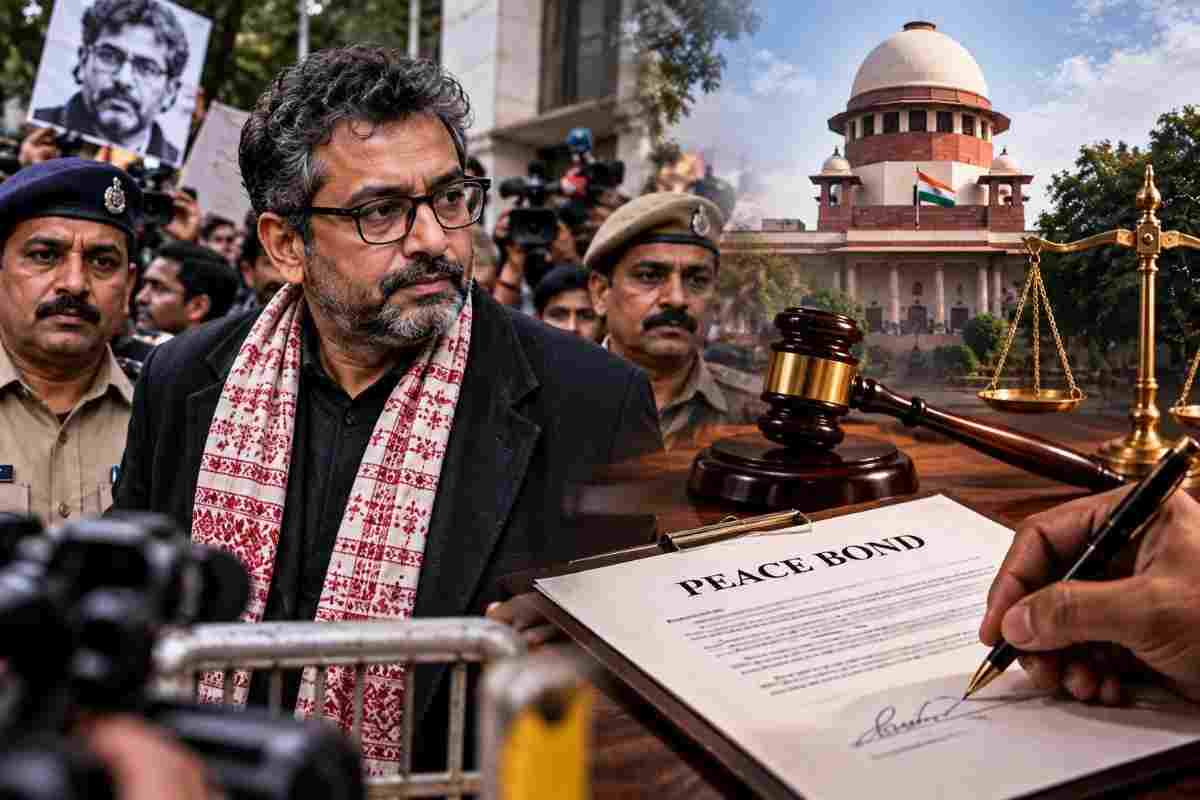
Cockroach Janta Party founder Abhijeet Dipke has been released after signing a peace bond, following his detention ahead of a planned protest in New Delhi over electoral-roll revisions and demands for the resignation of Chief Election Commissioner Gyanesh Kumar.
Abhijeet Dipke, founder of the Cockroach Janta Party (CJP), was granted conditional bail on Saturday, October 17, after being detained by Delhi Police ahead of a planned demonstration in the national capital. His release followed proceedings before a Special Executive Magistrate, where he was required to sign a peace bond and provide a surety.
Dipke had been taken into custody on Friday after attempting to participate in the party’s proposed Lehra Do Tiranga march towards Connaught Place. Police cited restrictions in force in the area and concerns about public order. The detention triggered criticism from supporters and activists, who questioned the action against a political organiser preparing to participate in a demonstration.
Court Grants Conditional Bail to CJP Founder
Dipke was produced before a Special Executive Magistrate after police registered preventive proceedings against him under Sections 126 and 170 of the Bharatiya Nagarik Suraksha Sanhita (BNSS).
The proceedings were connected to concerns about a possible breach of peace ahead of the planned protest. The magistrate granted conditional release rather than sending Dipke to judicial custody.
Reports said Dipke was required to furnish a surety bond of ₹50,000 and undertake to maintain peace and good behaviour. One of the reported conditions requires him to avoid disturbing public order for a period of one year.
The release does not amount to a judicial finding that every aspect of the police action was unlawful. It means Dipke was allowed to leave custody subject to the conditions imposed during the proceedings.
Why Was Dipke Detained?
Dipke’s detention came ahead of the CJP’s planned Lehra Do Tiranga march at Connaught Place in Delhi on October 16.
According to reports, police officers stopped him shortly after he left the residence where he was staying in the Jhandewalan area. Officers referred to restrictions in force around Connaught Place and raised concerns about traffic congestion, public safety and disruption to commercial activity.
The police subsequently took him into preventive custody. The action was taken against the backdrop of protests organised by CJP and other groups over the Special Intensive Revision (SIR) of electoral rolls and demands for accountability from the Election Commission.
The legal basis for preventive action is intended to allow authorities to address potential threats to public peace. However, its use during political demonstrations can generate questions about how security concerns are balanced against the right to peaceful assembly.
CJP Protests Against Electoral-Roll Revision
The Cockroach Janta Party has been involved in demonstrations opposing the Election Commission’s Special Intensive Revision of electoral rolls.
The exercise has generated political controversy, with critics raising concerns about the possibility of eligible voters being excluded from electoral lists. Opposition groups and activists have called for greater transparency and accountability in the revision process.
The Election Commission maintains that electoral-roll revision is part of its responsibility to maintain accurate voter lists. Questions surrounding the process have become a wider political issue, with different parties disagreeing over its implementation and possible consequences for voters.
CJP’s campaign has included demands for Chief Election Commissioner Gyanesh Kumar to resign. The planned march in Delhi was part of this broader campaign.
The allegations made by protesters about the electoral-roll process remain contested. The controversy has nevertheless placed the Election Commission, political parties and the rights of voters at the centre of public debate.
Peace Bond Places Conditions on Dipke’s Release
A peace bond is an undertaking intended to ensure that a person maintains peace and complies with specified conditions. In Dipke’s case, the reported bond and surety formed part of the requirements for his conditional release.
Such preventive proceedings differ from a conviction following a criminal trial. The use of these provisions does not, by itself, establish that the person has committed a criminal offence.
The reported one-year condition means Dipke is expected to avoid conduct that breaches the terms of the undertaking. The precise legal consequences of any alleged violation would depend on the applicable law and the circumstances of the case.
The development has renewed debate about the use of preventive powers during demonstrations. Authorities can impose lawful restrictions to address public-safety risks, while protesters retain legal protections concerning peaceful assembly and personal liberty.
Whether a particular restriction is justified depends on the facts, the applicable legal provisions and the procedures followed by the authorities.
Questions Raised Over Police Action
Dipke’s detention has drawn attention from CJP supporters and student activists, some of whom have criticised the police response to the planned march.
Critics argue that preventive detention can place significant restrictions on political activity, particularly when it is used before a demonstration takes place. They have called for authorities to explain the grounds for detaining organisers and to ensure that peaceful political participation is not unnecessarily restricted.
Police, meanwhile, cited public-order concerns and the restrictions applicable to the planned gathering.
The competing positions highlight a recurring challenge for authorities during large demonstrations: maintaining public safety while ensuring that restrictions remain lawful and proportionate.
The grant of conditional bail allows Dipke to leave custody, but it does not resolve every question surrounding the circumstances of his detention. Any further legal challenge would need to be considered through the relevant procedures.
What Happens Next?
Dipke’s release could allow CJP to continue its political campaign, although the conditions attached to his release may affect how organisers plan future demonstrations.
The party has continued to oppose the electoral-roll revision and demand accountability from the Election Commission. Its next steps will depend on its organisational decisions, the applicable restrictions in Delhi and any further legal developments.
Authorities are also likely to remain attentive to public-order arrangements around planned demonstrations in central Delhi. Any future restrictions would need to be assessed under the relevant legal framework.
The wider dispute over electoral-roll revision is likely to remain a subject of political and legal scrutiny as critics seek explanations about the process and the Election Commission defends its responsibilities.
Conclusion
The conditional release of CJP founder Abhijeet Dipke marks the latest development in the dispute surrounding protests against electoral-roll revisions in New Delhi.
After being detained ahead of the planned Lehra Do Tiranga march, Dipke was released following proceedings before a Special Executive Magistrate and the signing of a peace bond. The reported conditions include providing a ₹50,000 surety and maintaining peace for one year.
The episode has renewed debate over preventive police powers, public-order restrictions and the protection of peaceful political demonstrations. While authorities have cited security concerns, activists have questioned whether such measures unnecessarily restrict political participation.
The broader dispute over the electoral-roll revision remains unresolved, leaving further questions about the process, political accountability and the balance between public safety and civil liberties.