

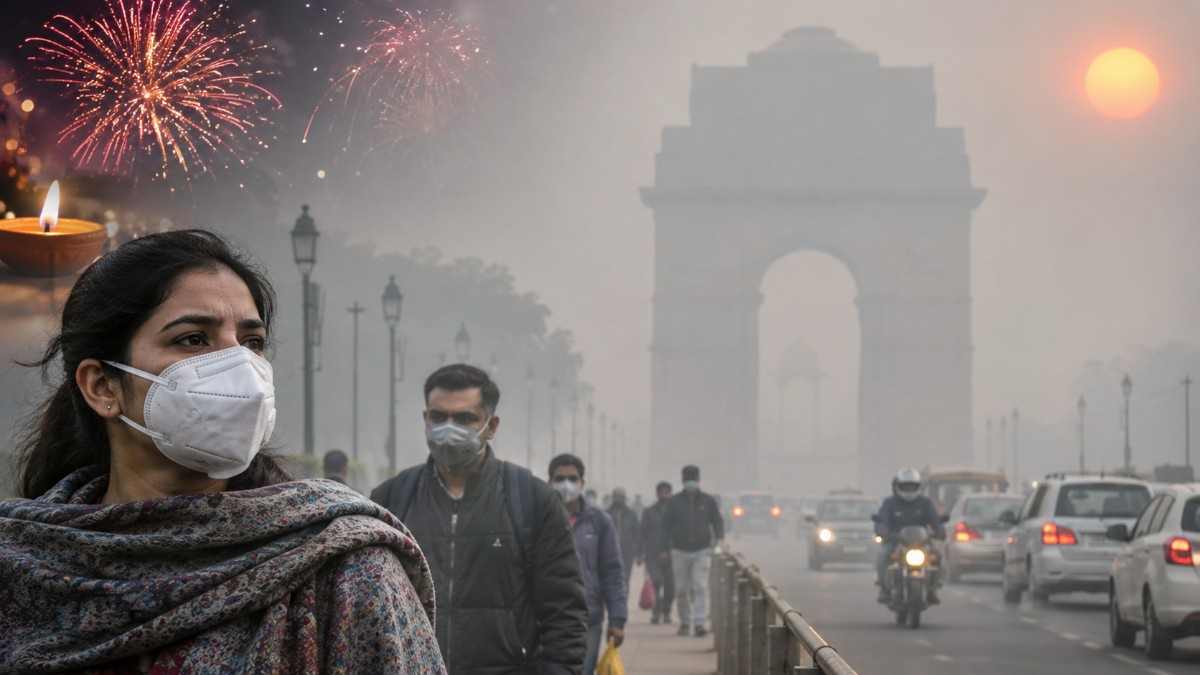
Several parts of Delhi recorded severe air pollution levels on the morning after Diwali, as firecracker emissions, stagnant weather conditions and existing pollution combined to blanket the national capital in a thick grey haze.
New Delhi woke up to visibly polluted skies on the morning after Diwali, with several areas recording air quality in the severe category. A thick layer of grey haze covered parts of the capital, reducing visibility and raising fresh concerns about the health risks faced by residents.
The deterioration followed celebrations across Delhi on Diwali night, when firecrackers were burst despite restrictions aimed at controlling pollution. The smoke released during the celebrations added to an already polluted atmosphere, pushing air quality to hazardous levels in several locations.
The situation has renewed concerns over the effectiveness of restrictions on firecrackers and the challenges involved in controlling Delhi’s annual winter pollution crisis.
Several Areas Experience Severe Pollution
Air quality monitoring stations across Delhi reported a sharp deterioration in pollution levels after Diwali celebrations.
The Air Quality Index (AQI) is used to measure the concentration of major air pollutants and indicate the potential health risks associated with exposure.
Under India’s AQI classification:
- Good: 0–50
- Satisfactory: 51–100
- Moderate: 101–200
- Poor: 201–300
- Very Poor: 301–400
- Severe: 401–500
An AQI reading above 400 falls into the severe category, indicating serious health risks, particularly for children, older people and individuals with respiratory or cardiovascular conditions.
The grey haze visible across the city was a sign of the accumulation of pollutants close to the ground. The extent of pollution varied between neighbourhoods, with some monitoring stations reporting significantly worse conditions than others.
Firecracker Emissions Add to Delhi’s Pollution Burden
Firecrackers remain a major concern during Diwali because they release fine particulate matter and a mixture of harmful gases and chemical compounds.
PM2.5 particles are particularly dangerous because they are small enough to penetrate deep into the lungs and can enter the bloodstream. Short-term exposure can cause coughing, throat irritation, breathing difficulties and aggravation of asthma.
The pollution impact is not limited to the hours when firecrackers are used. Smoke and fine particles can remain suspended in the atmosphere, especially when weather conditions prevent them from dispersing.
Delhi’s pollution problem is also influenced by vehicle emissions, construction dust, industrial activity, waste burning and seasonal agricultural fires in neighbouring states.
Weather Conditions Make the Situation Worse
Weather plays an important role in determining how quickly pollution spreads or accumulates.
During the winter season, lower temperatures, reduced wind speeds and atmospheric conditions that restrict vertical air movement can trap pollutants close to the surface.
When this happens, emissions from vehicles, industries and firecrackers accumulate rather than dispersing into the atmosphere.
The combination of high emissions and unfavourable weather can cause pollution levels to rise sharply within a short period.
Health Concerns for Residents
Severe air pollution can affect even people who do not have an existing medical condition.
Exposure to high concentrations of particulate matter may lead to eye irritation, headaches, coughing, chest discomfort and breathing difficulties.
People with asthma, chronic obstructive pulmonary disease and heart conditions face a greater risk of complications.
Health experts generally advise residents to reduce prolonged outdoor activities when AQI reaches severe levels. Children, older adults and people with existing health problems should take particular care.
Using a well-fitted N95 or equivalent respirator outdoors can help reduce exposure to fine particles. Residents should also keep windows closed during periods of heavy outdoor pollution and use an appropriately sized air purifier indoors where possible.
Questions Over Pollution Control Measures
The post-Diwali deterioration has once again raised questions about the enforcement of firecracker restrictions in Delhi.
Authorities have introduced different measures over the years, including restrictions on the sale and use of conventional firecrackers, public awareness campaigns and monitoring of pollution levels.
However, controlling the problem remains difficult because air pollution comes from multiple sources and is influenced by conditions across the wider National Capital Region.
Environmental experts have repeatedly stressed that reducing pollution requires consistent action throughout the year rather than relying only on temporary restrictions during Diwali or the winter season.
Delhi Faces Another Difficult Pollution Season
The severe air quality recorded after Diwali highlights the continuing challenge of protecting public health in one of India’s most polluted urban regions.
Although firecracker emissions can contribute to a sudden deterioration, the capital’s wider pollution problem requires coordinated action on transport emissions, industrial pollution, construction dust, waste management and regional agricultural burning.
With winter conditions approaching, residents and authorities are likely to face further pressure to prevent pollution levels from rising.
For millions living in Delhi and the surrounding region, the immediate concern is clear: restoring breathable air and reducing the health risks associated with prolonged exposure to hazardous pollution.
Source: Air quality monitoring data and reports from Indian news outlets and environmental authorities.