
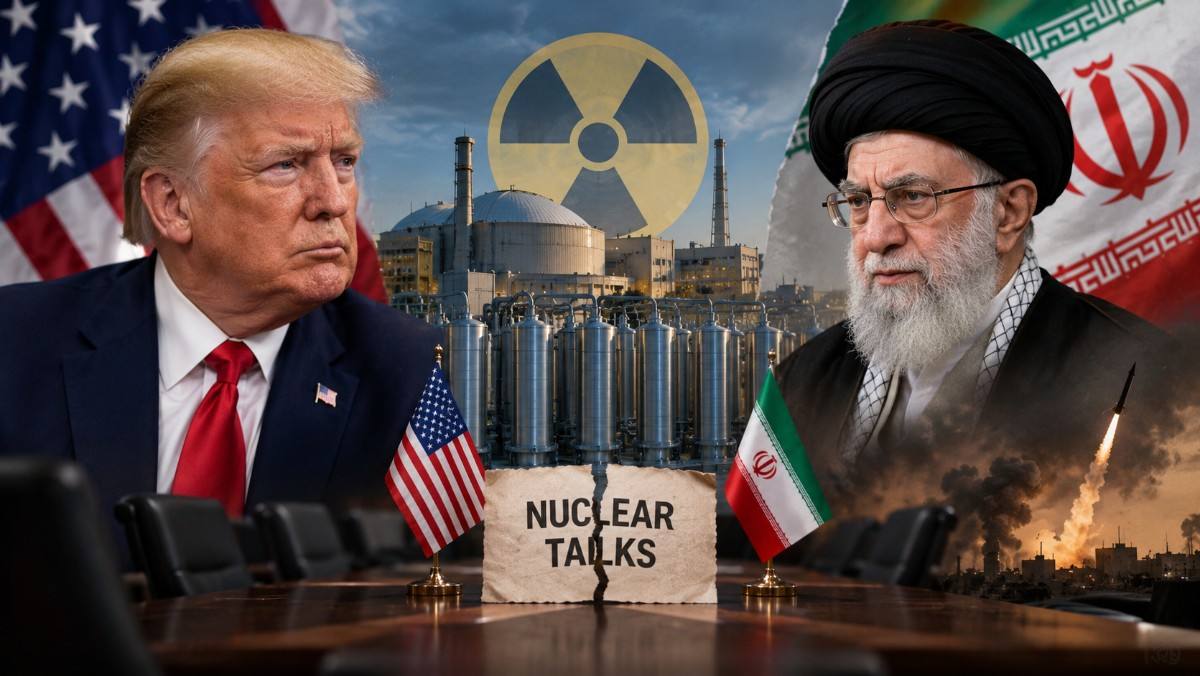
Negotiations between Washington and Tehran have stalled over Iran’s enriched uranium stockpile, with mediators warning that diplomatic efforts have yet to produce a breakthrough and cannot guarantee that military confrontation will not resume.
By CK Sharma | World Affairs | NewsBee Media Inc.
Diplomatic efforts to ease tensions between the United States and Iran have encountered a major setback, with negotiations reportedly stalled over disagreements surrounding Tehran’s enriched uranium stockpile and the future of its nuclear programme.
According to a report by Al Arabiya English, citing a senior source, Washington is demanding a clear roadmap and written guarantees from Iran to eliminate its enriched uranium stockpile and permanently refrain from restarting uranium enrichment. Tehran, however, has shown little willingness to accept these conditions.
Mediators have reportedly presented several proposals to bridge the differences, but neither side has moved sufficiently from its position. The continued deadlock has raised concerns that the fragile situation could deteriorate into renewed military escalation in the Middle East.
Uranium enrichment remains the biggest obstacle
The central disagreement concerns Iran’s stockpile of uranium enriched to high levels and its right to continue enrichment activities.
The United States wants Iran to make verifiable commitments that would prevent it from developing the capability to produce nuclear weapons. Washington has maintained that any lasting agreement must address the country’s nuclear material and enrichment capacity.
Tehran, meanwhile, considers its nuclear programme a matter of national sovereignty and security. Iranian officials have repeatedly rejected demands that they regard as excessive or incompatible with the country’s national interests.
The dispute is particularly sensitive because uranium enriched to 60 per cent is much closer to weapons-grade material than the levels normally required for civilian nuclear energy.
Before US and Israeli strikes on Iranian nuclear facilities in June 2025, the International Atomic Energy Agency had estimated that Iran possessed approximately 440.9 kilograms of uranium enriched to 60 per cent. The exact amount remaining after subsequent attacks and the current location of the material have not been independently verified.
Iran demands a lasting agreement, not a temporary pause
Iranian Foreign Minister Abbas Araghchi has made it clear that Tehran does not want an agreement designed simply to end the immediate diplomatic crisis.
In recent comments reported by Al Jazeera, Araghchi said Iran was seeking a good, honourable and lasting agreement that would protect its national interests and provide assurances against another military confrontation.
He questioned the value of reaching an agreement if fighting could resume within a short period.
Araghchi also referred to the breakdown of an earlier ceasefire, arguing that Iran would not accept an arrangement that merely postpones another conflict.
His comments reflect Tehran’s concern that a diplomatic settlement without credible security guarantees could leave the country vulnerable to future military action.
Iran has indicated that it is willing to discuss its enriched uranium stockpile, including possible arrangements involving dilution under international supervision. However, Tehran has rejected transferring the material outside the country.
Qatar and Pakistan continue mediation efforts
With direct negotiations facing difficulties, regional mediators are attempting to prevent the diplomatic process from collapsing.
Qatar and Pakistan have emerged as important communication channels between Washington and Tehran. Their efforts are focused on narrowing differences, restoring a ceasefire framework and creating conditions for renewed nuclear negotiations.
Recent diplomatic contacts have included discussions between US representatives and Qatari officials. These efforts suggest that Washington and Tehran have not completely abandoned diplomacy, even as their public positions remain far apart.
However, mediation has so far failed to produce an agreement acceptable to both sides.
The challenge is not limited to uranium enrichment. Iran also wants assurances against renewed attacks and relief from economic restrictions, while the United States is seeking verifiable nuclear commitments before making major concessions.
A fragile ceasefire and the risk of renewed conflict
The diplomatic stalemate comes after months of conflict that began with US and Israeli attacks on Iran on February 28, 2026.
Although large-scale military operations have eased, the confrontation remains unresolved. Washington has continued economic and maritime pressure on Tehran, while Iran has maintained that its security concerns and national interests must be addressed in any settlement.
The situation has also affected regional stability, particularly around the Strait of Hormuz, one of the world’s most important routes for international oil and gas shipments.
Any renewed military confrontation could threaten commercial shipping, disrupt energy supplies and push global oil prices higher. It could also draw neighbouring countries into a wider regional crisis.
Mediators have therefore warned that they cannot guarantee a return to diplomacy or rule out another round of military escalation if the current negotiations fail.
Washington and Tehran face difficult choices
US President Donald Trump has indicated that Washington wants an agreement but has rejected terms that he considers unacceptable. His administration continues to insist that Iran must not obtain a nuclear weapon.
For Tehran, accepting Washington’s demands without strong security guarantees could be politically difficult. Iranian leaders are also concerned about the possibility of another military confrontation after an agreement is reached.
The two sides therefore face a complicated choice: make compromises that could allow negotiations to progress, or continue the current standoff with the risk of renewed conflict.
Conclusion
The breakdown in Iran-US negotiations highlights how difficult it will be to achieve a lasting settlement over Tehran’s nuclear programme.
The uranium enrichment dispute remains the biggest obstacle, but wider disagreements over sanctions, security guarantees and regional stability are equally important.
Although Qatar and Pakistan continue to support diplomatic efforts, the absence of meaningful progress has increased uncertainty across the Middle East.
For now, neither side appears ready to abandon its core demands. Whether mediators can find a compromise or the region moves towards another military confrontation will depend on the willingness of Washington and Tehran to make concessions before the diplomatic window closes.