

Opening Summar
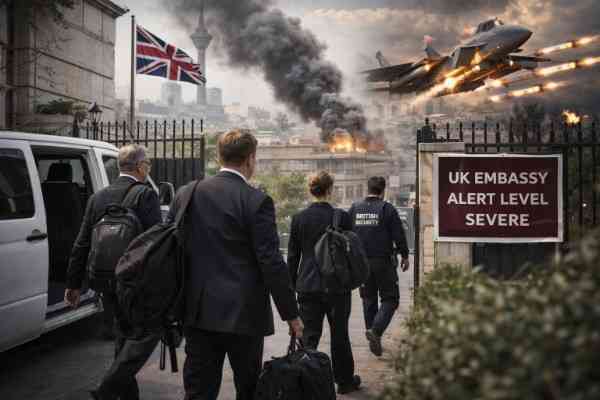
The United Kingdom has withdrawn embassy staff from Tehran, Iran, citing growing concerns over the threat of possible U.S. military strikes in the region. The decision was taken as tensions between the United States and Iran continue to escalate. The move matters internationally as diplomatic drawdowns often signal heightened security risks and concern over regional stability.
Background and Context
Relations between Iran and Western countries have been strained for years due to disputes over Iran’s nuclear programme, regional influence, and sanctions. Periodic military incidents and escalating rhetoric have raised fears of direct confrontation.
The United States has increased its military presence in parts of the Middle East amid concerns over Iran’s nuclear activities and regional security threats. Such deployments have frequently led foreign governments to reassess the safety of their diplomatic personnel in Tehran and other regional capitals.
The United Kingdom maintains diplomatic relations with Iran, though ties have fluctuated over the years. British embassies in sensitive regions often adjust staffing levels in response to evolving security assessments.
Diplomatic withdrawals do not necessarily indicate imminent conflict but are typically precautionary measures aimed at ensuring the safety of personnel.
Latest Developments
British officials confirmed that embassy staff have been withdrawn from Tehran as a precautionary measure. Essential services may continue through remote operations or limited local staffing, though details were not fully disclosed.
The UK government said the move reflects its assessment of increased security risks tied to potential U.S. military action. Officials emphasized that the safety of diplomatic personnel remains the top priority.
Iranian authorities have not publicly commented on the UK’s decision. The U.S. government has also not confirmed any specific timeline for potential strikes, though military readiness in the region remains elevated.
Other Western governments are reportedly monitoring the situation closely, reviewing contingency plans for their diplomatic missions in Iran.
Why This Matters
Diplomatic withdrawals are significant because they signal serious concern over security conditions. When countries reduce embassy staffing, it can indicate that intelligence assessments point to heightened risk.
The move also reflects broader instability in the Middle East. Any U.S. military action against Iran could have far-reaching consequences, including impacts on global energy markets, shipping routes, and regional alliances.
For Canada and European allies, developments in Iran are closely watched due to shared interests in nuclear non-proliferation, regional stability, and the protection of citizens abroad.
The withdrawal may also complicate diplomatic engagement at a time when negotiations over Iran’s nuclear programme remain sensitive.
What Happens Next
The UK government is expected to continue monitoring developments and may adjust staffing levels depending on the security situation. Embassy operations could resume fully if tensions ease.
Diplomatic efforts between the United States, Iran, and international partners may intensify in an attempt to prevent escalation.
Other countries could follow the UK’s example if security conditions deteriorate further.
Observers will watch closely for signals from Washington and Tehran regarding military action or renewed diplomatic engagement.
Conclusion
The United Kingdom’s decision to withdraw embassy staff from Tehran reflects growing concern over potential U.S. strikes and rising regional tensions. While described as a precautionary step, the move underscores the seriousness of the current situation.
As diplomatic and military developments unfold, the risk of escalation remains a key concern for governments and global markets alike.