

Opening Summary
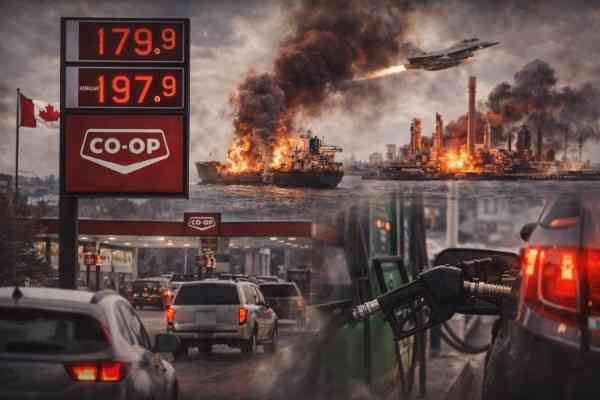
Gasoline prices across Canada are rising sharply as the war involving Iran, the United States, and Israel disrupts global oil markets. Drivers in several provinces have already seen noticeable increases at the pump as crude oil prices surge due to conflict in the Middle East. The situation matters nationally because higher fuel costs can affect transportation, inflation, and the overall cost of living in Canada.
Background and Context
Canada’s gasoline prices are closely tied to global oil markets. Even though Canada produces large amounts of oil, the price drivers pay at the pump is influenced by international crude prices and global supply conditions.
The current surge began after coordinated military strikes by the United States and Israel against Iranian targets triggered a broader conflict in the region. Iran responded with retaliatory actions and threats to block shipping routes in the Persian Gulf.
One of the most important factors affecting oil markets is the Strait of Hormuz, a narrow waterway through which roughly 20% of the world’s oil normally passes. Any disruption to tanker traffic through this route can significantly reduce global oil supply and quickly push prices higher.
Energy analysts say geopolitical conflicts in the Middle East historically have an immediate impact on global fuel markets because the region plays a central role in oil production and exports.
Latest Developments
Canadian motorists have begun seeing the impact of the conflict at gas stations across the country. Average fuel prices have increased by several cents per litre in recent days, with some regions experiencing larger spikes depending on local supply conditions.
Energy analysts say the price increases are linked to rising global crude oil prices, which have surged as markets react to the risk of supply disruptions in the Middle East.
The price of oil has climbed rapidly amid reports of tanker disruptions, attacks on energy infrastructure, and threats to close major shipping routes.
Retail fuel suppliers in Canada are now passing those higher costs on to consumers at the pump. In several provinces, drivers have reported noticeable increases compared with prices just a week earlier.
Industry observers say prices could continue rising if the conflict spreads or if shipping disruptions in the Gulf region persist.
Why This Matters
Higher gasoline prices can have widespread economic consequences for Canada. Fuel costs directly affect transportation, logistics, and supply chains, which means price increases often ripple through other sectors of the economy.
For households, rising fuel prices increase the cost of commuting and everyday travel. For businesses, especially trucking and delivery companies, higher fuel costs can lead to higher prices for goods and services.
Economists warn that sustained increases in energy costs could also contribute to inflation, putting additional pressure on consumers already facing high living expenses.
At the same time, higher global oil prices may benefit parts of Canada’s energy sector, particularly oil-producing provinces such as Alberta and Saskatchewan, where stronger crude prices can increase revenues.
What Happens Next
Energy analysts say future gasoline prices in Canada will largely depend on how long the Middle East conflict continues and whether global oil supply disruptions worsen.
If tanker traffic through key shipping routes remains restricted or oil facilities continue to be targeted, crude prices could remain elevated.
Governments and energy agencies around the world are monitoring the situation closely and may consider releasing strategic oil reserves if supply shortages intensify.
Canadian consumers and businesses are expected to watch fuel prices closely in the coming weeks as markets react to further developments in the conflict.
Conclusion
The surge in gasoline prices across Canada highlights how global conflicts can quickly affect domestic energy costs. As the war involving Iran, the United States, and Israel spreads, oil markets have reacted sharply, pushing fuel prices higher for Canadian drivers.
Whether the price increases remain temporary or become a longer-term trend will depend largely on how the conflict evolves and how global oil supplies are affected in the weeks ahead.