

Opening Summary
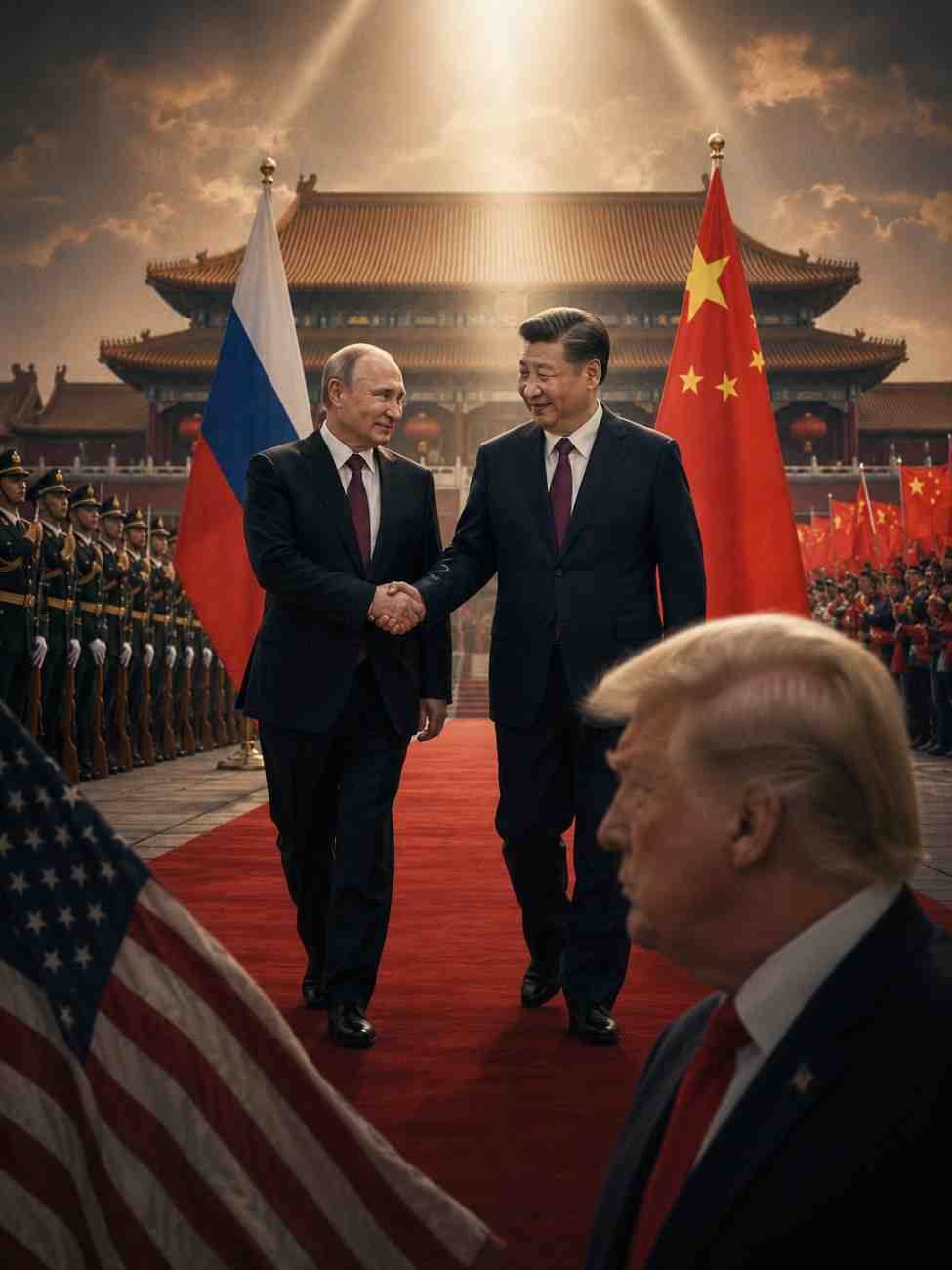
Chinese President Xi Jinping welcomed Russian President Vladimir Putin for high-level talks in Beijing just days after hosting U.S. President Donald Trump, placing China at the center of global diplomacy. The meetings highlight Beijing’s growing influence amid rising geopolitical tensions. The development matters internationally as it reflects shifting alliances and strategic competition between major world powers.
Background and Context
China has been balancing complex relationships with both Russia and the United States during a period of global instability.
Beijing and Moscow have strengthened ties in recent years through energy cooperation, military coordination, and shared opposition to Western pressure.
At the same time, China has been engaged in difficult but important discussions with Washington over trade, technology, Taiwan, and global security.
Xi’s meetings with both Trump and Putin within days of each other have drawn significant international attention, with analysts viewing the diplomacy as part of China’s effort to expand its global influence.
Latest Developments
President Xi Jinping hosted Vladimir Putin in Beijing for talks focused on strategic cooperation, trade, energy security, and global conflicts.
The visit came shortly after Xi’s high-profile summit with Donald Trump, where discussions centered on trade disputes, geopolitical tensions, and economic stability.
Chinese state media highlighted Xi’s role as a central global leader engaging with both rival powers during a period of international uncertainty.
Putin praised China-Russia relations during the visit, describing the partnership as important for maintaining what he called a “balanced world order.”
The meetings have intensified global attention on China’s diplomatic strategy and its role in shaping international power dynamics.
Why This Matters
Hosting both Trump and Putin within a short period strengthens China’s image as a major diplomatic power.
The meetings also signal Beijing’s attempt to maintain influence with both East and West while protecting its economic and strategic interests.
For global politics, closer China-Russia ties may increase concern among Western allies about emerging geopolitical blocs.
The developments could also affect trade negotiations, security alliances, and future diplomatic efforts related to ongoing global conflicts.
What Happens Next
China is expected to continue engaging with both Washington and Moscow while positioning itself as a key global negotiator.
Western countries will closely monitor any agreements or strategic commitments emerging from the Xi-Putin talks.
Future diplomatic meetings and economic announcements may further shape global power relations.
Conclusion
Xi Jinping’s decision to host Vladimir Putin days after meeting Donald Trump has placed China firmly in the international spotlight.
As Beijing deepens ties with Russia while managing relations with the United States, China’s diplomatic influence is becoming increasingly central to global politics and security.