

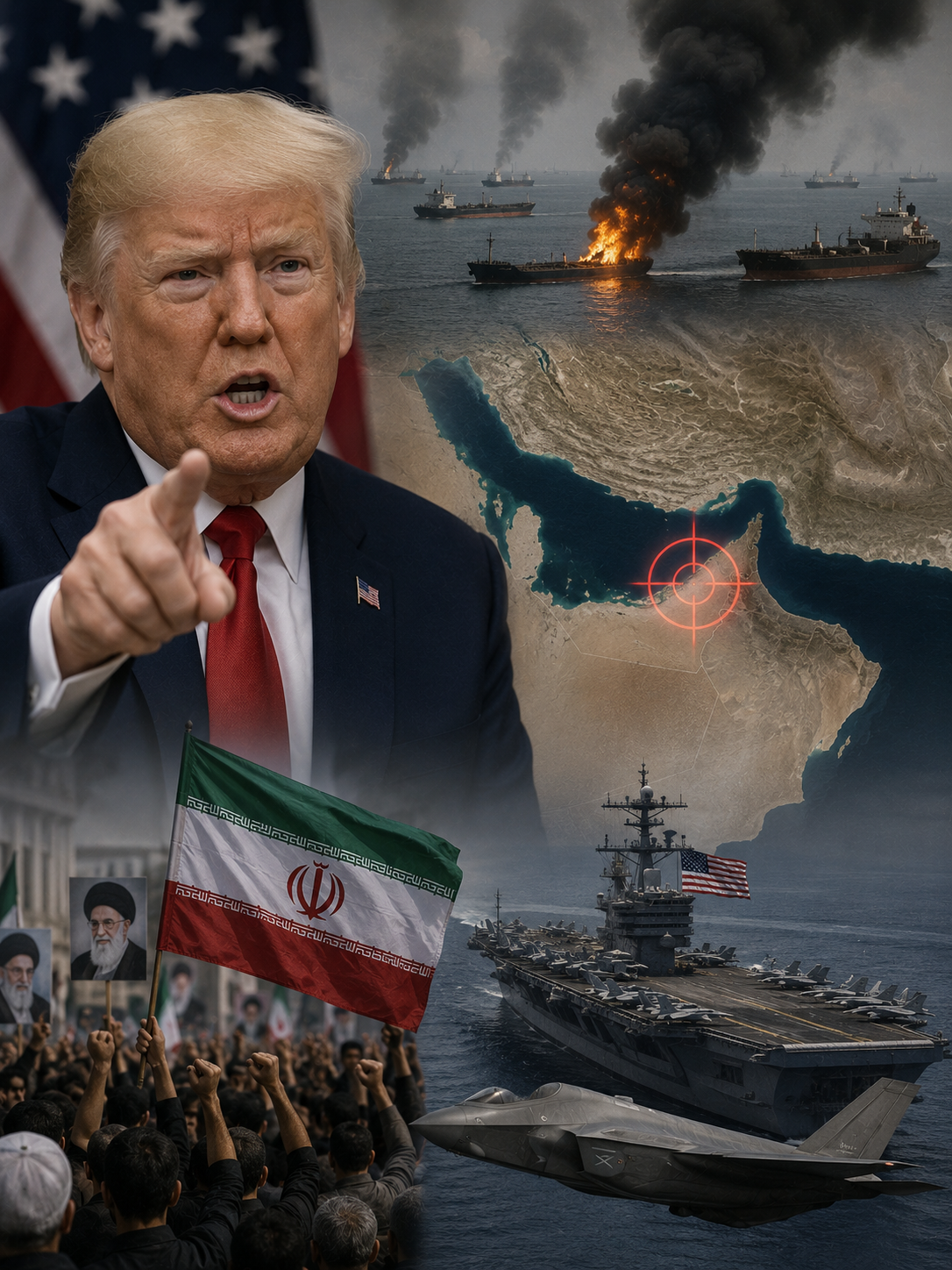
U.S. President Donald Trump has accused Iran of violating the recently agreed ceasefire after an alleged attack on commercial shipping in the Strait of Hormuz. Trump described the incident as a “foolish violation” of the truce, warning that such actions could undermine ongoing efforts to secure a lasting peace in the region.
Background and Context
The ceasefire between the United States and Iran was intended to end months of military confrontation and reduce tensions across the Middle East.
As part of the agreement, both sides committed to lowering hostilities while negotiations continued on a broader peace framework covering regional security, maritime safety, and diplomatic relations.
The Strait of Hormuz remains one of the world’s most strategically important shipping routes, carrying a significant share of global oil exports and international trade.
Latest Developments
President Trump alleged that Iranian forces launched an attack targeting commercial shipping in the Strait of Hormuz, calling it a direct breach of the ceasefire agreement. He warned that continued attacks could jeopardize the fragile diplomatic progress achieved in recent weeks.
According to U.S. officials, the incident involved drones targeting vessels operating in the strategic waterway. Authorities are continuing to assess the full extent of the damage and monitor security conditions in the Gulf.
Iran has rejected the accusations and maintains that its actions are aimed at protecting its national security and territorial interests.
The latest exchange of accusations has raised concerns that the ceasefire could come under renewed strain if diplomatic efforts fail to prevent further incidents.
Why This Matters
Any attack in the Strait of Hormuz has the potential to disrupt global shipping, affect energy markets, and increase geopolitical uncertainty.
The incident also threatens ongoing negotiations aimed at transforming the temporary ceasefire into a long-term peace agreement.
A breakdown in the truce could increase the risk of renewed military confrontation and further destabilize the region.
What Happens Next
International mediators are expected to intensify diplomatic efforts to preserve the ceasefire and encourage both sides to avoid further escalation.
Security forces will continue monitoring maritime traffic in the Gulf while negotiators work to address the latest dispute.
Global markets and regional governments are expected to closely watch developments as efforts to maintain stability continue.
Conclusion
Trump’s accusation that Iran violated the ceasefire following the Strait of Hormuz attack has added fresh uncertainty to an already fragile peace process.
With regional security, international trade, and global energy supplies at stake, the coming days will be critical in determining whether diplomacy can keep the ceasefire intact.