

Millions Expected to Join Week-Long Ceremonies as Iran Mourns Former Supreme Leader
Summary
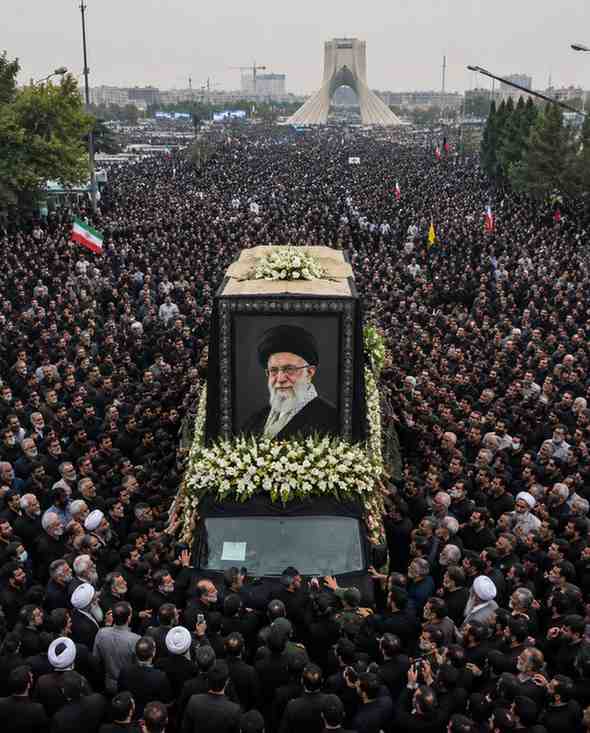
Thousands of mourners gathered in Tehran on the opening day of funeral ceremonies for former Iranian Supreme Leader Ayatollah Ali Khamenei, marking the beginning of a six-day period of national mourning. Iranian authorities expect millions of people to participate in ceremonies across Iran and neighbouring Iraq, making it one of the largest public commemorations in the country’s modern history.
The funeral has drawn senior Iranian officials, religious leaders, military commanders, and foreign delegations from several countries. The ceremonies are also being viewed as a demonstration of national unity and political resilience following the death of the long-serving leader.
Massive Turnout in the Capital
The first day of the funeral began at Tehran’s Grand Mosalla mosque, where large crowds assembled to pay their final respects. Mourners carried Iranian flags, portraits of Ayatollah Khamenei, and banners expressing support for the Islamic Republic, while religious prayers and Quran recitations were held throughout the day.
Iranian officials estimate that between 15 million and 20 million people could take part in ceremonies in Tehran over the coming days, with additional events scheduled in several other cities. Authorities have implemented extensive security measures and traffic restrictions to manage the expected crowds safely.
Week-Long Funeral Across Multiple Cities
The funeral ceremonies will continue over six days, with processions planned in major Iranian cities before concluding with a final burial ceremony in Mashhad, Ayatollah Khamenei’s birthplace. Parts of the commemorations will also take place in the Iraqi holy cities of Najaf and Karbala, reflecting the late leader’s religious significance within the Shia Muslim world.
Officials have described the funeral as both a national and religious event, intended to honour Khamenei’s decades-long leadership while reinforcing the country’s message of unity during a period of regional uncertainty.
Strong Political Symbolism
The funeral carries significant political importance for Iran’s leadership. During the ceremonies, many participants chanted slogans in support of the Islamic Republic and against the country’s regional adversaries, highlighting the continued emphasis on national resistance and sovereignty.
Government officials have portrayed the large turnout as evidence of public solidarity and loyalty to the country’s leadership. However, observers note that public opinion within Iran remains diverse, with differing views regarding Khamenei’s political legacy and the future direction of the nation.
International Attention
The funeral has attracted delegations from numerous countries, including regional partners and allies, underlining Iran’s diplomatic ties with several nations despite ongoing geopolitical tensions. Security has been tightened throughout the capital to ensure the safety of participants and visiting officials.
International observers are also closely monitoring the ceremonies as Iran enters a new phase of leadership, with attention focused on how the country will navigate domestic governance and regional challenges following the end of Khamenei’s nearly four-decade tenure as Supreme Leader.
Conclusion
The opening day of Ayatollah Ali Khamenei’s funeral brought large crowds to Tehran, beginning what is expected to be one of the largest state funeral ceremonies in Iran’s history. As millions of mourners are anticipated to participate over the coming days, the commemorations represent both a farewell to one of the country’s most influential leaders and a significant moment in Iran’s political and religious landscape. The ceremonies are likely to shape both domestic sentiment and international attention as the nation moves into a new chapter of its leadership.