

Successor’s Absence Sparks Questions as Senior Officials and Thousands of Mourners Gather in Tehran
Summary
Iran’s newly appointed Supreme Leader, Mojtaba Khamenei, was notably absent from public funeral ceremonies for his father, Ayatollah Ali Khamenei, while three of the late leader’s other sons appeared alongside senior political and military officials to pay their final respects. The absence of the country’s new leader drew widespread attention during the second day of funeral ceremonies, prompting speculation despite official reports citing security concerns and injuries sustained during the recent conflict.
The funeral in Tehran attracted massive crowds, with mourners gathering to honour the late leader as Iran continues a week of national mourning following one of the most significant events in the country’s modern political history.
Three Sons Attend Funeral Prayers
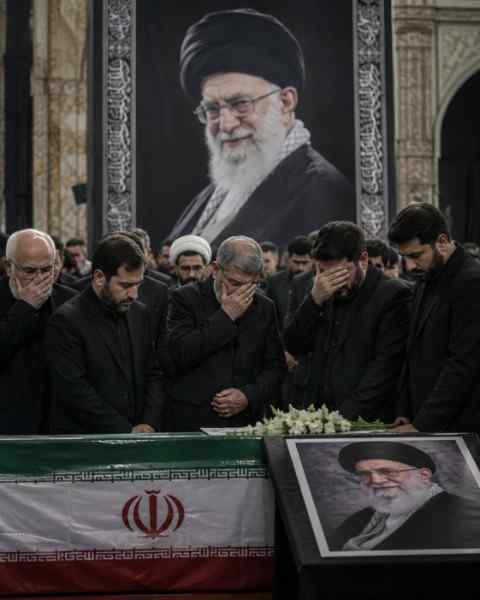
During funeral prayers at Tehran’s Grand Mosalla mosque, Mostafa, Meysam, and Masoud Khamenei stood beside their father’s coffin as religious leaders, government officials, military commanders, and thousands of mourners participated in the ceremonies.
The appearance of the three brothers marked a rare public display by members of the Khamenei family. Images broadcast by Iranian state media showed them offering prayers and receiving condolences alongside Iran’s political leadership.
However, the absence of Mojtaba Khamenei, who assumed the country’s highest leadership position following his father’s death, became one of the most discussed aspects of the ceremony.
Security Concerns Behind the Absence
Iranian officials have indicated that Mojtaba Khamenei did not attend the public funeral because of ongoing security concerns. Reports suggest he was injured during the conflict that claimed his father’s life and has remained out of public view since assuming leadership.
Authorities have not provided detailed information regarding his current condition or future public appearances. Analysts believe heightened security threats and concerns over potential attacks have influenced the decision to keep the new Supreme Leader away from large public gatherings.
The absence has fueled speculation internationally, although Iranian officials continue to emphasize that the leadership transition remains stable and that government institutions are functioning normally.
Funeral Reflects National Mourning
The funeral ceremonies have drawn enormous crowds from across Iran, with thousands of mourners gathering in Tehran to honour Ayatollah Ali Khamenei after his decades-long leadership of the Islamic Republic.
Religious ceremonies, Quran recitations, and public processions have been accompanied by heavy security throughout the capital. Senior government officials, members of the Revolutionary Guard, military commanders, and foreign delegations have also attended the commemorations.
Authorities have described the funeral as a symbol of national unity and resilience during a period of significant political transition.
Leadership Transition Under Global Watch
The funeral has become more than a national memorial, serving as the first major public event since Iran’s leadership changed. International observers are closely watching how the country’s new leadership will manage domestic affairs, regional tensions, and foreign policy in the months ahead.
While Mojtaba Khamenei’s absence has generated international attention, Iranian officials continue to stress continuity within the government and have reaffirmed their commitment to maintaining stability during the transition.
Political analysts believe future public appearances by the new Supreme Leader will be closely scrutinized as Iran enters a new chapter following the end of Ali Khamenei’s long tenure.
Conclusion
The absence of Iran’s new Supreme Leader, Mojtaba Khamenei, from his father’s funeral has become a defining feature of the ongoing national mourning ceremonies. While three of Ayatollah Ali Khamenei’s sons publicly paid their respects alongside senior officials, security concerns kept the country’s new leader away from the event. As funeral ceremonies continue across Iran, attention remains focused not only on honouring the late leader’s legacy but also on how the nation’s new leadership will guide the country through a period of political transition and regional uncertainty.