

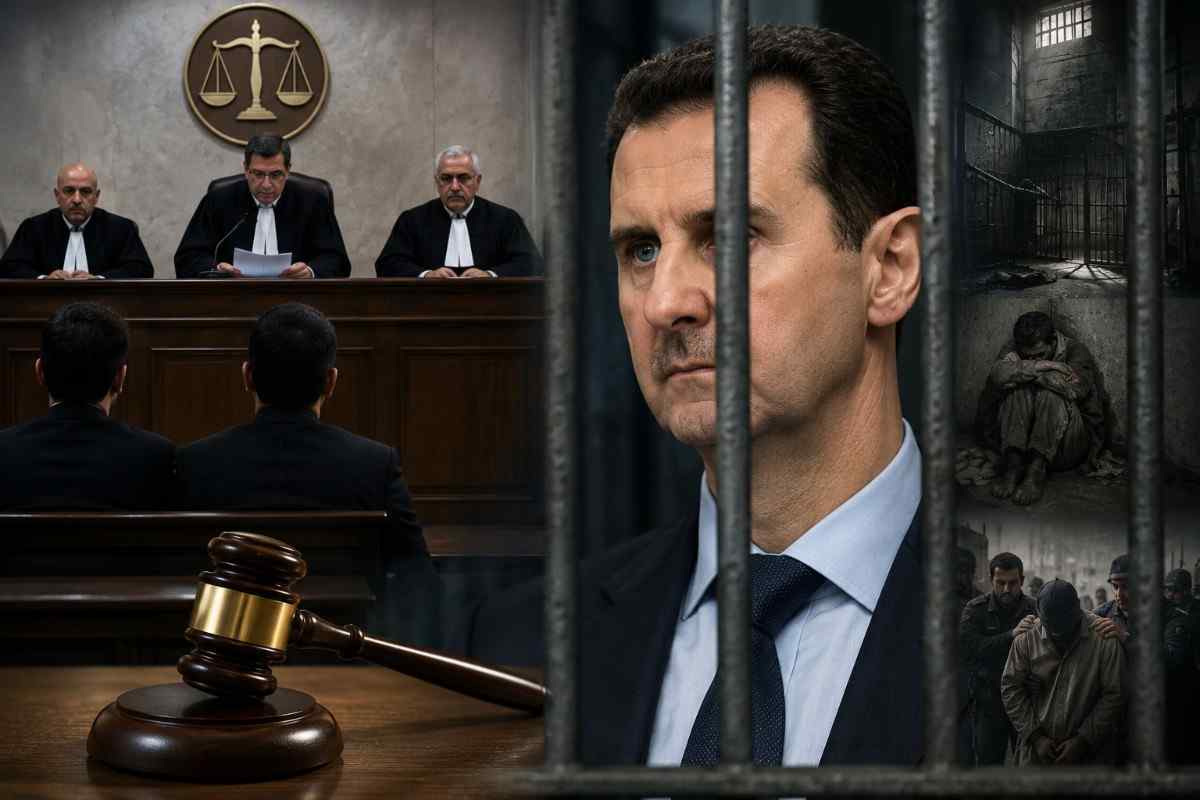
Ousted Former President Convicted in Absentia of Killings, Torture and Crimes Against Humanity
Summary
A Syrian court has sentenced former President Bashar al-Assad to death in absentia after convicting him of serious crimes committed during the country’s nearly 14-year civil war. The landmark ruling includes convictions for premeditated murder, torture, arbitrary arrests and crimes against humanity. Assad, who was removed from power in December 2024, is currently living in Russia and was not present in court.
The verdict represents the first major criminal conviction against Assad since the collapse of his government and marks a significant moment in Syria’s efforts to pursue accountability for abuses committed during the conflict.
Court Delivers Landmark Verdict
The Damascus criminal court handed down the death sentence on Tuesday following proceedings that examined allegations of killings, torture and other abuses carried out during Assad’s rule.
The court also sentenced Assad’s younger brother, Maher al-Assad, and his cousin Atef Najib to death. Najib was the only one among the three to appear in court, while Bashar and Maher were tried in absentia.
Crimes Linked to Syria’s Civil War
The case centres on some of the most serious allegations associated with the former Syrian government during the conflict that began in 2011.
Prosecutors accused Assad and members of his security apparatus of responsibility for killings, torture, arbitrary detention and systematic abuses against civilians. The conflict ultimately killed hundreds of thousands of people and displaced millions from their homes.
The ruling represents an attempt by Syria’s new authorities to establish legal accountability for the former government and its senior officials.
Assad Remains in Russia
Although the court imposed the death sentence, Assad is not currently in Syrian custody. He fled the country after rebel forces captured Damascus in December 2024 and subsequently received asylum in Russia.
Because the verdict was issued in absentia, carrying out the sentence would require Assad to be brought back to Syria. This creates a major practical obstacle, particularly given his current location and Russia’s decision to provide him protection.
Deraa Figure Also Sentenced
Atef Najib, Assad’s cousin and a former senior security official in Deraa, was also sentenced to death.
Najib played a prominent role in the government’s early response to protests in Deraa in 2011. The crackdown in the southern city became one of the events that helped transform demonstrations into a nationwide uprising and eventually a prolonged civil war.
Reactions Across Syria
The verdict was met with celebrations in parts of Syria, particularly in Deraa, where the uprising against Assad’s government began.
Supporters of the ruling described it as an important step toward justice for victims and their families. Prosecutors also presented the decision as recognition of the suffering endured by Syrians throughout the conflict.
At the same time, legal experts have raised questions about how the death sentence will affect future efforts to secure Assad’s extradition and whether a different form of accountability could prove more practical.
A New Chapter in Syria’s Justice Process
The case comes as Syria’s transitional authorities attempt to investigate abuses committed under the former government and prosecute senior figures accused of serious violations.
Human rights organizations have welcomed efforts to pursue accountability while also stressing the importance of fair trials, due process and adherence to international legal standards.
Conclusion
The death sentence against Bashar al-Assad marks one of the most consequential legal developments since his government was overthrown. While the ruling provides a measure of recognition for victims of killings and torture, Assad’s presence in Russia means the sentence is unlikely to be carried out in the immediate future. The case nevertheless signals that Syria’s new authorities intend to pursue senior figures from the former regime as the country enters a difficult process of transitional justice and rebuilding.