

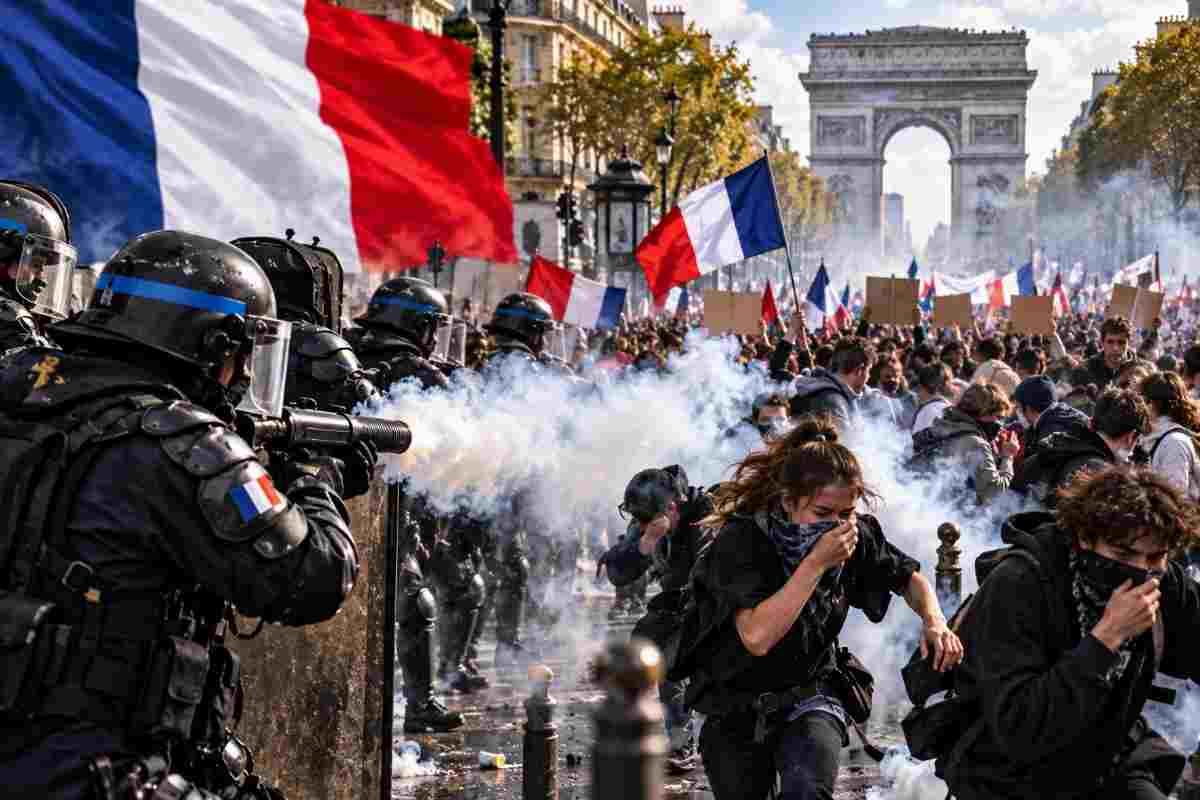
France’s nationwide student demonstrations have intensified, with protesters demanding better-funded schools while clashes in several cities have led police to deploy tear gas and other crowd-control measures.
Tens of thousands of students, teachers, parents and supporters took to the streets across France on Tuesday as a growing movement over the state of the country’s education system entered its biggest day of demonstrations.
The protests, which began in the Paris region in September, have spread nation..2027wide. Demonstrators are demanding more teachers, better-maintained school buildings and additional resources, while some rallies have descended into clashes with police. In Strasbourg, Lyon and Rennes, police used tear gas after protesters threw projectiles and fires were reported in the streets.
France’s Interior Ministry said around 86,000 people had joined demonstrations across the country by Tuesday, with as many as 40,000 more expected to attend the main Paris demonstration.
Students Demand Better Conditions in Schools
The movement has been driven primarily by concerns over deteriorating conditions in French high schools.
Students and teachers have complained about overcrowded classrooms, teacher shortages, missing staff and ageing school buildings. Some schools have also struggled with infrastructure problems and uncomfortable conditions during periods of high temperatures.
The protests began in the Paris suburb of Créteil in September before spreading to other parts of the country.
On Tuesday, the national high-school students’ union said around 1,800 of France’s 3,700 high schools had been blockaded or closed for the day. Government figures and union estimates differ on the exact number of affected schools.
Police Deploy Tear Gas as Clashes Spread
Most demonstrations have remained peaceful, but several cities have witnessed confrontations between protesters and police.
In Strasbourg, Lyon and Rennes, police fired tear gas as some protesters threw objects and set fires. Police have also used other riot-control equipment during previous confrontations.
Authorities say such measures are being used to prevent violence and protect public property and people. Interior Minister Laurent Nuñez has defended the police response, saying officers are acting against violence rather than peaceful student demonstrations.
Rights groups and unions, however, have accused police of using excessive force and have called for investigations into incidents involving young protesters.
Serious Injuries Raise Questions Over Police Tactics
The debate over policing intensified after a 15-year-old student suffered severe injuries during clashes in northern France on Monday.
French authorities said the teenager lost his hand after a grenade exploded during the confrontation. The precise circumstances are under investigation, including whether the device was picked up by the student or landed directly on him.
Another teenager was seriously injured during an earlier protest after being struck in the face by a police-fired tear-gas grenade. French reporting said the use of the weapon in that manner was contrary to guidelines governing its deployment.
The incidents have intensified criticism from human-rights groups, while authorities have also reported injuries among police officers.
Thousands Arrested Since Protests Began
The scale of the unrest has prompted a significant police response.
The Interior Ministry said approximately 6,100 people had been arrested since the protests began, with the majority under the age of 18. The Justice Ministry said more than 1,800 people were facing prosecution, including 1,483 minors.
Prime Minister Sébastien Lecornu has called for the government to respond to students’ concerns while maintaining that violence and destruction cannot be tolerated.
Government officials have also warned that some individuals may be exploiting the student movement to provoke wider unrest.
Government Promises Action on Education
The government has begun considering measures aimed at addressing some of the students’ demands.
Lecornu has instructed ministers to develop proposals on school conditions, including repairing ageing campuses and addressing shortages of teaching staff.
Officials are also examining issues such as overcrowded classrooms, the length of the school day and the availability of school services.
However, the government’s ability to provide significant new funding is complicated by France’s wider budgetary difficulties and pressure to reduce public spending.
Protests Become a Wider Political Issue
The demonstrations have developed into a broader political challenge for the French government.
The protests come ahead of France’s 2027 presidential election and have provided an outlet for wider frustration over public services, inequality and government spending priorities.
While the original movement was focused primarily on education, unions, parents and political groups have increasingly joined demonstrations.
Students involved in the protests have nevertheless stressed that their immediate demands centre on improving schools and ensuring they have adequate resources for their education.
Government Faces Pressure to De-escalate
The government now faces the difficult task of balancing public-order concerns with demands from students and teachers.
Police have been instructed to maintain order around schools and demonstrations, while internal investigations have been opened into allegations of excessive force. The Interior Ministry has said several investigations are examining police conduct during the unrest.
For protesters, the response has become part of the wider dispute, with some arguing that heavy-handed policing is distracting from the original education-related demands.
What Happens Next?
Further demonstrations are expected as student groups, teachers and unions call for the government to provide concrete commitments on education funding and school conditions.
Authorities will also continue monitoring demonstrations for violence, particularly around schools where blockades have disrupted classes.
The government’s response over the coming days could determine whether the movement begins to lose momentum or develops into a broader national protest over public spending and social policy.
Conclusion
France is facing a rapidly expanding wave of school protests, with tens of thousands taking part in demonstrations demanding better educational resources and improved school conditions.
While many rallies have remained peaceful, clashes in several cities have resulted in police using tear gas and other crowd-control measures. Serious injuries to young protesters have also intensified scrutiny of police tactics.
The government has promised to examine students’ concerns, but with France facing significant budgetary pressures, finding the money for major improvements could prove difficult. The protests therefore represent not only an education dispute but a growing test of how the government responds to demands for greater investment in public services.