

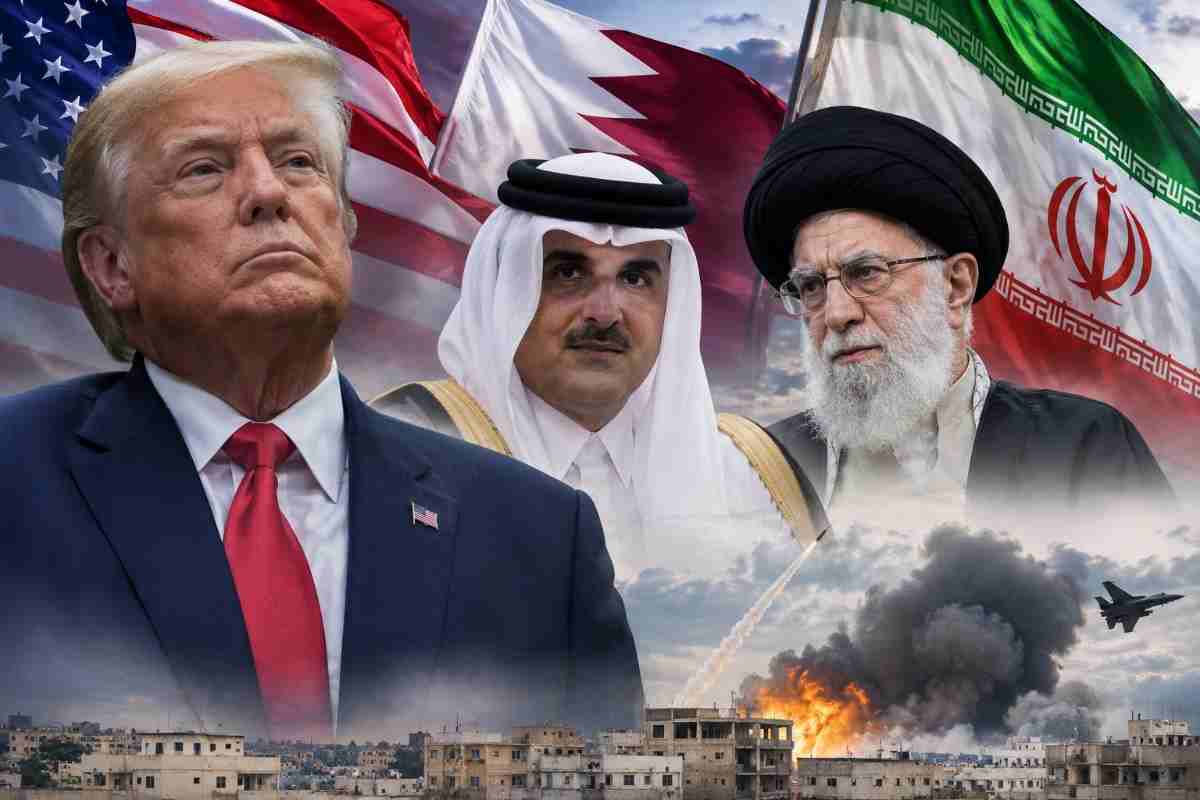
US President Donald Trump is set to hold talks with Qatar’s Prime Minister Sheikh Mohammed bin Abdulrahman Al-Thani as diplomatic efforts intensify, but disagreements between Washington and Tehran continue to make an immediate peace agreement unlikely.
US President Donald Trump is scheduled to meet Qatar’s Prime Minister Sheikh Mohammed bin Abdulrahman Al-Thani in Washington on Monday, November 9, as efforts to bring an end to the ongoing war with Iran gather momentum.
Qatar has played a central role in facilitating indirect communication between the United States and Iran since the conflict began. However, despite renewed diplomatic activity, officials in Washington and the Gulf region remain doubtful that a comprehensive agreement can be reached in the immediate future.
The meeting comes more than eight months after the United States and Israel launched military operations against Iran on February 28. The conflict has expanded across the region, disrupted energy supplies and raised concerns about the security of international shipping routes.
Qatar Steps Up Diplomatic Efforts
Sheikh Mohammed bin Abdulrahman Al-Thani, who serves as both Qatar’s prime minister and foreign minister, is expected to meet Trump and Vice President JD Vance during his visit to Washington.
The Qatari leader travelled to Tehran last week as part of efforts to narrow differences between the two sides. Doha has been conveying proposals and messages between Washington and Tehran while exploring possible arrangements for a ceasefire.
Vice President Vance is also expected to hold separate discussions with Al-Thani. He previously played a leading role in negotiations surrounding a short-lived truce in June.
According to Reuters, Qatar and other regional countries are continuing diplomatic engagement in an attempt to find common ground on the terms for ending the conflict.
Iran’s Proposal Faces Strong Opposition From Washington
One of the biggest obstacles remains the disagreement over the conditions required to stop the fighting.
Iran’s proposal reportedly calls for the United States to end its naval blockade of Iranian ports, lift some economic sanctions and halt its bombing campaign. In return, Tehran would stop its blockade of the Strait of Hormuz.
Discussions on Iran’s nuclear programme and additional sanctions would take place at a later stage.
Iran has argued that its proposal offers a practical starting point for negotiations and could be implemented through a short, two-day process.
However, the Trump administration has rejected the conditions.
US Secretary of State Marco Rubio said on Sunday that the Iranian demands were unacceptable and described them as unrealistic. He also cautioned that negotiations had not reached a stage where a major diplomatic breakthrough could be expected.
Iranian Foreign Ministry spokesperson Esmaeil Baghaei defended Tehran’s position on Monday, describing the proposal as the most reasonable offer currently available.
The opposing positions suggest that both governments remain far apart on the fundamental terms of a settlement.
Midterm Election Results Add Pressure on Trump
The diplomatic push is also taking place against a difficult political backdrop for the Trump administration.
The Republican Party’s poor performance in last week’s US midterm elections has intensified scrutiny of the president’s handling of the Iran conflict.
Some senior Republicans, including Vice President Vance, have faced questions about the political and economic consequences of the war. Rising energy costs and uncertainty surrounding the conflict have become important domestic concerns.
Although Trump has indicated that he does not want to escalate military operations further, his administration has continued to insist that any agreement must address Washington’s security concerns.
The political pressure could encourage the White House to explore diplomatic options more seriously. However, it does not necessarily mean the United States is prepared to accept Iran’s current conditions.
Military Tensions Continue Across the Region
While diplomatic discussions are underway, military activity has not stopped.
Iranian state media reported that the United States carried out overnight strikes on Qeshm Island. A local official said the reported attacks did not damage vital infrastructure or public services. Washington has not publicly confirmed the reported operation.
Meanwhile, attacks involving commercial vessels have continued in the Gulf and the strategically important Strait of Hormuz.
The waterway is one of the world’s most important routes for international energy shipments. Continued disruption has raised concerns about oil and gas supplies, shipping costs and the wider global economy.
The conflict has also affected other parts of the Middle East. Iran has carried out attacks against Gulf Arab countries, while the Iran-aligned Houthi movement in Yemen has claimed responsibility for an attack on a building associated with Saudi oil company Aramco in Riyadh. Saudi authorities reported damage to a building but did not publicly assign responsibility for the incident.
These developments underline the difficulty of securing a ceasefire that can hold across multiple fronts.
Gulf Officials Warn of Prolonged Uncertainty
Regional officials have also expressed concern about the possibility of a prolonged conflict.
Anwar Gargash, a senior United Arab Emirates official, said a comprehensive political settlement between Washington and Tehran appeared difficult to achieve.
He warned that the region should prepare for an extended period of uncertainty in which neither a decisive resolution nor a stable regional order could be taken for granted.
His remarks reflect growing concerns among Gulf countries about the economic and security consequences of continued confrontation.
A Diplomatic Opening, But No Clear Path to Peace
Trump’s meeting with Qatar’s prime minister represents another important diplomatic effort to reduce tensions between the United States and Iran. Qatar’s position as an intermediary gives it an opportunity to communicate proposals and encourage both sides to reconsider their positions.
However, major disagreements remain over sanctions, maritime restrictions, military operations and Iran’s nuclear programme.
For now, neither side appears ready to make the concessions required for a comprehensive settlement. Although diplomatic channels remain active, continued military incidents and conflicting demands are limiting the prospects of an immediate breakthrough.
The coming discussions in Washington may help clarify whether a temporary ceasefire is possible. But with fighting continuing and trust between the two governments deeply strained, ending the Iran war remains a difficult challenge.
Source: Reuters, with additional reporting from international news outlets.