

By CK Sharma
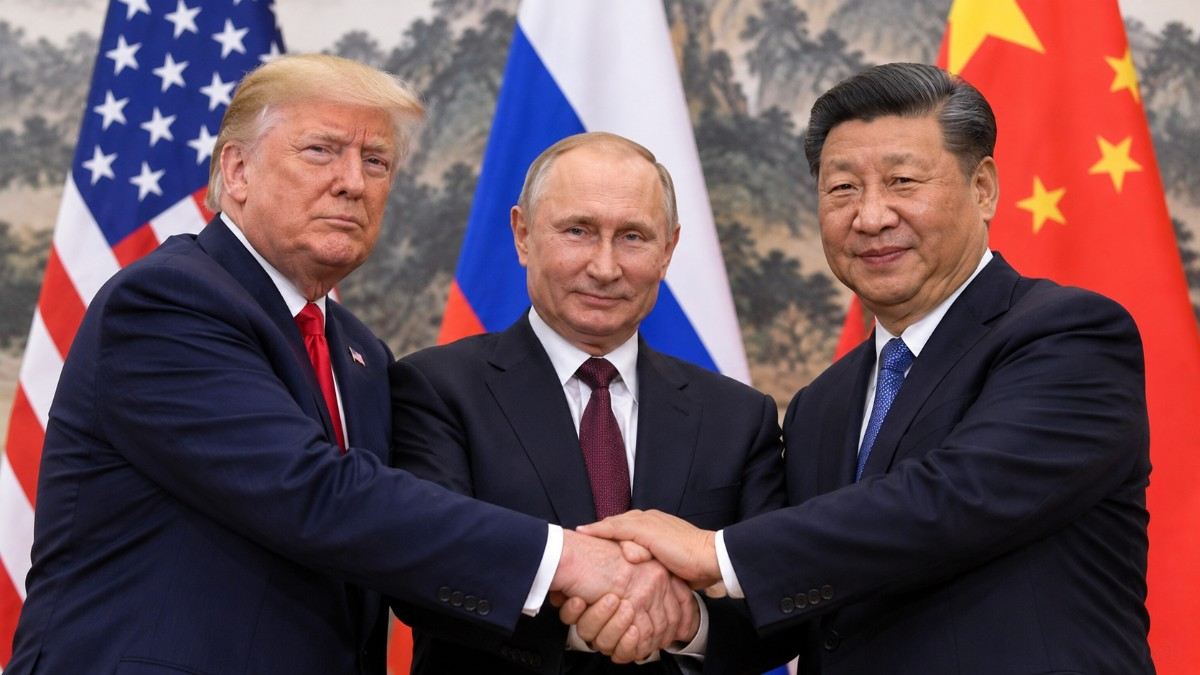
The meeting between the USA, China and Russia is significant as all three countries hold great power, both militarily and economically, and can therefore greatly influence decisions in other countries.
This meeting, held in Shenzhen on the 19 th November, has been described as a historic event. Trump, Xi and Putin have jointly declared that they do not support nuclear warfare and that they intend to work collaboratively on international security.
Despite the significance of these statements, it is important to consider if this meeting actually brings any tangible benefits to increase stability in our increasingly divided world.
Symbolic progress only achieved
Historic Meeting with unanswered questions
The meeting, lasting three days, took place between leaders of countries which have often been on opposing sides in international issues.
The statement released during the meeting encourages reform within the UN, collaboration on energy issues, and dialogue to reduce the risks of nuclear war. All three leaders stated that “nuclear war should never happen”.
This is of great importance, as the impact of a nuclear war would be vast, affecting many countries.
However, there was no indication of timetables for talks on nuclear arms control. Furthermore, two of the biggest conflicts currently present in the world, the Russian invasion of Ukraine, and the conflict between the USA and Iran, were not mentioned in the declaration.
Significance of words versus tangible political progress
While it is agreed that nuclear war should be avoided, achieving agreements on reducing arms, military commitments and addressing the issues causing global tensions is very different.
New Diplomatic Opportunity
For Putin
For Putin, this meeting is extremely significant.
Since undertaking a full invasion of Ukraine in February 2022, Russia has faced widespread western sanctions. Relations with most western governments are heavily strained. In addition, Putin has been issued with an arrest warrant by the International Criminal Court (ICC) due to alleged war crimes committed in Ukraine. However, Moscow have denied these claims.
The opportunity for Putin to meet the leaders of the USA and China shows that Russia is still seen as an influential country in the world.
This should not be underestimated.
Being diplomatically isolated includes not only economic sanctions, but also a lack of access to influential people, international recognition and the ability to play a role in discussions on the future of the world.
Putin’s presence in Shenzhen demonstrates that despite pressure from western nations, Russia still has access to some of the most influential political figures in the world.
It remains to be seen if this meeting had any real diplomatic benefit for Russia however.
China has its own motivations
For Xi Jingping, this meeting allows China to be positioned as a key player in international peace and security.
Beijing has long wanted to take a greater role in global governance, and has expressed concerns that western countries have too much influence in international bodies.
The meeting has allowed China to demonstrate that it can bring different players together.
However China faces complex challenges.
Despite the fact that relations between China and Russia are very strong (especially with regard to strategic relations), tensions in trade, technology, Taiwan and regional security still exist. However, Beijing maintains a very close strategic relationship with Moscow.
To manage these complex relationships, a very delicate balance must be maintained. China has very good economic reasons to maintain a stable relationship with Washington. However, it also has a key relationship with Russia as part of its broader foreign policy.
Therefore, Xi faces a challenge to increase China’s diplomatic status, without getting pulled into conflicts which could be damaging to its economic interests.
The issue with Ukraine
A large issue left unanswered by the summit is the Russian invasion of Ukraine.
This conflict has caused tensions in European security, international energy markets, and relations between Moscow and western governments.
Although Ukraine was not officially represented in the trilateral meeting, this issue was widely discussed with regards to international diplomacy.
Following the summit, Kushner has commented that Russia may be okay with Ukraine obtaining similar security assurances to NATO members. However, this statement does not indicate any agreement between Russia and Kyiv.
The security of Ukraine cannot be determined by big powers alone.
Kyiv will require a solution which protects its territorial integrity, national security and prevents further invasions. In addition, European nations have clearly indicated that they wish to play a role in deciding the future of security in Europe.
Indeed, this was reflected in responses from European leaders in Berlin. As Chancellor Friedrich Merz stated, “decisions must not be made over our heads”.
It is clear that, if countries not directly affected by the decision-making process are excluded from diplomacy between major powers, a sustainable solution may not be reached.
A difficult balancing act for the USA and allies
Trump is very comfortable in direct diplomacy with both Putin and Xi. This is very much a ‘personal’ approach to foreign policy.
Those supporting Trump’s approach could argue that direct communication between the leaders can provide opportunities which may otherwise be impossible to achieve. Even in cases where countries have conflicting relationships, some form of communication could allow solutions to be discussed.
This argument holds some weight.
However, it may cause concern for the USA’s allies. The increased engagement with Moscow and Beijing may have an impact on current security arrangements.
For European nations, it is concerning to see if the diplomatic actions undertaken by the USA will actually increase the chances of peace in Ukraine, or if it causes uncertainty around the commitments made to date.
The same concern exists in Indo-Pacific nations, as the security relationships held by the USA in these regions are key to maintaining stability.
Whilst diplomatic engagement can be very useful, it is important that allies feel confident that their interests are being considered.
Significance for other countries
As well as affecting the USA, China and Russia, this summit carries many implications for smaller countries.
Many small countries rely on stable and predictable international conditions to ensure trade, investment, energy supplies and security.
When major powers are in conflict, the consequences are often felt by other countries. Restrictions on trade can cause problems in supply chains, tension in military relations can cause rising energy prices, and international conflict can put pressure on countries wishing to remain neutral.
This is critically important for developing economies, which rely on international trade and cheap energy.
India has long had an interest in maintaining positive relations with all three countries, but also wants to protect strategic interests.
The summit is significant for New Delhi and other middle powers as it demonstrates that decisions made by major powers can affect countries not even in attendance.
Only the beginning
Although the meeting in Shenzhen should not be dismissed as unproductive, as it was a real meeting between three leaders with very different interests, leading to a declaration on nuclear issues, it does not yet represent great success.
Whether real progress is made in reducing nuclear risks, arms control in the USA and Russia, or whether the diplomacy can lead to a resolution in Ukraine, and whether countries directly affected by these issues can play a meaningful role, will be key indicators of success.
Ultimately, many peaceful international declarations have been made, and the usefulness of these depends on whether the relevant decisions are actually made.
While this meeting in Shenzhen has created new diplomatic channels between the countries, it has not resolved the conflicts that prompted the meeting to take place in the first place.
The challenge for Trump, Putin, and Xi now lies in demonstrating that conversations between them can lead to outcomes which will make the world a safer place for everyone.
CK SHARMA TORONTO ( EDITOR IN CHIEF )