
Opening Summary
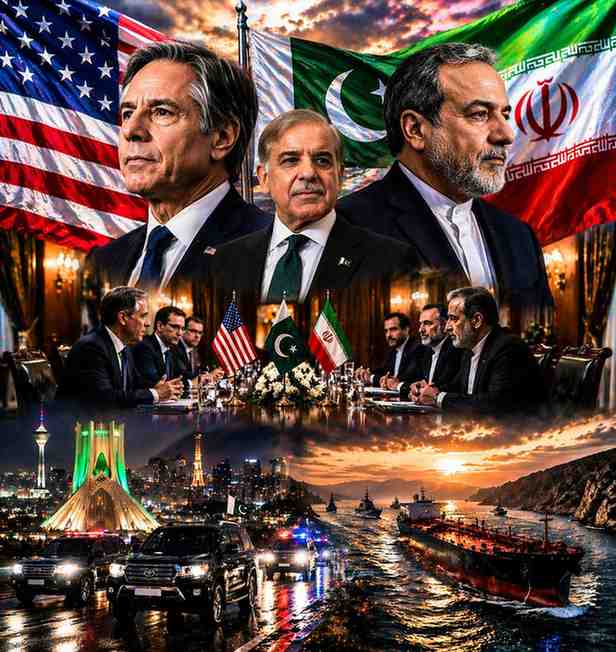
The United States and Iran are preparing for a new round of peace talks as Pakistani mediators arrive in Tehran to help revive stalled negotiations. The renewed diplomatic push comes amid a fragile ceasefire and ongoing tensions in the region. The development matters globally as it could determine whether the conflict moves toward resolution or escalates further.
Background and Context
Recent peace talks between the United States and Iran in Islamabad ended without a final agreement despite extended negotiations. Key disagreements remain over Iran’s nuclear program, sanctions relief, and control of the Strait of Hormuz.
Pakistan has emerged as a key mediator in the conflict, hosting earlier talks and now working to bring both sides back to the negotiating table.
The ongoing conflict has caused significant disruption, particularly in global energy markets due to instability in the Strait of Hormuz, a major oil transit route.
A temporary ceasefire is currently in place, but it remains fragile and dependent on continued diplomatic progress.
Latest Developments
A high-level Pakistani delegation has arrived in Tehran to facilitate further discussions between the United States and Iran.
Officials indicate that both sides are continuing to exchange messages through mediators, with efforts focused on arranging the next round of formal negotiations.
U.S. President Donald Trump has expressed cautious optimism that progress can be made, though major differences remain unresolved.
Diplomatic sources suggest that another round of talks could take place soon, as mediators attempt to bridge gaps between the two sides.
While some progress is being reported, no formal agreement has yet been reached.
Why This Matters
The arrival of Pakistani mediators signals renewed momentum in diplomatic efforts after earlier talks failed.
If successful, the next round of negotiations could lead to an extension of the ceasefire and potentially a broader peace agreement.
For the global economy, stability in the Middle East is critical, particularly for energy markets affected by disruptions in oil supply routes.
The situation also highlights the growing role of regional mediators in resolving major international conflicts.
What Happens Next
Diplomatic efforts will now focus on organizing and conducting the next round of talks between the United States and Iran.
Mediators will work to narrow differences on key issues such as nuclear policy, sanctions, and maritime security.
The current ceasefire may be extended if progress is made, though uncertainty remains.
Global leaders and markets will continue to monitor developments closely.
Conclusion
With Pakistani mediators arriving in Tehran, efforts to restart U.S.-Iran peace talks are gaining momentum. While challenges remain, the renewed diplomatic push offers a possible path toward de-escalation.
The coming days will be crucial in determining whether negotiations succeed or if tensions escalate again in an already volatile region.