

Opening Summary
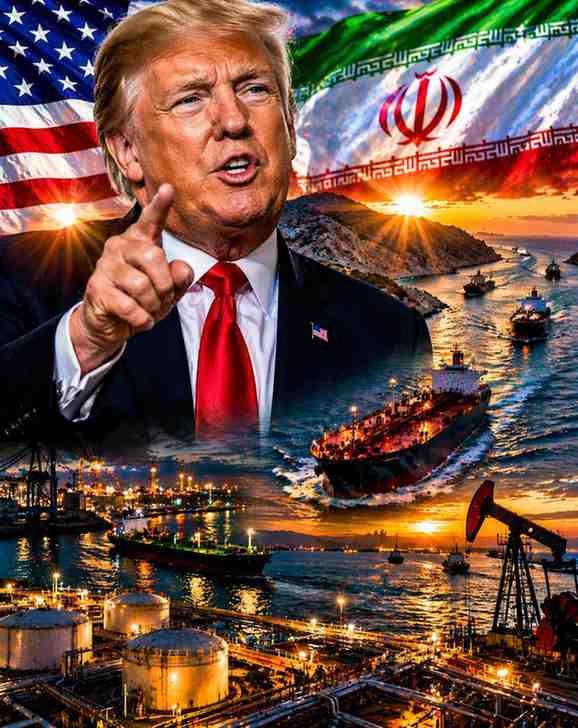
U.S. President Donald Trump has claimed that Iran has agreed to “never” close the Strait of Hormuz again, calling it a major breakthrough during ongoing ceasefire efforts. The statement comes as tensions ease slightly following weeks of conflict that disrupted global oil supply. The development matters globally as the strait is one of the world’s most critical energy routes.
Background and Context
The Strait of Hormuz is a vital maritime passage connecting the Persian Gulf to global markets, with a large portion of the world’s oil supply passing through it daily.
The ongoing conflict between Iran, the United States, and Israel led to severe disruptions in the strait, including threats, restrictions, and reduced tanker movement. This caused sharp increases in global oil prices and raised concerns about supply shortages.
A temporary ceasefire was recently put in place to reduce hostilities and stabilize the region, with reopening the strait being one of the key conditions.
Diplomatic efforts have been ongoing through intermediaries to reach a broader agreement between the United States and Iran.
Latest Developments
President Donald Trump said that Iran has agreed to never close the Strait of Hormuz again and that it “will no longer be used as a weapon against the world.”
The statement followed Iran’s earlier announcement that the strait would be open to commercial shipping during the ceasefire period.
Trump described the development as a major step toward stability and suggested that broader negotiations with Iran are progressing.
However, Iranian officials have not publicly confirmed any permanent commitment to keep the strait open beyond the current ceasefire.
Reports indicate that while shipping has resumed, some restrictions and coordination requirements may still apply.
Why This Matters
A permanent guarantee that the Strait of Hormuz will remain open would significantly reduce risks to global energy supply.
Even temporary reopening has already impacted global markets, with oil prices falling as fears of disruption eased.
The claim also signals potential progress in negotiations between the United States and Iran, though differences remain.
For countries like Canada and others dependent on stable oil markets, developments in the strait directly affect fuel prices and economic stability.
What Happens Next
Diplomatic efforts are expected to continue to turn the temporary ceasefire into a longer-term agreement.
It remains to be seen whether Iran will formally confirm a permanent commitment regarding the strait.
Shipping activity and energy markets will continue to be closely monitored as the situation evolves.
Any breakdown in talks could quickly reverse progress and lead to renewed disruptions.
Conclusion
President Donald Trump’s claim that Iran has agreed to never close the Strait of Hormuz again marks a potentially significant development in the ongoing conflict.
While the reopening of the strait offers immediate relief to global markets, uncertainty remains over whether this commitment will hold beyond the current ceasefire.