

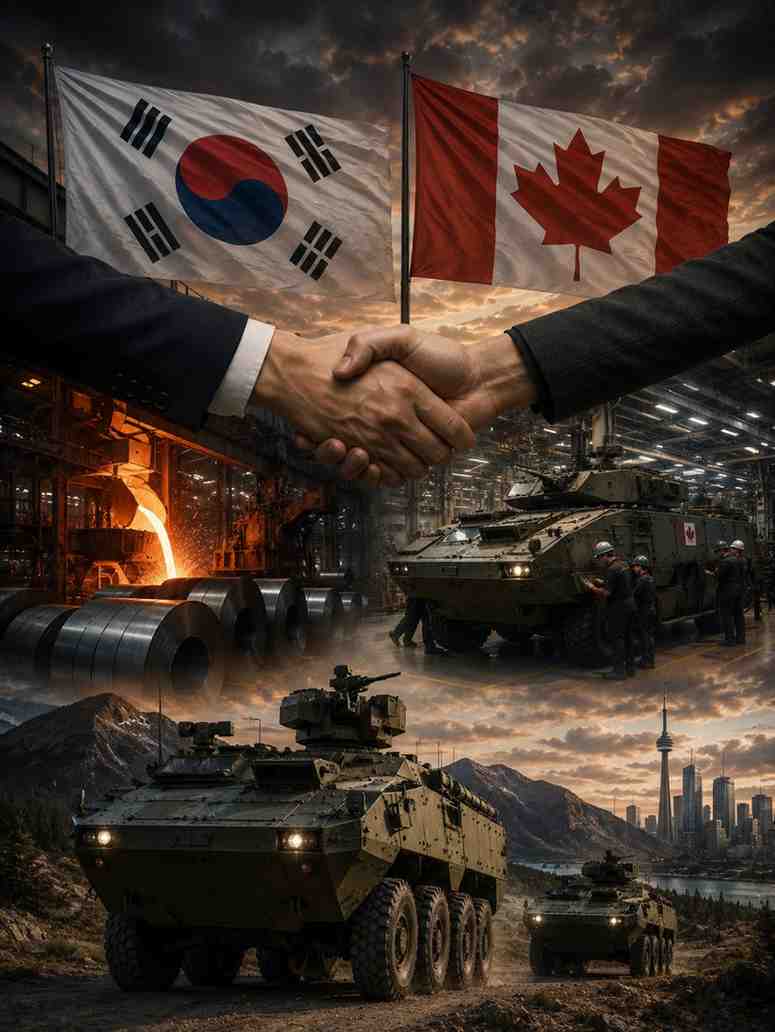
South Korean defence company Hanwha Ocean says it plans to use Canadian-made steel from Algoma Steel to build military vehicles in Canada if it secures major defence contracts from Ottawa. The move is part of a broader effort to strengthen domestic manufacturing, defence production, and supply chains. The development matters nationally as Canada weighs major military procurement decisions and seeks to boost industrial investment.
Background and Context
Canada is currently evaluating proposals for major defence projects, including its future submarine fleet and military modernization plans.
Hanwha has been actively expanding its presence in Canada, promoting partnerships with Canadian industries and offering domestic production commitments tied to future defence contracts.
At the same time, Ottawa has been placing greater emphasis on ensuring defence procurement generates Canadian jobs, industrial growth, and long-term economic benefits.
Algoma Steel, based in Sault Ste. Marie, Ontario, is one of Canada’s largest steel producers and has increasingly positioned itself as a supplier for defence, infrastructure, and advanced manufacturing projects.
Latest Developments
Hanwha announced plans to use Canadian labour, materials, and domestically produced steel, including products from Algoma Steel, for military vehicle manufacturing in Canada if its defence proposals are selected by the federal government.
The company has already signed agreements with Algoma Steel that include investments and commitments linked to future Canadian defence programs. Under a previously announced arrangement, Hanwha pledged up to CAD $345 million in support tied to Canadian steel production and defence supply chains.
Hanwha has also signaled interest in establishing military vehicle production capabilities in Canada through partnerships with Canadian manufacturers and suppliers.
Why This Matters
The proposal could create manufacturing jobs, strengthen Canada’s defence industry, and increase the use of Canadian-made materials in military projects.
For Algoma Steel, the partnership could provide long-term demand and support future industrial expansion.
The plan also aligns with growing pressure on defence contractors to deliver economic benefits inside Canada rather than relying heavily on foreign production.
What Happens Next
The proposal remains tied to upcoming Canadian defence procurement decisions, including submarine and military modernization projects.
Federal officials are expected to continue reviewing bids from international defence companies before making final selections.
Industry leaders and provincial governments will closely watch whether Hanwha’s investment commitments influence Ottawa’s decisions.
Conclusion
Hanwha’s plan to use Algoma Steel products for military vehicle production in Canada highlights growing efforts to link defence spending with domestic industrial growth.
As Canada moves closer to major procurement decisions, promises of jobs, investment, and Canadian manufacturing are likely to play a significant role in shaping the outcome.