

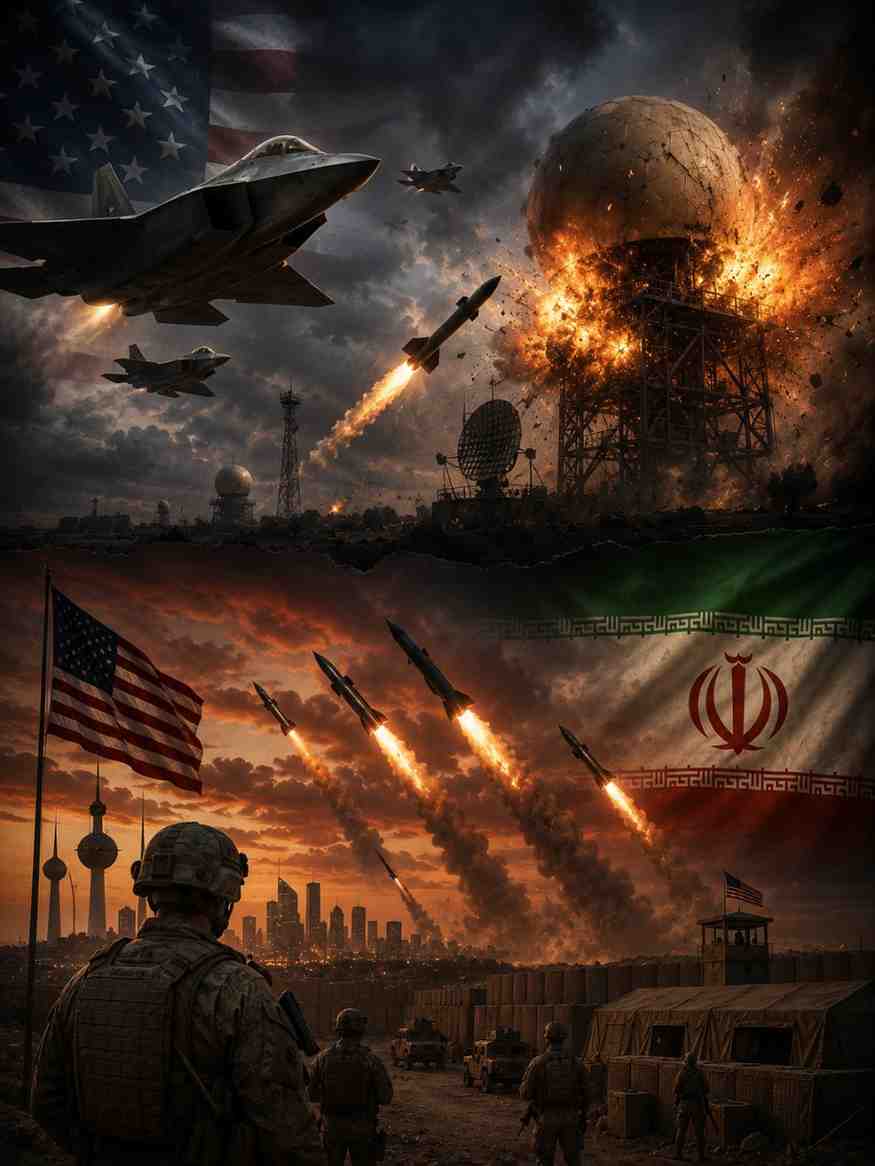
The United States says it carried out strikes on Iranian radar and drone-control facilities after Iran reportedly shot down an American drone, while Tehran claims it responded by targeting U.S. forces in Kuwait. The latest exchange marks another serious escalation despite ongoing ceasefire and peace negotiations. The development matters globally as tensions continue to threaten regional stability and energy security.
Background and Context
The United States and Iran have remained locked in a fragile standoff for months, with repeated military incidents occurring even as diplomats attempt to negotiate a broader peace agreement.
A major source of tension remains the Strait of Hormuz, one of the world’s most important shipping routes for global oil exports.
Both countries have repeatedly accused each other of violating ceasefire understandings through military operations, drone activity, and naval deployments.
Latest Developments
According to U.S. Central Command, American forces conducted what were described as “self-defence strikes” against Iranian radar systems and drone command-and-control facilities located in Goruk and on Qeshm Island. The U.S. said the operation was carried out after Iran shot down an MQ-1 drone that Washington says was operating in international waters.
Iranian officials later said they responded by targeting American military personnel and facilities in Kuwait with missiles and drones. Kuwaiti and U.S. defence systems reportedly intercepted incoming projectiles before they reached their targets.
Iran’s Revolutionary Guard warned that further U.S. military actions would face stronger retaliation, while American officials said their forces remain prepared to defend military assets and shipping routes in the region.
Why This Matters
The latest military exchange highlights how unstable the current ceasefire remains.
Any direct confrontation involving U.S. forces in Kuwait raises the risk of a broader regional conflict involving Gulf states and international allies.
The situation is also being closely watched by global energy markets because further instability could disrupt shipping and oil exports through the Strait of Hormuz.
What Happens Next
Diplomatic mediators are expected to continue urgent efforts to prevent the situation from escalating further.
Military forces across the Gulf region are likely to remain on heightened alert as both Washington and Tehran assess their next steps.
Global governments and financial markets will closely monitor whether negotiations can survive the latest round of military exchanges.
Conclusion
The U.S. strikes on Iranian radar facilities and Iran’s reported targeting of American forces in Kuwait mark another dangerous escalation in an already fragile regional crisis.
With military tensions rising alongside diplomatic negotiations, the coming days could prove critical for both regional security and global stability.