

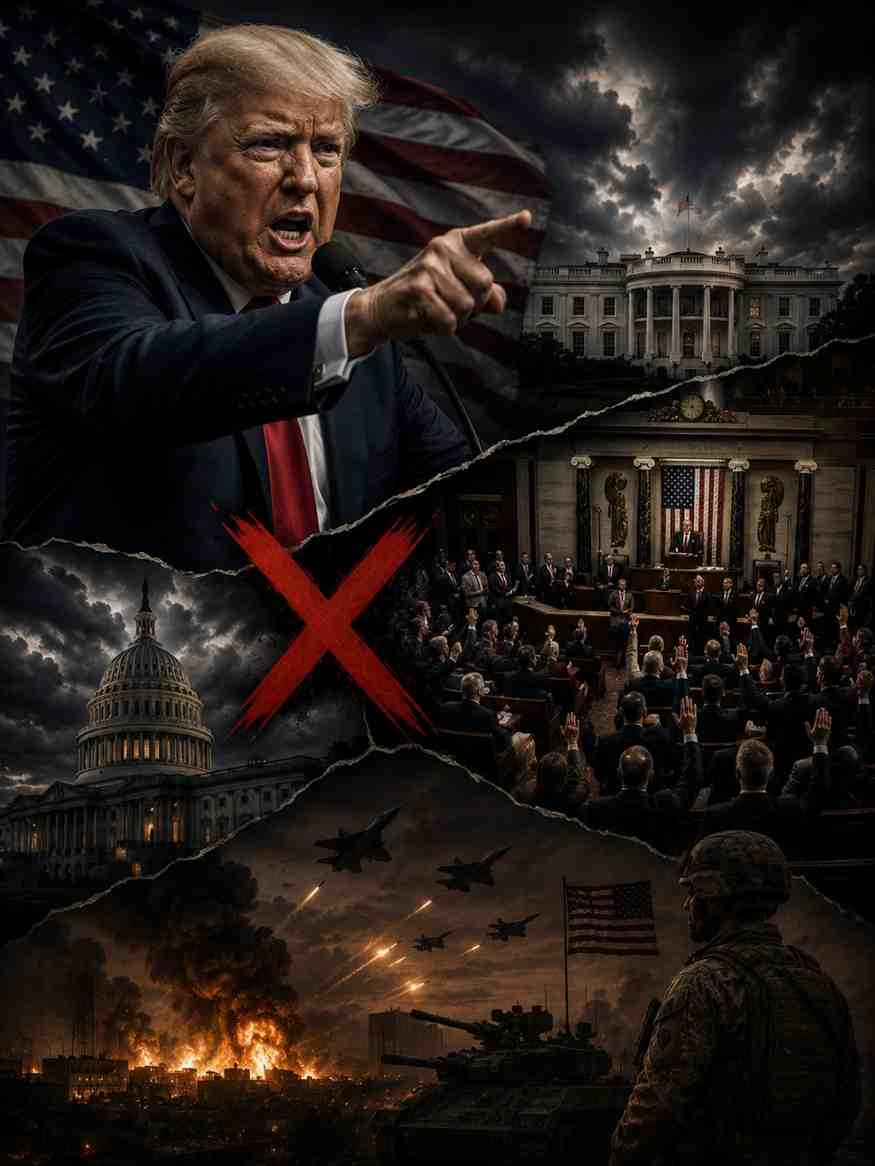
U.S. President Donald Trump has sharply criticized lawmakers after the House of Representatives approved a resolution aimed at limiting his authority to continue military operations against Iran without congressional approval. Trump called the vote “unpatriotic” and accused opponents of undermining ongoing negotiations and national security efforts. The development matters internationally as it highlights growing political divisions in Washington over the Iran conflict.
Background and Context
The debate centers on the War Powers Resolution, a law intended to limit a president’s ability to engage in prolonged military action without authorization from Congress.
The U.S.-Iran conflict has been ongoing for several months, with military strikes, retaliatory attacks, and diplomatic negotiations taking place simultaneously.
Lawmakers from both parties have increasingly questioned whether the administration should continue military operations without explicit congressional approval.
Latest Developments
The House of Representatives passed a war powers resolution by a narrow margin, with a small number of Republicans joining Democrats in support of the measure. The resolution seeks to require congressional authorization for continued military action against Iran.
In response, Trump condemned the vote, calling it “unpatriotic” and arguing that it weakens the United States during sensitive negotiations and ongoing security operations. He also criticized Republican lawmakers who supported the measure, accusing them of political grandstanding.
The White House maintains that the president has the authority to conduct military operations necessary to protect American interests and forces in the region.
Why This Matters
The vote represents one of the most significant congressional challenges to Trump’s handling of the Iran conflict.
It also highlights growing bipartisan concern about presidential war powers and the role Congress should play in authorizing military action.
The dispute could influence future U.S. foreign policy decisions and shape ongoing negotiations related to Iran and regional security.
What Happens Next
The measure is expected to face further debate in the Senate, where lawmakers are also considering limits on presidential war powers related to Iran.
The White House is likely to continue opposing the resolution while defending its military and diplomatic strategy.
Political tensions over the issue are expected to remain high as negotiations with Iran continue.
Conclusion
Donald Trump’s reaction to the House vote underscores the deep divisions in Washington over the Iran conflict and presidential war powers.
As Congress and the White House continue to clash over military authority, the outcome could have major implications for U.S. foreign policy and the future direction of the conflict.