

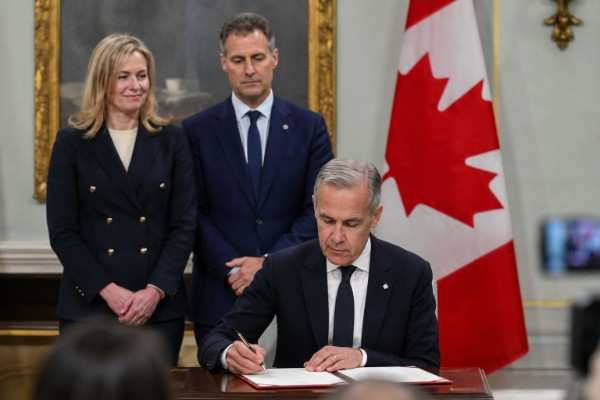
Prime Minister Names Principal Secretary Tom Pitfield and Former Conservative MP Ed Fast as Senators
Summary
Canadian Prime Minister Mark Carney has announced the appointment of his principal secretary, Tom Pitfield, and former Conservative Member of Parliament Ed Fast to the Senate, marking one of the most significant changes to the upper chamber since taking office. The appointments also signal a major shift in Carney’s approach to Senate nominations, as the government moves away from the previous non-partisan appointment process in favour of a more openly political model.
The decision has sparked debate across Canada’s political landscape, with supporters describing it as a pragmatic move to strengthen legislative experience in the Senate, while critics argue it could reshape the chamber’s traditionally independent character.
Key Appointments to the Senate
Among the new appointments is Tom Pitfield, one of Prime Minister Carney’s closest advisers and principal secretary. Pitfield has played a central role in shaping the government’s economic, innovation, and public policy agenda and is widely regarded as one of the Prime Minister’s most trusted strategists.
Joining him is former Conservative MP Ed Fast, who previously served as Canada’s Minister of International Trade and represented the riding of Abbotsford for many years. His appointment is viewed as an effort to bring experienced voices from across the political spectrum into the Senate.
The appointments fill some of the growing vacancies in the upper chamber and are expected to strengthen the government’s legislative capacity.
Change in Senate Appointment Policy
The announcement also marks a notable departure from the independent Senate appointment process introduced by former Prime Minister Justin Trudeau. Under Carney’s new approach, political experience and public service are expected to play a greater role in future nominations.
Government officials argue that experienced political leaders can contribute valuable expertise to legislative review while ensuring the Senate remains effective in examining complex national issues. The move reflects Carney’s broader effort to reshape key federal institutions as part of his governing agenda.
Political Reactions
The appointments have generated mixed reactions across Canada’s political landscape. Supporters say naming both a senior Liberal adviser and a respected former Conservative MP demonstrates a willingness to include experienced individuals with different political backgrounds.
Opposition critics, however, have questioned the decision to move away from the non-partisan selection model, arguing that the Senate’s independence should remain protected. Political observers expect the appointments to become a topic of discussion as Parliament resumes its legislative agenda.
Analysts note that including a former Conservative cabinet minister could help encourage greater bipartisan cooperation on major national issues despite ongoing political differences.
Impact on Parliament
The Senate plays an important role in reviewing legislation passed by the House of Commons, conducting committee studies, and proposing amendments to federal laws. The addition of experienced political figures is expected to strengthen debate on issues ranging from economic policy and national security to trade and constitutional matters.
Prime Minister Carney has indicated that his government intends to pursue an ambitious legislative program in the coming months, making Senate support increasingly important for advancing key priorities. The latest appointments may also influence future discussions about the long-term role and structure of Canada’s upper chamber.
Conclusion
Prime Minister Mark Carney’s appointment of senior adviser Tom Pitfield and former Conservative MP Ed Fast to the Senate marks a significant political and institutional development. The move reflects a new direction for Senate appointments while bringing experienced political leadership into Canada’s upper chamber. As Parliament prepares for a busy legislative period, the appointments are expected to shape both the Senate’s future role and the broader political conversation surrounding federal governance.