

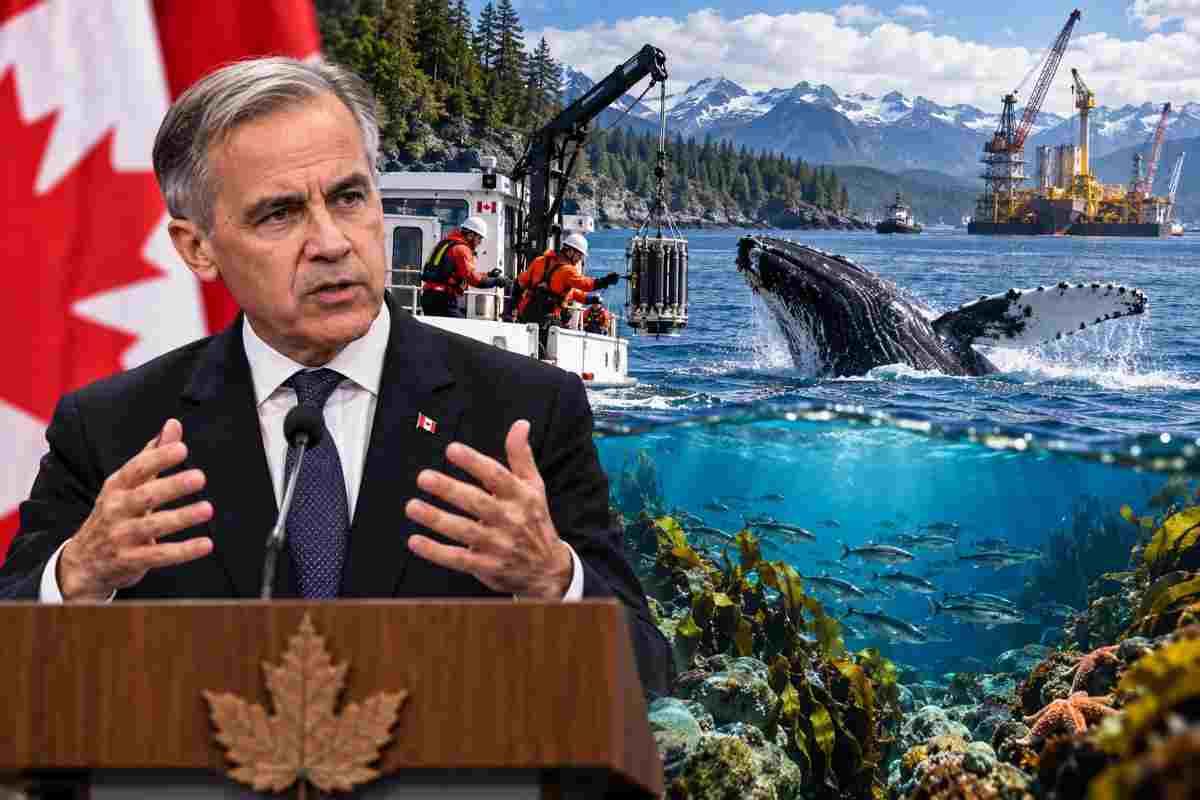
Canada is expanding marine monitoring, spill preparedness and conservation measures as major energy and port projects are expected to increase shipping activity along the West Coast.
Prime Minister Mark Carney has announced C$1.2 billion in new federal funding to strengthen protection of Canada’s oceans, improve marine safety and prepare coastal communities for increased shipping activity.
The announcement comes as Ottawa advances major infrastructure and energy projects on British Columbia’s coast, including expansion of the Port of Vancouver and the proposed Roberts Bank Terminal 2. The government says greater economic activity and marine traffic will increase pressure on coastal ecosystems, requiring stronger protection and emergency-response systems.
More Than C$740 Million for Ocean Conservation
The largest portion of the package—more than C$740 million over four years—will be directed toward strengthening ocean conservation and marine safety.
The funding will renew measures under Canada’s Oceans Protection Plan while expanding the Canadian Coast Guard’s ability to monitor marine traffic. It will also support stronger search-and-rescue capabilities and extend very-high-frequency radio and radar coverage in areas where it is currently limited.
Ottawa also plans to establish a national high-resolution nearshore weather forecasting system. The system is intended to provide more detailed, real-time information to improve responses to marine emergencies.
The government will also modernize marine safety and oversight systems, including inspection and certification processes.
New Measures to Protect Marine Life
Another C$136 million will be invested over four years specifically to protect marine mammals and reduce environmental risks.
The government plans to establish a national marine mammal oil-spill response plan, alongside training and equipment for local partners so they can respond more quickly if a spill occurs.
The funding will also support monitoring and mitigation of underwater noise in the Pacific, Arctic and Atlantic regions. Ottawa says it will work with vessel operators on technologies designed to reduce underwater noise, including quieter propellers, electric and hybrid motors and improvements to ship hulls.
An Arctic monitoring program will also be created to establish baseline information on underwater noise and assess possible mitigation measures.
Funding Linked to Indigenous Partnerships
The package includes C$186 million for the Northern Shelf Bioregion Reconciliation Framework Agreement.
The funding will support collaborative governance, conservation, waterway management, emergency preparedness and work on cumulative environmental effects in the Great Bear Sea region.
Ottawa also announced additional support for Indigenous-led stewardship and restoration of the Lower Fraser River Estuary.
The government says Indigenous and coastal communities will play an important role as Canada expands marine infrastructure and economic activity.
Major Projects Could Increase Marine Traffic
The timing of the announcement is closely connected to Canada’s plans for major projects on the West Coast.
Ottawa is considering a new pipeline to the British Columbia coast while also advancing expansion of the Port of Vancouver’s Roberts Bank Terminal 2. Other energy, LNG and resource-development projects could also contribute to higher shipping volumes.
The federal government says projected growth in marine shipping associated with these projects makes it necessary to expand marine safety, environmental protection and spill-response capacity.
Carney has described the approach as one in which Canada can build major infrastructure while strengthening environmental protections alongside that development.
Canada Expanding Its Ocean Strategy
The C$1.2-billion announcement forms part of a broader national ocean strategy being developed by the federal government.
Ottawa says the strategy will focus on three broad areas: protecting marine ecosystems, securing Canada’s waters and building the country’s ocean economy.
Canada has also committed to protecting 30% of its lands and waters by 2030. The government’s nature strategy aims to expand marine conservation while supporting Indigenous-led conservation initiatives and new marine protected areas.
At the United Nations General Assembly earlier this month, Carney also announced C$82 million over five years to strengthen Canada’s ocean-observation capabilities and support the Global Ocean Observing System.
Balancing Economic Development and Environmental Protection
The announcement highlights a challenge facing the federal government as it seeks to expand Canada’s export infrastructure while maintaining environmental safeguards.
Greater shipping activity can provide economic benefits through trade, energy exports and port investment, but it can also increase risks involving marine pollution, vessel traffic, underwater noise and impacts on marine species.
The government says the new investments are intended to strengthen the systems needed to manage those risks as Canada’s marine economy expands.
The package therefore links environmental protection directly with Canada’s broader infrastructure and trade strategy rather than treating conservation and economic development as separate initiatives.
What Comes Next?
Ottawa says additional elements of its national ocean strategy will be released in the coming months.
The government is also preparing to host the 12th Our Ocean Conference in Halifax in May 2027, where it plans to bring together governments, Indigenous leaders, scientists and coastal communities to discuss ocean governance and conservation.
Meanwhile, decisions surrounding major West Coast infrastructure projects will determine how quickly marine traffic could grow and how extensively the new protection measures will be required.
Conclusion
Prime Minister Mark Carney’s C$1.2-billion ocean investment comes at a significant moment for Canada’s West Coast, where Ottawa is pursuing major energy, trade and port projects that could bring more ships into Canadian waters.
The new funding will expand marine monitoring, emergency preparedness, conservation enforcement, spill response and protection for marine mammals. It also includes significant support for Indigenous-led conservation and regional partnerships.
For the federal government, the challenge now will be implementing these protections as Canada’s marine economy expands and major projects move through their respective approval and development stages.