

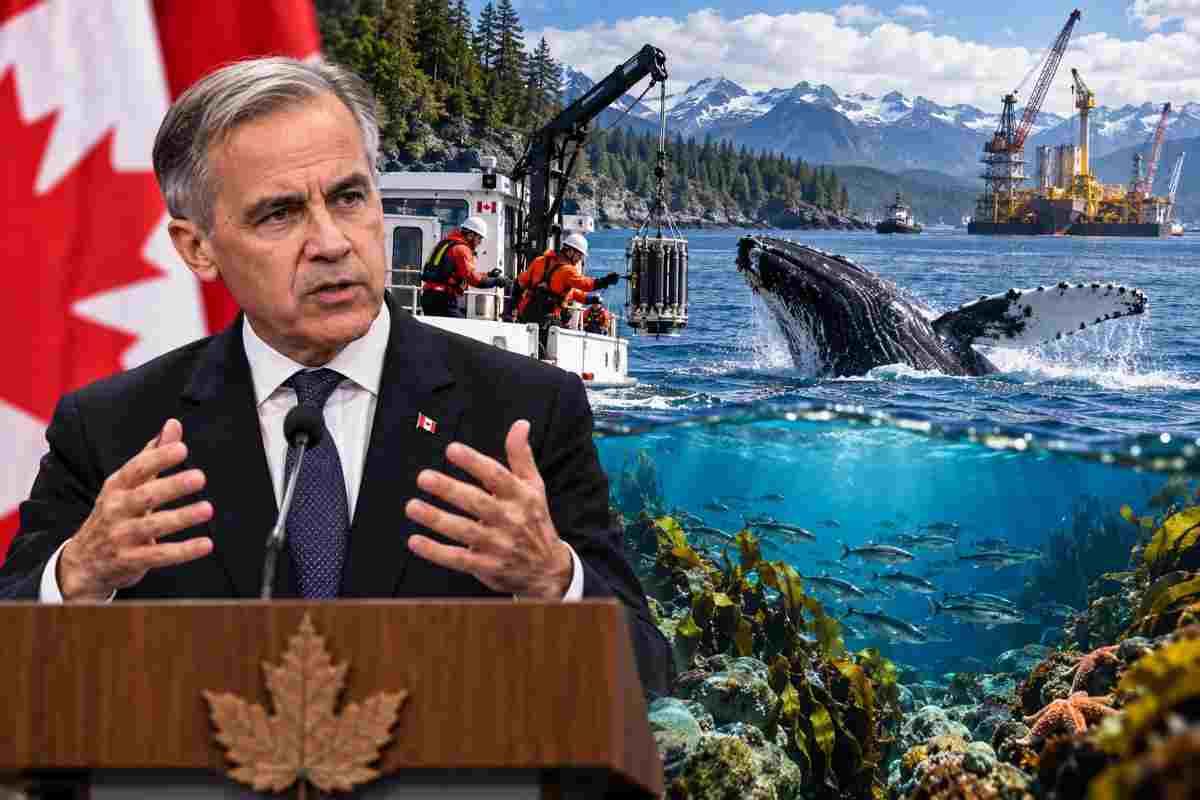
Ottawa has designated the proposed West Coast oil pipeline a project of national interest, aiming to expand Canada’s energy exports and reduce its dependence on the U.S. market.
Prime Minister Mark Carney’s government has designated a proposed West Coast oil pipeline as a project of national interest, giving the major infrastructure project a faster federal approval pathway as Canada seeks to diversify its trade and energy exports.
Announced in Fort McMurray, Alberta, on October 1, the project has been named Pacific Link. The proposed pipeline would transport approximately one million barrels of Canadian crude oil per day from Alberta to a new marine terminal near Delta, British Columbia, allowing Canadian oil to reach international markets by tanker.
The announcement comes as Canada faces continuing trade tensions with the United States and seeks to reduce its heavy reliance on the American market for crude oil exports.
Pacific Link Receives National Interest Status
Pacific Link is the first project to receive a national-interest designation under Canada’s Building Canada Act.
The designation allows the federal government to streamline the regulatory process through the Major Projects Office, which will work with the Canada Energy Regulator and other authorities on the project’s federal review.
Ottawa says the review will address issues including environmental protection, Indigenous rights, ownership, economic benefits, local hiring and other conditions. The government aims to finalize those conditions by September 1, 2027.
The designation does not mean the pipeline can immediately begin construction. Route details, environmental reviews, financing, regulatory requirements and other project conditions still have to be developed and addressed.
Aimed at Reducing Dependence on the U.S.
One of the central arguments for the project is Canada’s dependence on the United States as its main crude-oil export market.
The federal government says Pacific Link would provide capacity to send an additional one million barrels of Canadian crude per day to growing international markets, particularly in Asia.
Reuters reported that the project is part of Carney’s broader strategy to diversify Canada’s economy away from the United States and reduce the impact of U.S. trade measures on Canadian industries.
Canada currently sends the overwhelming majority of its crude oil exports to the United States. A new Pacific route would give producers another export option and potentially allow Canadian crude to reach buyers beyond the North American market.
Billions of Dollars in Investment
The pipeline is expected to be a major infrastructure undertaking.
The federal government says the project could generate significant economic activity, with an estimated peak employment impact of about 140,000 jobs when direct and indirect employment from construction and related upstream development is included. Ottawa also estimates more than C$20 billion in annual GDP impact and C$100 billion in government revenue through 2060.
Independent reporting has put the estimated project cost between approximately C$35.2 billion and C$43.7 billion. The proposed pipeline would stretch roughly 1,250 kilometres from Alberta to the British Columbia coast.
Canada and Alberta to Share Ownership
The project is being developed through cooperation between the federal government and Alberta.
According to the federal government, Trans Mountain Corporation and the Alberta Petroleum Marketing Commission will hold equal shares of the project, while Pembina Pipeline Corporation will participate as a private-sector investor. Pembina’s economic interest during construction is expected to be 10%, with an opportunity for an additional interest once the project enters commercial operation.
Indigenous communities are also being offered an opportunity to acquire at least a 10% ownership interest, with financing support available through federal and Alberta Indigenous loan-guarantee programs.
Indigenous Consultation Remains a Key Issue
The designation follows months of consultation with Indigenous communities along potential routes.
The Major Projects Office says it consulted more than 130 potentially affected Indigenous communities and organizations, holding more than 140 meetings between July and September. More than 100 written submissions were also received.
However, some Indigenous groups have raised concerns about the pace and scope of the consultation process. Reporting by The Canadian Press said some communities argued they had not received enough project information to fully assess potential environmental and treaty-rights implications.
The federal government says consultations will continue during the regulatory process and that Indigenous participation will remain part of decisions concerning the project’s conditions.
Environmental and Coastal Concerns
The proposed pipeline also faces environmental considerations, particularly because crude would eventually be transported by tanker from the British Columbia coast.
The government says the planned southern route would avoid British Columbia’s North Coast and sensitive areas including the Great Bear Sea.
Ottawa has also announced additional investments in ocean protection as it prepares for potentially greater marine traffic on Canada’s West Coast.
Environmental groups and some Indigenous communities have previously opposed major oil-pipeline developments because of concerns about emissions, spills, tanker traffic and impacts on marine ecosystems.
Trade Diversification Becomes a Priority
The Pacific Link announcement is part of a wider shift in Canada’s economic strategy.
Carney’s government has said Canada needs to expand its international trade relationships and reduce its dependence on a single market. The proposed pipeline would provide infrastructure to support that objective by connecting Alberta’s oil-producing region with a Pacific export corridor.
The federal government says the project could help Canada increase non-U.S. exports while attracting investment and strengthening the country’s energy infrastructure.
What Happens Next?
The national-interest designation accelerates the federal process, but several major steps remain before construction can begin.
Over the coming year, authorities are expected to work on the pipeline’s final concept, route planning, environmental studies, cost estimates, procurement, financing arrangements and consultations with Indigenous communities and other stakeholders.
Ottawa’s current target is to finalize the federal conditions by September 1, 2027, after which the project could move toward construction if the necessary requirements are met.
Conclusion
Prime Minister Mark Carney’s decision to designate Pacific Link as a project of national interest marks a major step in Canada’s plan to expand access to international energy markets.
The proposed one-million-barrel-per-day pipeline is being positioned as a way to diversify Canada’s crude exports, create economic activity and reduce reliance on the U.S. market amid continuing trade tensions.
However, the project still faces significant regulatory, financial, environmental and Indigenous-consultation requirements. Its national-interest designation accelerates the federal review process, but it does not remove those requirements or guarantee that construction will proceed.