

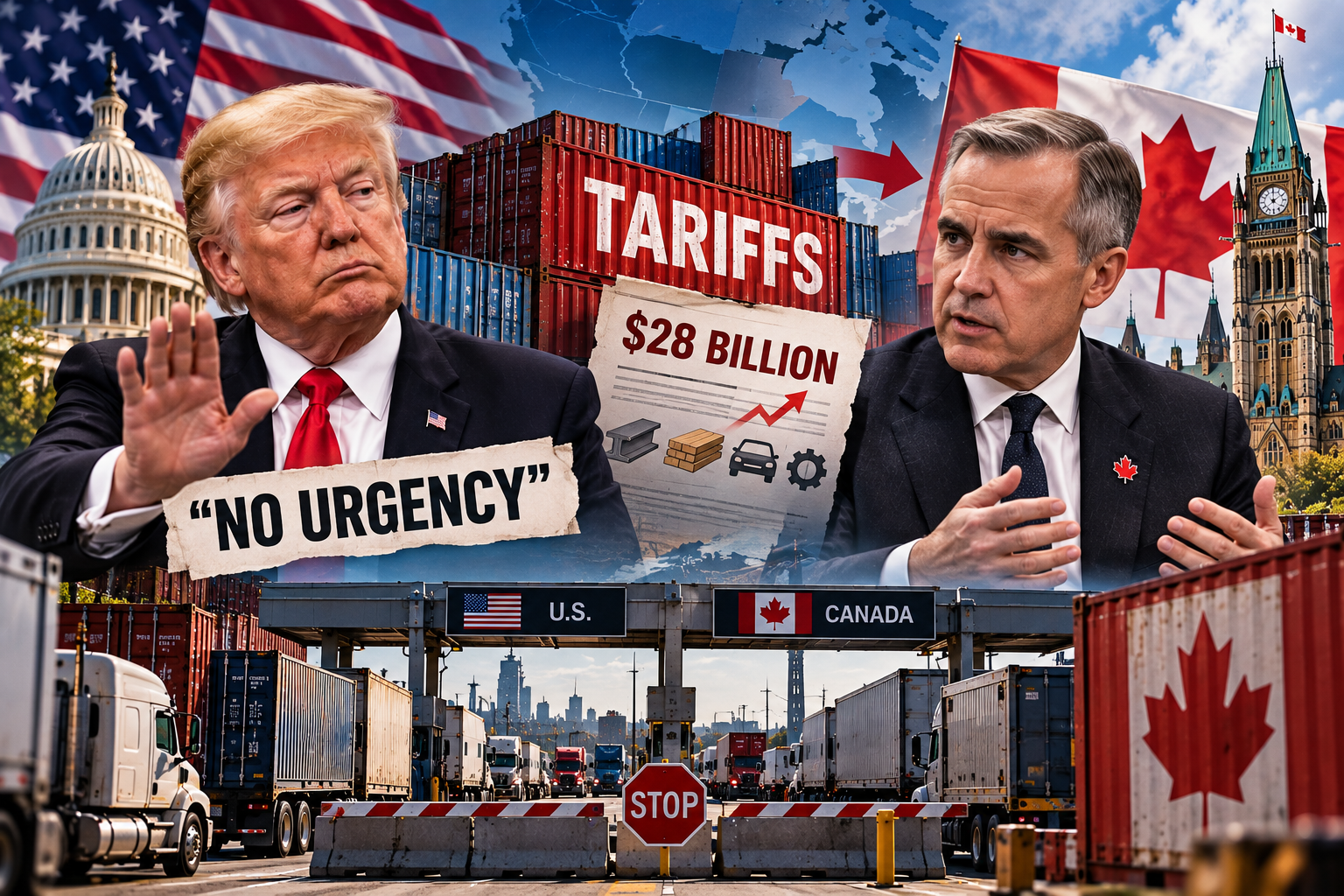
Washington says it is comfortable with the current trade relationship with Canada, while Ottawa maintains that formal negotiations remain suspended amid escalating tariffs.
The United States appears in no rush to restart formal trade negotiations with Canada, with U.S. Trade Representative Jamieson Greer saying the Trump administration is comfortable with the current state of the bilateral relationship despite growing tensions over tariffs.
Greer’s comments come more than a month after Canada and the United States suspended formal negotiations and as both countries continue to impose tariffs and countermeasures on each other’s goods. The latest developments have raised questions about when, or under what conditions, the two sides could return to the negotiating table.
Washington Says There Is “No Urgency”
In an interview with CNBC on September 25, Greer said the United States sees no urgent need to reach a new trade agreement with Canada.
He said the Trump administration was “comfortable with where we are” and pointed to the continuing volume of trade between the two countries. Greer also indicated that Canadian officials periodically contact Washington and that the United States remains willing to talk when those contacts occur.
The comments suggest that Washington does not currently view a comprehensive new agreement with Canada as an immediate priority, even as tariffs remain a major source of friction between the two economies.
Trade Talks Were Suspended in August
Canada formally suspended its trade negotiations with the United States on August 21 after Ottawa said last-minute changes in U.S. proposals did not meet Canada’s objectives.
Prime Minister Mark Carney said Canada had sought to preserve tariff-free access for most Canadian businesses, reduce U.S. tariffs on strategic industries and provide greater certainty for workers and companies. He said the government would not pursue an agreement “at any price or on any deadline.”
Since then, Canadian officials have continued to communicate with their U.S. counterparts, but there has been no formal resumption of negotiations.
Canadian Trade Minister Dominic LeBlanc said earlier in September that although there were no official negotiations underway, officials on both sides were still communicating.
US Tariffs Affect Billions in Canadian Goods
The trade dispute escalated significantly in August when Washington imposed a 50% tariff on approximately C$27.6 billion worth of Canadian goods under Section 338.
Canada subsequently introduced matching counter-tariffs on selected U.S. products. Ottawa said the measures, effective September 8, cover roughly C$27.6 billion in U.S. imports and target sectors including steel, dairy, appliances, agricultural equipment, pulp and paper, plastics and electronics.
The United States has also introduced additional measures affecting Canadian products, including import restrictions on certain goods. The White House said in September that those actions were a response to Canada’s retaliation against U.S. exports.
Canada Faces Continued Trade Uncertainty
For Canadian businesses, the prolonged dispute creates uncertainty over the future terms of access to the U.S. market.
The Bank of Canada has warned that the latest U.S. tariffs could weigh on Canadian economic growth in the fourth quarter of 2026. Governor Tiff Macklem said the tariffs could discourage business investment and hiring, although companies were also adapting by changing supply chains and pursuing other strategies.
The dispute is particularly significant because the United States remains Canada’s largest trading partner, making changes to tariff rates and market access important for exporters across several industries.
Ottawa Looks Beyond the US
While Canada continues to seek stability in its relationship with Washington, the government has also been accelerating efforts to diversify its international trade relationships.
Canada has recently advanced discussions with India, ASEAN and the Philippines, including negotiations toward a comprehensive economic partnership agreement with India. Ottawa has described diversification as part of a broader effort to strengthen Canada’s position in global markets.
The approach does not eliminate Canada’s dependence on the U.S. market, but it reflects Ottawa’s effort to develop additional trade opportunities while the dispute with Washington remains unresolved.
What Happens Next?
The immediate question is whether the current pause will eventually lead to renewed formal negotiations or whether the two governments will continue operating under the existing tariff framework.
For now, Washington’s position is that there is little urgency to reach a new deal, while Canada has indicated that it remains prepared to engage if an agreement can meet its economic and national interests.
With tariffs affecting billions of dollars in trade and both sides maintaining retaliatory measures, the timing and conditions for a return to formal negotiations remain uncertain.
Conclusion
The Canada-U.S. trade relationship is currently defined by suspended negotiations, significant tariffs and limited movement toward a comprehensive agreement. Washington says it is comfortable with the current situation and sees no immediate need for a deal, while Ottawa continues to manage the economic impact and pursue alternative trading relationships.
Until formal negotiations resume, Canadian exporters and U.S. importers will continue to operate amid uncertainty over tariffs and the longer-term structure of North American trade.