

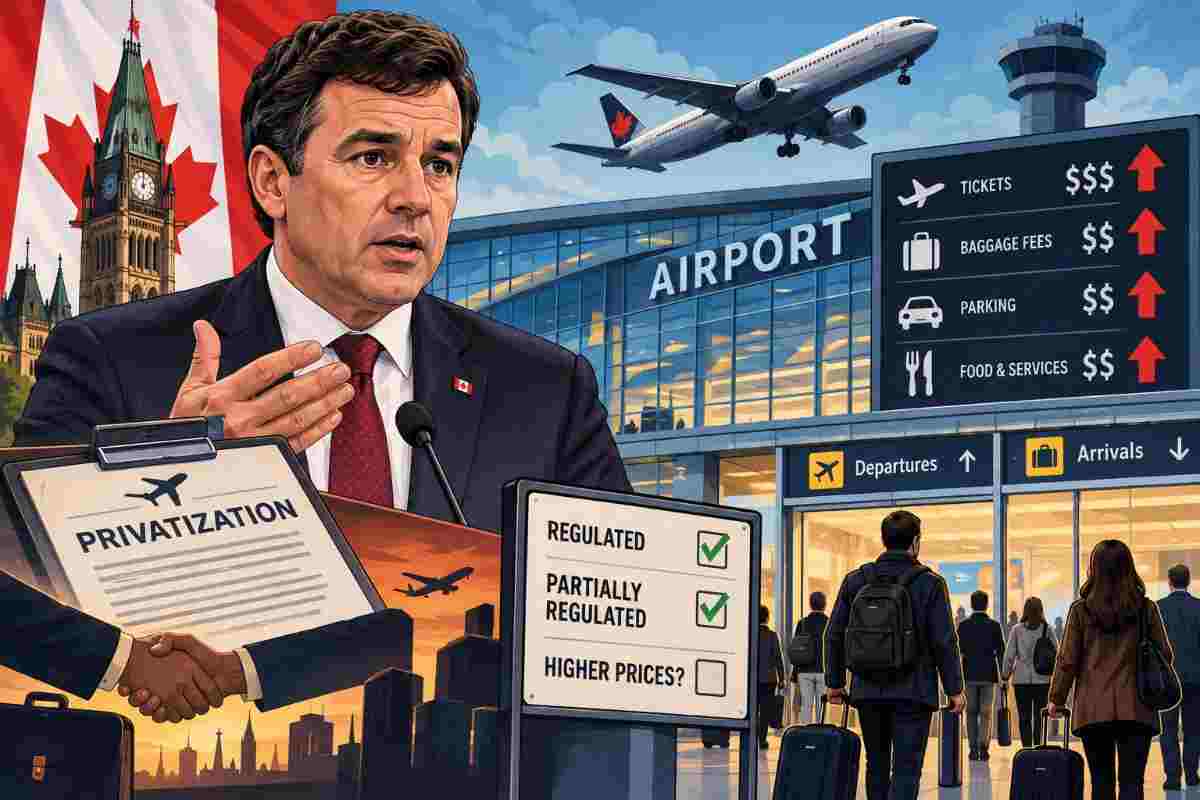
Subheading: Transport Minister Steven MacKinnon says Ottawa cannot promise that air travel will become cheaper after private investors take over long-term operations at Canada’s four largest airports, but fees will remain subject to partial regulation.
Government Moves Ahead With Private Airport Investment
The Canadian government is moving forward with plans to bring private investment into the operations of four of the country’s largest airports, but Transport Minister Steven MacKinnon is declining to guarantee that passengers will not face higher costs as a result.
The airports covered by the plan are Toronto Pearson, Montréal-Trudeau, Vancouver International and Calgary International. Ottawa intends to use long-term concession agreements that would allow private investors to operate the facilities while the federal government retains ownership of the underlying land and assets.
The government says the model is intended to unlock billions of dollars in private capital and allow Ottawa to redirect resources toward smaller regional airports and other transportation priorities.
Minister Won’t Promise Lower Travel Costs
MacKinnon has said the government cannot guarantee that the cost of flying will remain unchanged after the new model is introduced.
The minister has nevertheless promised that airport fees will be partially regulated, with the government maintaining oversight of important aspects of airport operations and passenger charges.
The issue has become one of the central concerns surrounding the plan because airport fees can ultimately affect airlines’ operating costs and, indirectly, the price passengers pay for tickets. Canada’s Competition Bureau has noted that airport fees are currently an important component of the country’s user-pay aviation system.
Ottawa Says Public Ownership Will Remain
Despite describing the initiative as airport privatization, the federal government says it is not selling the airports outright.
Under the proposed concession model, private investors would receive long-term rights to operate the airports, while Ottawa would retain ownership of the land and airport assets.
Prime Minister Mark Carney has argued that private capital could help unlock the value of the country’s major aviation infrastructure without transferring public ownership of the underlying assets.
The government is expected to use a competitive process to select investors, with both Canadian and international investment groups eligible to participate.
Pension Funds and International Investors Show Interest
The proposal has already attracted attention from major institutional investors.
MacKinnon said Canadian pension funds have expressed strong interest in participating in the concession agreements. Australian infrastructure investors have also been examining opportunities in Canada’s airport sector.
The government says competition for the concessions could help ensure that Canada receives strong value from the arrangements while maintaining regulatory oversight.
The National Airlines Council of Canada has welcomed the possibility of new investment but said passengers and airlines should not end up paying more because of the new ownership structure.
Why Passenger Fees Are a Major Concern
Canada’s major airports already operate under a user-pay model. Airlines and passengers contribute through various fees that help finance airport infrastructure and operations.
The Competition Bureau has previously noted that airport fees can influence the cost of air travel. It also says Canada’s airport passenger and airline fees are not generally subject to direct regulation under the existing model.
The proposed concession framework could therefore introduce new rules governing how certain charges are set.
MacKinnon’s comments about partial regulation indicate that Ottawa intends to retain some control over fees while allowing private operators enough flexibility to make the concessions financially attractive.
Critics Warn of Higher Costs
The government’s plan has drawn criticism from groups concerned that private operators could have an incentive to increase charges or reduce spending in ways that ultimately affect travellers.
Some aviation analysts have also questioned whether private investors could achieve their expected returns without increasing airport revenues.
A Canadian Press analysis noted that international experience shows private airport ownership can be associated with higher charges, although private operators can also bring additional investment and improvements in airport facilities and services.
The debate therefore centres on whether increased private investment can improve infrastructure and passenger service without placing additional financial pressure on travellers.
Government Says Regional Airports Could Benefit
One of the main arguments for the plan is that it could free federal resources for airports outside Canada’s largest cities.
Carney has said proceeds from the concessions could help fund improvements at smaller regional airports, which often have fewer financial resources but play an important role in connecting remote and smaller communities.
The Canadian Airports Council has similarly said that any new investment model should strengthen infrastructure, connectivity and affordability across the country.
A Major Change to Canada’s Airport Model
The proposed concessions would represent a significant change to how Canada’s largest airports are financed and operated.
Canada already relies on independent airport authorities to operate many major airports. These organizations are financially independent and operate facilities on land leased from the federal government.
The new model would introduce private investors with long-term operating rights, creating a different relationship between the federal government, airport operators, airlines and passengers.
The details of the concession agreements, including service standards, fee structures and performance requirements, will be critical to determining how the system ultimately works.
Conclusion
Canada’s government is moving ahead with plans to bring private investment into Toronto Pearson, Montréal-Trudeau, Vancouver International and Calgary International airports, while retaining public ownership of the underlying assets.
Transport Minister Steven MacKinnon has acknowledged that Ottawa cannot guarantee airfares or passenger costs will not increase, although the government plans to introduce partial regulation of airport fees.
The success of the initiative will ultimately depend on how the concession agreements balance private investment with passenger affordability, service quality and public oversight. For travellers, the key question will be whether the additional investment delivers better airports without adding significantly to the cost of flying.