

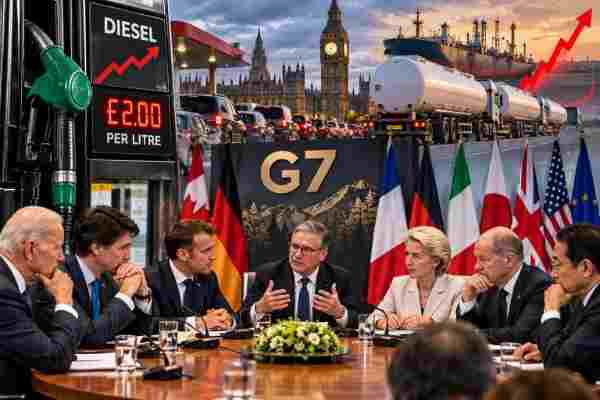
G7 leaders are preparing to discuss the global fuel-supply crisis as diesel prices in Britain reach a record level and Europe considers releasing emergency reserves.
G7 leaders are holding urgent discussions over rising fuel prices and strained diesel supplies after the average price of diesel in the United Kingdom crossed £2 a litre for the first time.
French President Emmanuel Macron, whose country currently holds the G7 presidency, is convening a videoconference with other G7 leaders to discuss conditions in global crude oil and refined-product markets. The talks come as governments across Europe consider emergency measures to increase fuel availability and contain the impact of soaring prices.
The latest crisis has been driven by disruptions to global fuel supplies amid the war involving Iran, restrictions affecting Russian exports and China’s reduced diesel exports. At the same time, concerns have increased over the possibility of the United States limiting diesel exports to protect its domestic market.
UK Diesel Prices Hit Record £2
The average UK diesel price reached 200.01 pence per litre on October 2, according to the RAC, surpassing the previous record of 199.09p set in June 2022.
The latest figure represents a sharp increase from the beginning of the Iran war, when diesel averaged about 142.38p per litre. The RAC said the cost of filling a typical 55-litre diesel tank has increased substantially as a result.
The price surge has increased pressure on the British government to address concerns about fuel availability and costs.
However, UK Transport Minister Keir Mather has sought to reassure motorists, saying the country’s diesel supply remains “robust” and “resilient” and that Britain has a wide range of sources.
G7 Focuses on Global Fuel Supplies
Macron’s planned G7 discussion comes as governments look for coordinated ways to increase supplies of crude oil and refined products.
Reuters reported that Macron discussed the situation with U.S. President Donald Trump before preparing to convene the G7 call. The talks are expected to focus on possible measures to ease pressure on global fuel markets.
The G7 discussion follows separate negotiations among European governments over whether strategic diesel reserves should be released.
France has proposed releasing around 50 million barrels of diesel from European emergency stocks, while the International Energy Agency is considering an additional release of crude oil.
Europe Considers Emergency Diesel Reserves
European governments have been under growing pressure to use strategic fuel reserves as diesel prices continue to rise.
EU countries and the European Commission held emergency discussions on Friday about the possibility of releasing fuel stocks. The proposal is intended to increase supply and reduce pressure on prices at a time when global diesel markets are unusually tight.
The proposed European diesel release would amount to roughly 50 million barrels, according to Reuters. That would represent a significant portion of the EU’s emergency diesel holdings, although the final decision and conditions attached to any release remain under discussion.
US Pressure Adds to Europe’s Dilemma
The European discussions have also been influenced by pressure from Washington.
U.S. officials have urged European countries to draw down emergency fuel reserves to help stabilize the market. Trump has also indicated that he could restrict U.S. diesel exports if European countries do not take action.
For Europe, the situation creates a difficult balance. Releasing strategic stocks could provide additional supplies to the market, but governments generally maintain such reserves as protection against severe future disruptions.
The possibility of restrictions on U.S. diesel exports has added another layer of uncertainty because Europe relies heavily on imported refined fuels.
Why Britain Is Particularly Exposed
Britain is especially sensitive to changes in international diesel markets because it imports a substantial share of the diesel it consumes.
The UK imports nearly 55% of its diesel requirements, with the United States accounting for around 31% of those imports, according to figures cited in recent reporting.
That dependence means any significant reduction in U.S. exports could force Britain and other European buyers to compete for supplies from alternative markets.
British officials have therefore joined European discussions about emergency stocks while also communicating with Washington over the potential impact of any U.S. export restrictions.
Supply Concerns Grow Despite Government Reassurance
Despite record prices, the British government has stressed that the country is not currently facing a diesel shortage.
Officials have pointed to Britain’s diverse supply network and existing stocks as reasons for confidence. The government has also been working with European partners on contingency measures should global supply conditions deteriorate further.
The immediate challenge, however, is not simply whether diesel is available. Higher wholesale prices, transportation costs and competition for refined products are already feeding through to consumers and businesses.
Diesel is particularly important for freight, agriculture, construction and other parts of the economy, meaning prolonged high prices could have effects beyond motorists.
What Comes Next?
The G7 discussions could provide an opportunity for major economies to coordinate their response to the fuel-market disruption.
European governments are simultaneously considering whether to release emergency diesel stocks, while the United States is pressing its allies to increase supply and considering its own export policy.
Whether these measures can significantly reduce prices will depend on how quickly additional fuel reaches the market and whether the underlying supply disruptions continue.
Conclusion
The record £2-a-litre diesel price in Britain has become a visible sign of a wider international fuel-supply crisis. With global refined-product markets under pressure, European governments are considering emergency stock releases while the United States pushes for faster action.
The G7’s upcoming discussions will focus on how major economies can respond to the disruption and stabilize supplies. For Britain, the priority remains maintaining reliable fuel availability while limiting the impact of exceptionally high diesel prices on households and businesses.