

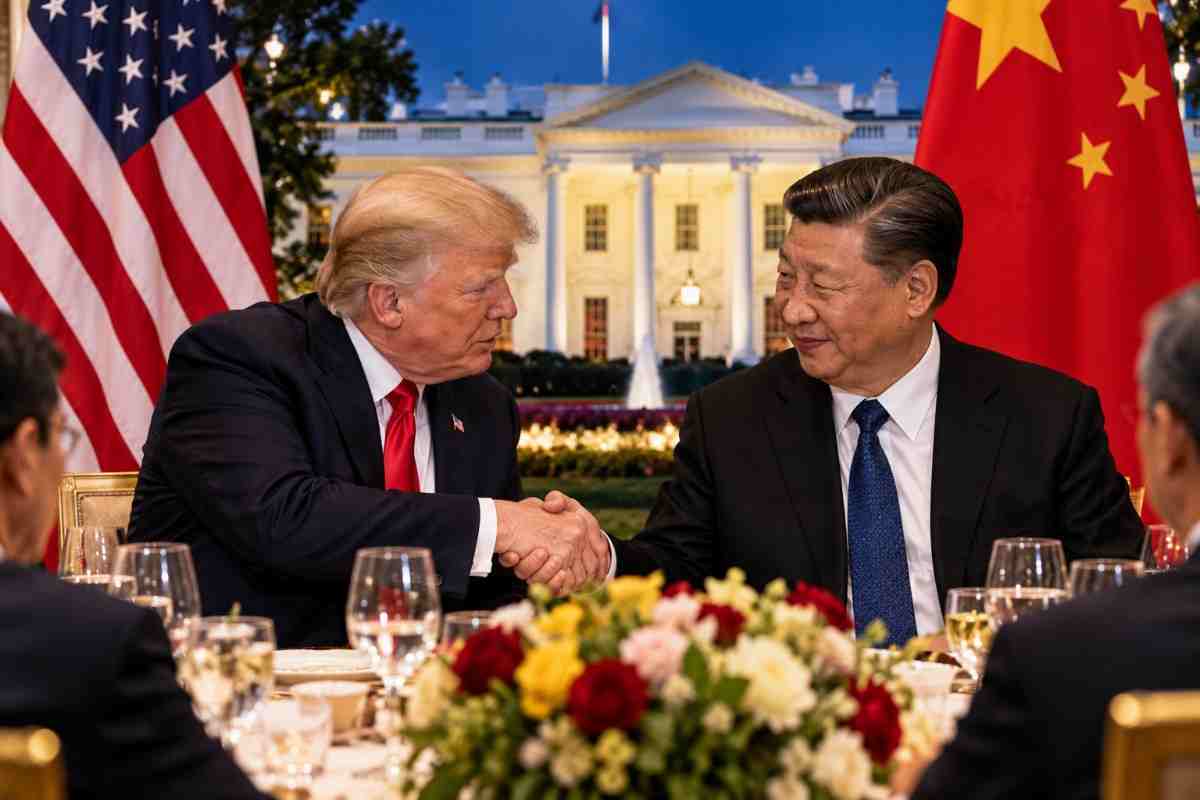
Subheading: Chinese President Xi Jinping says Washington and Beijing must act as responsible major powers and find new ways to manage competition, while Donald Trump highlights improving ties between the two countries.
Xi Urges Washington and Beijing to Work Together
Chinese President Xi Jinping has called on the United States and China to adopt a new approach to their relationship, saying the world’s two major powers must act responsibly and work together despite their differences.
Speaking at a state dinner hosted by U.S. President Donald Trump at the White House on Thursday, Xi said the two countries should meet the expectations of their people and adapt to the changing international environment. He described the moment as another important juncture in China-U.S. relations.
Xi’s remarks came during a high-profile three-day visit to Washington that has combined diplomatic ceremony with discussions over trade, artificial intelligence, Taiwan and other areas of strategic competition.
Trump Hails a Better Relationship
Trump used the dinner to emphasize the warmer tone surrounding his latest meeting with Xi.
The U.S. president described the relationship as having improved significantly and said he and Xi had made progress on issues facing the two countries. Trump also presented Xi with a statue of a bald eagle during the dinner, while emphasizing his desire for continued cooperation.
The dinner brought together senior U.S. officials, business leaders and prominent technology executives, including Apple CEO Tim Cook, OpenAI CEO Sam Altman, Nvidia CEO Jensen Huang and Tesla CEO Elon Musk. Their presence reflected the importance of technology and business ties to the wider U.S.-China relationship.
Trade Remains at the Heart of the Relationship
Despite the friendly atmosphere, major economic disagreements remain between Washington and Beijing.
Trade was one of the central issues discussed during Xi’s visit, with both sides seeking to manage tariffs and other restrictions that have disrupted bilateral commerce.
Reuters reported that the summit produced an extension of the existing trade arrangement for two months while negotiations toward a broader agreement continue. Major differences remain over areas including technology, artificial intelligence and market access.
The two governments have therefore combined short-term efforts to stabilize economic ties with longer-term negotiations over some of the most difficult issues in their relationship.
Artificial Intelligence Emerges as a Key Issue
Technology has become another major point of competition between the United States and China.
Artificial intelligence was among the issues discussed during the summit, with both countries seeking to maintain their positions in a rapidly developing sector that has economic, technological and national-security implications.
The presence of leading U.S. technology executives at the White House dinner highlighted the importance of the private sector in the broader relationship.
At the same time, Washington and Beijing continue to differ over technology controls and access to advanced computing equipment. Reuters reported that AI remained among the major issues where no major breakthrough was announced during the summit.
Taiwan Remains a Major Point of Disagreement
Taiwan remains one of the most sensitive issues in U.S.-China relations.
Beijing considers Taiwan part of China and opposes what it regards as outside interference in the issue. Washington maintains its longstanding policy toward Taiwan while continuing to provide support for the island.
The issue was among the difficult subjects surrounding the Trump-Xi discussions, alongside trade and technology. Despite the more positive public tone between the leaders, the summit did not eliminate the underlying strategic differences.
Xi Invokes the Risks of Great-Power Rivalry
Xi’s dinner remarks also carried a broader message about how major powers should manage competition.
He said China’s goal of national rejuvenation and Trump’s effort to strengthen the United States could be mutually reinforcing rather than necessarily incompatible.
Xi called for both countries to “explore a new approach” for major powers to coexist, emphasizing cooperation and stability rather than allowing rivalry to dominate the relationship.
The message reflects Beijing’s stated preference for managing competition with Washington while maintaining economic and diplomatic engagement.
A Symbolic Dinner Amid Strategic Differences
The state dinner provided a highly symbolic backdrop to a relationship that has experienced periods of intense rivalry.
The White House described the event as an important moment in the relationship, while China’s government emphasized the significance of continued exchanges between the two peoples.
Yet the warm public messaging has not removed the fundamental disagreements between the two countries.
Trade restrictions, advanced technology, Taiwan and strategic competition will continue to shape the relationship after Xi’s visit ends.
What Comes Next for Washington and Beijing?
The immediate focus will be on whether the latest trade arrangements can provide enough stability for broader negotiations to continue.
Both governments have an interest in avoiding uncontrolled escalation, particularly given the importance of their economies to global trade and supply chains.
At the same time, competition in technology and strategic influence is likely to remain a long-term feature of the relationship.
The Trump-Xi summit has therefore combined diplomatic gestures with practical negotiations, without resolving every major dispute between the world’s two largest economies.
Conclusion
Xi Jinping’s call for the United States and China to act as responsible major powers marked the central message of the White House state dinner, where both leaders presented a more cooperative tone after years of intense strategic competition.
Trump highlighted the improving personal relationship between the two leaders, while Xi called for a new approach that allows the two countries to manage differences and cooperate where their interests overlap.
The summit produced progress on some trade issues, but major disagreements over artificial intelligence, Taiwan and broader strategic competition remain unresolved.
The coming months will show whether the warmer diplomatic atmosphere can translate into more durable cooperation between Washington and Beijing.