
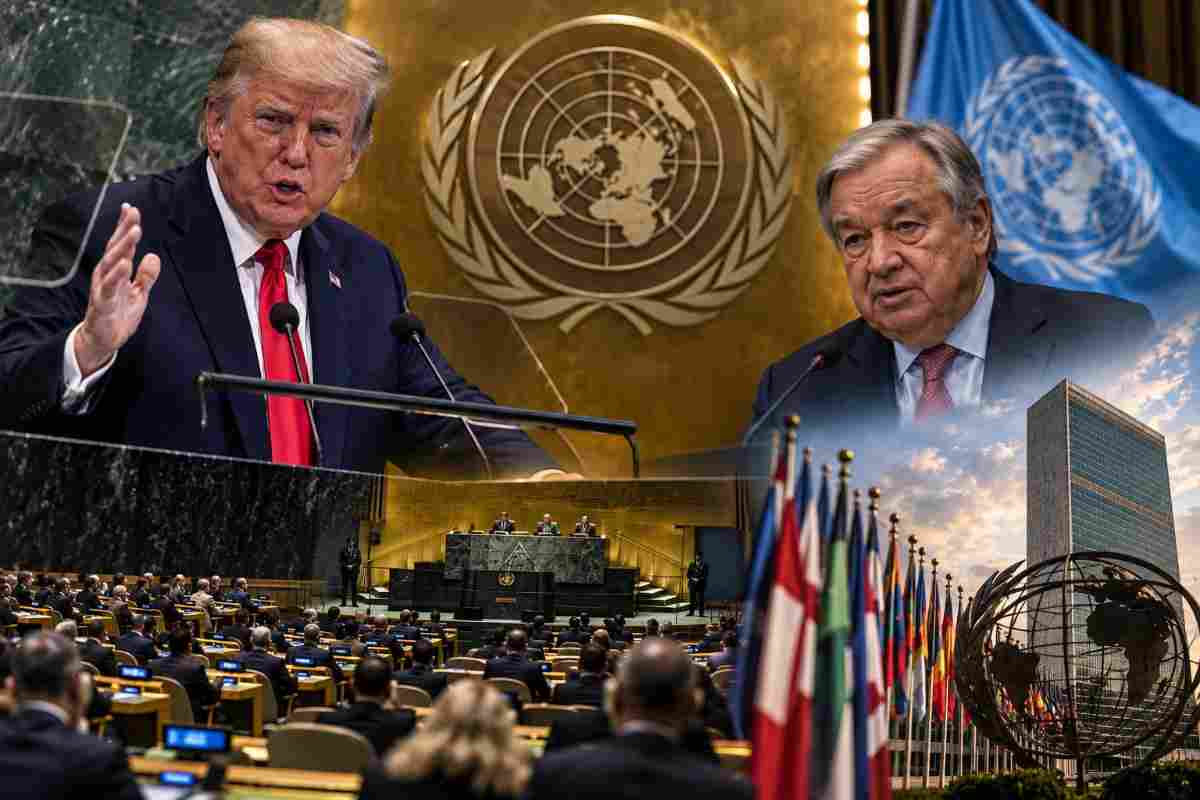
Subheading: Donald Trump defended the U.S. war with Iran and highlighted his administration’s foreign-policy record at the UN General Assembly, hours after António Guterres warned that the world’s political fault lines are widening.
Trump Takes Centre Stage at UN General Assembly
U.S. President Donald Trump addressed the United Nations General Assembly on Tuesday as world leaders gathered in New York for the opening of the 81st session’s high-level debate.
Trump’s speech came at a particularly tense moment for international diplomacy. The United States remains engaged in an ongoing war with Iran, the Russia-Ukraine conflict continues, and disagreements over global trade, security and the role of international institutions are adding to uncertainty.
The president used his address to defend his administration’s foreign-policy decisions while presenting the United States as a central force in efforts to reshape the international order. Reuters reported that Trump also criticized international organizations and argued that U.S. sovereignty should remain a central principle of global relations.
Trump Defends War With Iran
The conflict with Iran was one of the most important issues surrounding Trump’s appearance.
Trump defended his decision to launch military action against Iran, saying the operation was necessary to prevent Tehran from acquiring nuclear weapons. He also accused Iran of delaying negotiations and warned that Washington would not allow diplomatic discussions to indefinitely postpone U.S. demands.
The war has continued for months and has created wider economic and security consequences, particularly because fighting has affected shipping through the Strait of Hormuz.
Trump has simultaneously presented himself as a leader seeking to end international conflicts. During the UN address, he again highlighted his efforts to pursue peace while maintaining that the United States would use its military and economic power when necessary.
Iranian Delegation Walks Out During Speech
Trump’s comments on Iran produced a visible diplomatic reaction inside the General Assembly.
Members of the Iranian delegation walked out during his speech, underscoring the depth of the disagreement between Washington and Tehran.
Iranian President Masoud Pezeshkian is also attending the UN gathering, creating the possibility of further diplomatic discussions around the conflict. U.S. Secretary of State Marco Rubio has indicated that Trump remains open to diplomacy with Iran even as the military confrontation continues.
The competing messages reflect the difficult diplomatic situation surrounding the war: Washington says military pressure is intended to prevent a nuclear threat, while Tehran has continued to reject key U.S. demands.
Guterres Warns of Widening Fault Lines
Earlier in the day, UN Secretary-General António Guterres delivered his final General Assembly address after a decade leading the organization.
Guterres warned that the world’s political and economic fault lines have widened into increasingly dangerous divisions. He argued that military, economic and technological power alone cannot solve the major challenges confronting the international community.
The UN chief called for stronger international cooperation and renewed respect for international law. He also urged governments to reform global institutions so they better reflect today’s distribution of power.
Guterres highlighted conflicts including Gaza and Ukraine, as well as climate change, inequality and the rapid development of artificial intelligence.
Ukraine Remains on the UN Agenda
The Russia-Ukraine war was another major issue surrounding this year’s General Assembly.
Trump has repeatedly said he wants the conflict to end and has expressed frustration with the lack of a lasting settlement between Moscow and Kyiv. The war, which has continued for more than four years, remains one of the most serious security challenges facing Europe.
Trump is also scheduled to meet Ukrainian President Volodymyr Zelenskyy during his UN visit. Reuters reported that the president’s schedule includes meetings with leaders from several regions as he seeks to advance his diplomatic priorities.
The UN gathering provides another opportunity for leaders to discuss possible diplomatic pathways, although no immediate breakthrough has been announced.
UN Faces Questions Over Its Future
Guterres’ warning also comes as the United Nations faces questions about its ability to respond to major international crises.
The organization is dealing with conflicts, humanitarian emergencies, climate-related risks and rapid technological change while disagreements among major powers have made consensus more difficult.
The official theme of this year’s General Assembly is “Restoring trust, managing transformation: a United Nations that delivers for all.” The UN says the theme reflects the need to address interconnected global challenges through stronger international cooperation.
Guterres has also identified artificial intelligence, climate change and inequality as major global challenges requiring international coordination.
A Sharp Contrast in Messages
The speeches from Trump and Guterres presented noticeably different emphases.
Trump focused heavily on national sovereignty, U.S. power, military action and his administration’s foreign-policy record. Guterres, meanwhile, stressed multilateralism, international law and cooperation between countries.
Their contrasting messages reflect a broader debate over how the international system should respond to conflicts and a changing balance of global power.
With nearly 130 world leaders gathering in New York, the General Assembly is expected to remain focused on Iran, Ukraine, Gaza, global security, artificial intelligence and reform of international institutions.
Conclusion
Donald Trump’s UN address came at a moment of significant international tension, with the United States engaged in a prolonged conflict with Iran and diplomatic efforts over Ukraine still unresolved.
Trump defended his administration’s decision to use military force against Iran while also presenting his broader foreign-policy agenda as part of an effort to reshape global security.
Earlier, António Guterres warned that the world’s fault lines are widening and called for stronger international cooperation, respect for international law and reforms to global institutions.
The contrasting speeches set the tone for a UN gathering taking place amid wars, economic uncertainty and growing disagreements over the future of international cooperation.