

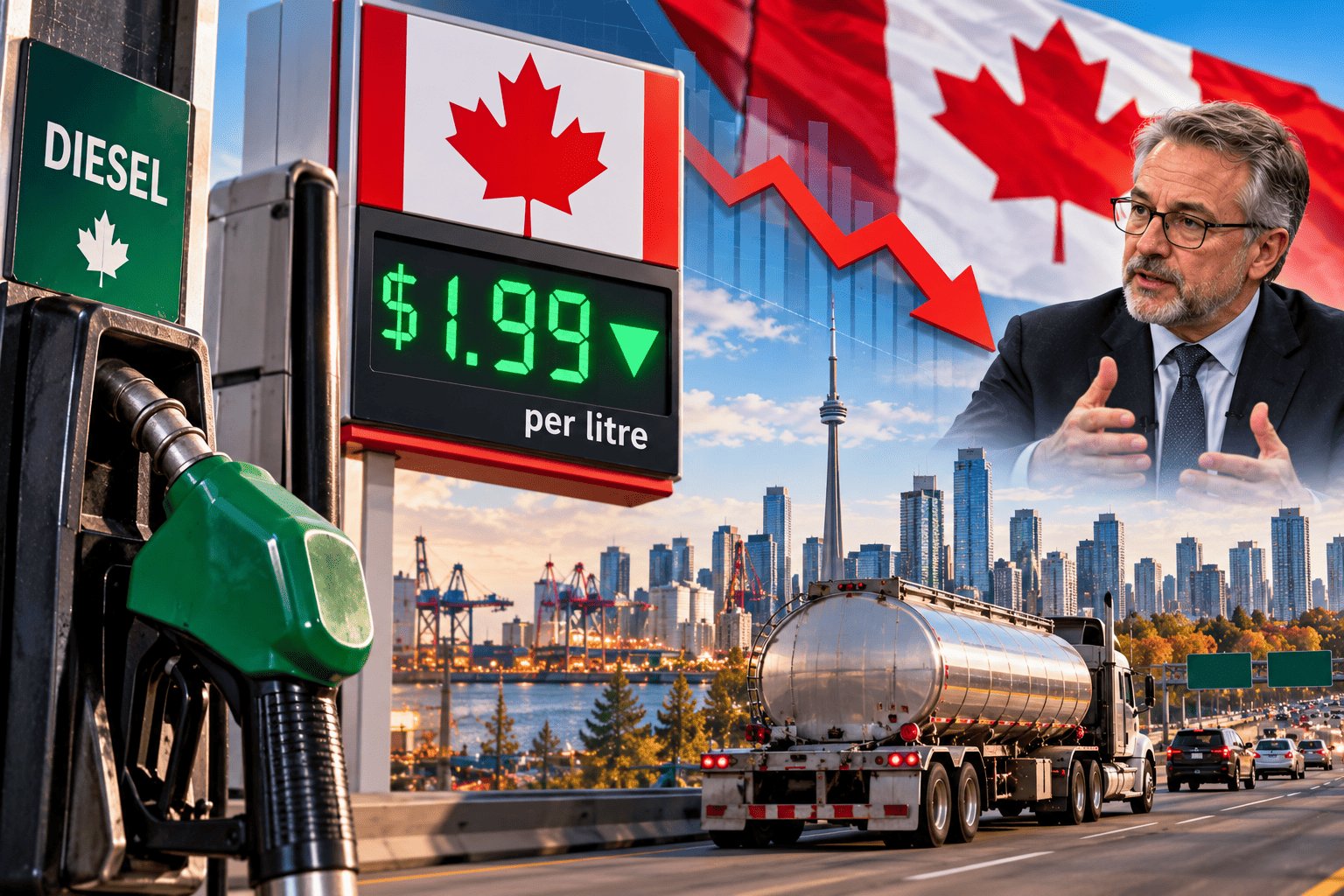
An energy expert says Canadian diesel prices may retreat below $2 a litre in the coming months if tensions in the Middle East ease and additional fuel supplies reach global markets.
Canadian motorists and businesses could see some relief at the pump in the months ahead, with energy analyst Peter Linder saying diesel prices may fall below $2 a litre if global oil prices continue to decline.
The forecast comes after diesel prices surged to record levels amid disruptions linked to the conflict involving the United States and Iran, reduced refined-fuel supplies and continued pressure on global energy markets.
Linder, a former oil and gas analyst, told CTV News Channel that crude oil could fall toward about US$85 a barrel, from roughly US$90, if tensions between Washington and Tehran ease. He said even the announcement of peace discussions could quickly push oil prices lower.
Diesel Prices Have Surged Across Canada
Diesel prices have risen sharply in Canada during the current energy-market disruption.
The national average retail price reached about C$2.64 per litre at the end of September, according to Natural Resources Canada data cited by Canadian Press reporting. That was approximately 59% higher than before the Iran conflict and about 15% above the previous record set in November 2022.
The increase has affected more than individual motorists. Diesel is heavily used by trucking companies, agriculture, construction and other industries, meaning higher fuel costs can eventually feed into transportation and consumer prices.
For the trucking industry in particular, the increase has been significant. One industry estimate cited by Money.ca put the cost of a round-trip semi-truck journey between Montreal and Toronto at around C$1,400, compared with approximately C$850 at the beginning of the year.
Why Diesel Has Become More Expensive
Linder said diesel prices have been particularly elevated because of an imbalance between supply and demand.
According to his assessment, demand for diesel remains strong while available supplies have tightened. The disruption has been particularly significant because diesel production and international trade have been affected by problems involving Russia and Middle Eastern energy supplies.
The situation has also exposed differences between the diesel and gasoline markets. While crude oil is the underlying feedstock for both fuels, refinery operations and global trade patterns can cause their prices to move differently.
RBC Global Asset Management economist Eric Lascelles recently noted that diesel and other refined products have been under greater pressure than crude oil itself, with transportation costs likely to keep passing through to the broader economy.
Middle East Diplomacy Could Change the Outlook
One of the biggest variables for Canadian fuel prices is what happens next in the conflict involving Iran and the United States.
Linder said a move toward negotiations could quickly reduce oil prices. He estimated that an announcement of peace discussions could knock several dollars off the price of a barrel almost immediately.
However, the opposite is also possible.
If tensions escalate or disruptions around the Strait of Hormuz continue, oil and refined-fuel prices could rise again. The waterway remains a critical route for global energy shipments, making developments in the region particularly important for countries that depend on international fuel markets.
G7 Reserve Release Could Add Downward Pressure
Another factor supporting the possibility of lower prices is the coordinated release of emergency fuel reserves by major economies.
G7 countries have agreed to coordinate the release of up to 100 million barrels of crude oil and refined fuel products through the International Energy Agency. The plan includes a substantial amount of diesel, with releases front-loaded during the first part of the programme.
The announcement has already contributed to some easing in oil prices. IEA Executive Director Fatih Birol said oil prices had fallen by around US$5 after the reserve-release decision and indicated that the agency could consider further action if necessary.
Linder said the additional supply could help put further downward pressure on diesel prices in Canada.
Canadian Fuel Tax Relief Provides Additional Support
Canadian consumers are also receiving temporary relief through the federal government’s suspension of the fuel excise tax.
The federal government has extended the suspension of the diesel excise tax through January 31, 2027. From February 1 through March 31, 2027, the diesel excise tax is scheduled to return at half its regular rate, before returning to the full rate on April 1.
The current suspension saves consumers approximately 4 cents per litre on diesel compared with the regular federal excise-tax rate.
While the measure does not directly control wholesale oil prices, it can reduce the final amount paid at the pump.
U.S. Diesel Policy Remains a Wild Card
The outlook for Canadian diesel prices is also being influenced by uncertainty over U.S. fuel policy.
U.S. President Donald Trump has considered restrictions on diesel exports as his administration attempts to bring down domestic fuel prices. Analysts have warned that restricting U.S. exports could have the opposite effect internationally by removing a major source of diesel from global markets.
For Canada, the consequences could be significant because North American fuel markets are closely connected.
A prolonged U.S. export restriction could therefore make it harder for Canadian consumers to benefit from falling crude prices, particularly if global diesel supplies remain tight.
Could Diesel Really Fall Below $2?
Linder’s forecast does not mean Canadian diesel prices are guaranteed to fall below $2 a litre.
Several conditions would have to develop in the right direction: crude oil prices would need to decline, Middle East tensions would need to ease, refined-fuel supplies would need to improve and international shipping would need to become more reliable.
The G7 reserve release could accelerate the adjustment, but it is not a permanent solution to the underlying supply problems.
For Canadian consumers, therefore, the next few weeks could be particularly important. A sustained improvement in global energy flows could bring substantial relief, while renewed conflict could quickly reverse the trend.
Conclusion
Canadian diesel prices have reached unprecedented levels during the current global energy disruption, putting pressure on motorists, truckers, farmers and businesses.
Energy expert Peter Linder believes prices may have peaked and could eventually fall below C$2 a litre if oil prices decline and geopolitical tensions ease. The G7’s coordinated emergency reserve release and Canada’s temporary fuel-tax relief could provide additional support for consumers.
However, the forecast remains dependent on global events. Any renewed escalation involving Iran, the United States or major energy-shipping routes could push diesel prices higher again.