

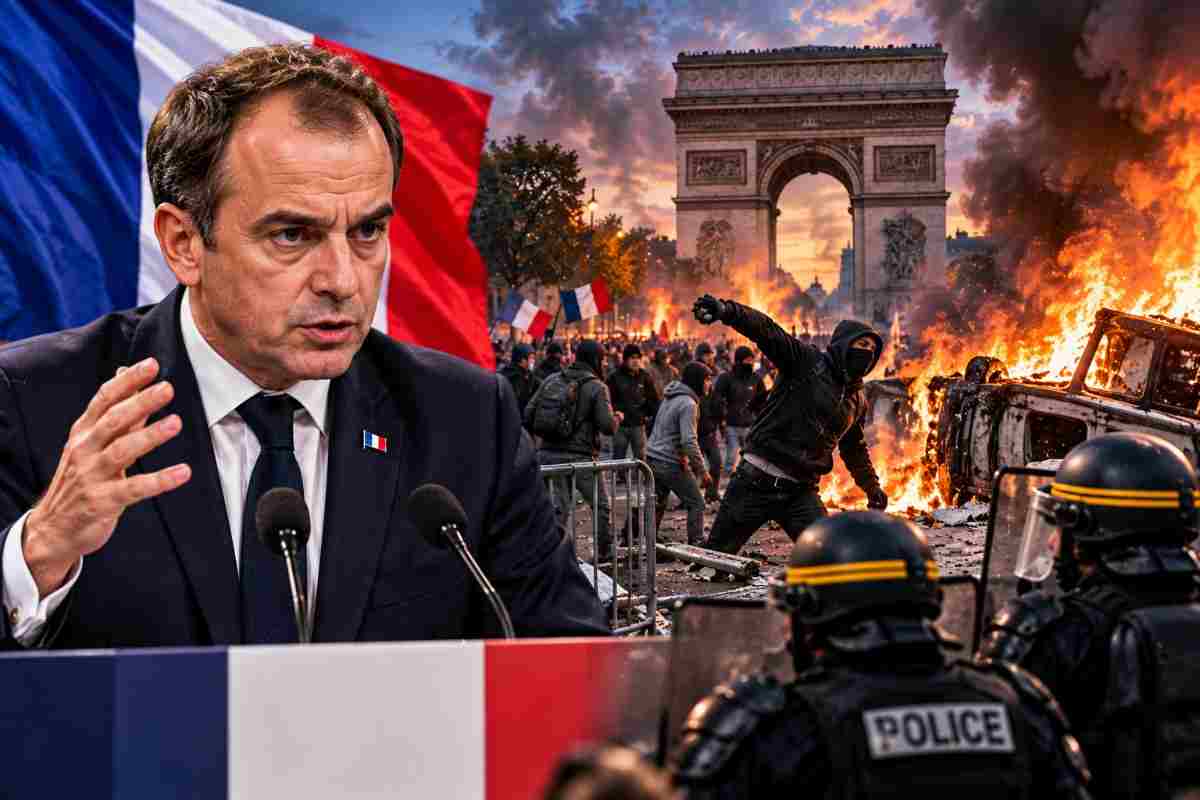
Prime Minister Sébastien Lecornu has instructed regional authorities to introduce limited, targeted curfews following widespread rioting and looting, as protests over the cost of living and deteriorating public services escalate across France.
The French government has called for localised curfews in affected urban areas after a weekend of violent demonstrations damaged public buildings, shops and businesses across the country. Prime Minister Sébastien Lecornu announced the measures on Monday, October 19, following an emergency meeting with senior government officials.
The unrest began with demonstrations over rising living costs and concerns about school conditions and public services. While many people participated in peaceful protests, some gatherings escalated into clashes with police, vandalism, fires and widespread looting. Authorities reported approximately 2,400 arrests nationwide, while thousands of businesses were reported damaged or targeted.
Prime Minister Calls for Targeted Curfews
Lecornu instructed regional prefects, who represent the central government in France’s administrative regions, to coordinate with local mayors and business representatives to determine where curfews are necessary.
The prime minister described the proposed restrictions as limited and localised rather than a nationwide curfew. The aim is to protect residents, businesses and public property while preventing further outbreaks of violence.
Authorities were expected to provide further details about the areas affected and the implementation of the restrictions. Lecornu also said the government had not ruled out declaring a state of emergency if the security situation deteriorated further.
The approach reflects an effort to concentrate security measures in locations experiencing the greatest disruption rather than impose identical restrictions across the entire country.
Rioting and Looting Damage Shops and Public Buildings
The latest unrest has affected several major French cities, including Paris, Lyon and Marseille. Groups of people smashed shop windows, looted commercial premises, set fires and damaged public infrastructure.
One of the most serious incidents occurred in Limoges, where a fire severely damaged the historic city hall. Other public buildings and businesses were also targeted during the demonstrations.
In Paris, violence continued into Sunday night, with masked groups reportedly looting shops and clashing with police in central commercial districts. Business owners described extensive damage and expressed concern about their ability to protect their premises during further disturbances.
Authorities estimated on Monday that around 3,000 businesses had been damaged or looted across several cities. Cleanup operations began as emergency workers removed debris and local authorities assessed the financial impact.
Cost-of-Living Concerns Fuel Demonstrations
The protests reflect wider dissatisfaction over economic conditions, public spending and the quality of essential services.
Rising living costs have placed pressure on household budgets, while concerns about school funding and staffing shortages have contributed to frustration among students, families and education workers.
Demonstrations initially focused on these grievances, but some gatherings were overtaken by groups involved in violence and opportunistic looting. The distinction between peaceful protesters and those responsible for criminal acts has become an important issue in the political debate.
The government has condemned the destruction while facing pressure to address the economic and public-service concerns that brought demonstrators onto the streets.
The unrest has also revived memories of previous periods of social upheaval in France, including the Yellow Vest protests that began in 2018 over fuel costs and broader economic grievances. However, the current demonstrations have their own mix of causes and participants, and should not be treated as identical to earlier movements.
Interior Minister’s Resignation Rejected by Macron
The crisis has increased pressure on President Emmanuel Macron’s government over its handling of public order.
Interior Minister Laurent Nuñez offered his resignation following criticism of the authorities’ response to the violence. Macron rejected the offer on Monday, saying continued leadership of the security services was necessary during the emergency.
The president instructed Nuñez to improve transparency regarding failures in planning and intelligence-gathering and to introduce changes to policing tactics as quickly as possible.
Nuñez acknowledged that police had lost control in some major cities during the worst incidents. He blamed highly mobile groups of looters and activists for overwhelming officers and argued that law enforcement methods needed to adapt to the situation. Those explanations remain the government’s assessment of the events, while questions about police preparedness and response continue.
Government Launches Wider Law-Enforcement Operation
Alongside the proposed curfews, the government announced a major law-enforcement effort to identify and prosecute people suspected of involvement in the violence.
In the Paris region alone, nearly 200 investigators were expected to examine CCTV recordings, shop security footage and videos circulating on social media to identify suspects.
The authorities have also begun assessing damage to businesses and public buildings. The investigation is intended to establish responsibility for specific incidents and support criminal proceedings where evidence warrants action.
The scale of the arrests and the number of businesses affected indicate the challenge facing police as they attempt to restore order while managing the aftermath of the demonstrations.
Officials have emphasised that people responsible for vandalism, arson and looting should face legal consequences. At the same time, the government’s response must distinguish between those accused of criminal conduct and people who participated peacefully in demonstrations.
Political Pressure Mounts Ahead of Presidential Election
The unrest comes roughly six months before France’s next presidential election, increasing pressure on the government to demonstrate that it can restore public order and respond to economic concerns.
Opposition politicians have criticised the authorities’ handling of the riots, while different political groups have offered competing explanations for the protests and their escalation into violence.
The unrest presents a challenge for Macron’s administration, which must address immediate security concerns while responding to dissatisfaction over living costs, education and public services.
Whether the proposed curfews reduce further violence will depend on how they are implemented, the scale of any new demonstrations and the government’s ability to coordinate police operations with local authorities.
Conclusion
France’s decision to introduce localised curfews marks a significant escalation in the government’s response to the recent wave of rioting and looting.
With approximately 2,400 arrests reported and thousands of businesses affected, the unrest has created a major public-order challenge for Prime Minister Sébastien Lecornu and President Emmanuel Macron. The rejection of the interior minister’s resignation also signals that the government intends to maintain its existing leadership while reviewing security operations.
The immediate priority is to protect residents, restore normal activity and prevent further damage. However, the protests also highlight wider concerns about living costs, education and public services that cannot be addressed through policing measures alone.
The coming days will show whether targeted curfews and expanded investigations can contain the violence while authorities work to address the grievances behind the demonstrations.