

Conflict Escalates as American Forces Strike New Targets and Stop Ship Bound for Iranian Port
Summary
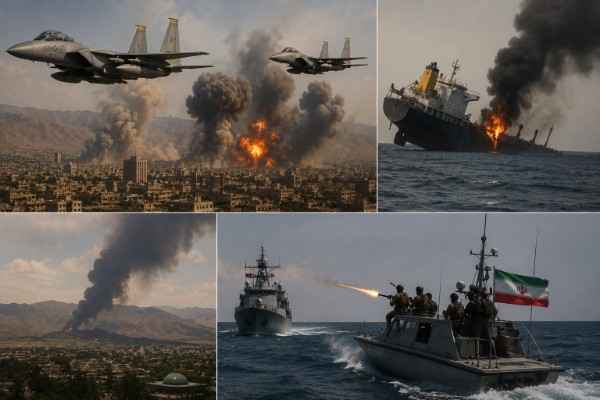
The United States has expanded its military campaign against Iran, launching fresh airstrikes on targets in the country’s north while disabling a commercial vessel accused of attempting to breach the U.S. naval blockade of Iranian ports. The latest operations mark a significant escalation in the ongoing conflict, as Washington increases pressure on Tehran through both air and maritime actions.
U.S. military officials said the strikes targeted missile facilities, military infrastructure, and command positions, while naval forces intercepted and disabled a ship that ignored repeated warnings as it attempted to reach an Iranian port. The developments have heightened tensions across the Middle East and raised fresh concerns over regional security and global energy markets.
U.S. Airstrikes Reach Northern Iran
According to U.S. Central Command, American aircraft carried out precision strikes on military targets farther north than in previous operations, including facilities believed to support Iran’s missile and drone capabilities. Officials said the objective was to reduce Iran’s ability to launch attacks against U.S. forces, allies, and commercial shipping operating in the Gulf.
Explosions were reported in several locations as air defense systems were activated. Iranian authorities acknowledged that strikes had occurred but have not released a full assessment of the damage. The renewed attacks represent one of the broadest expansions of U.S. military operations since hostilities intensified earlier this year.
Vessel Disabled While Attempting to Breach Blockade
Alongside the air campaign, U.S. naval forces intercepted a commercial vessel accused of attempting to enter an Iranian port in violation of the American naval blockade. Military officials said the ship failed to respond to repeated radio warnings before U.S. forces fired precision weapons that disabled the vessel without sinking it.
The crew was reported to be safe, and the vessel was left unable to continue its voyage. U.S. officials described the operation as part of ongoing efforts to enforce restrictions on maritime traffic connected to Iranian ports and prevent supplies from reaching military-linked infrastructure.
Iran Condemns the Operations
Iran strongly condemned both the airstrikes and the maritime interception, describing them as violations of international law and acts of aggression. Iranian officials warned that continued military action would receive a firm response and reiterated that interference with Iranian shipping would not go unanswered.
The latest confrontation follows weeks of missile exchanges, drone attacks, and growing tensions surrounding the Strait of Hormuz, a strategic waterway through which a significant portion of the world’s oil exports passes. Iranian military leaders have continued to describe the region as a critical security zone and warned against further foreign military intervention.
Global Markets Monitor Rising Risks
The expanding conflict has increased concerns among governments, shipping companies, and energy markets. Commercial vessels operating in the Gulf have been placed on heightened alert, while insurers continue reviewing security risks associated with transit through the Strait of Hormuz.
Energy analysts warn that prolonged instability could disrupt global oil supplies, increase transportation costs, and place additional pressure on international supply chains. Several countries have also urged restraint, calling for renewed diplomatic efforts to prevent a broader regional conflict.
Conclusion
The United States’ decision to expand airstrikes into northern Iran while disabling a ship attempting to breach its naval blockade marks another major escalation in the ongoing confrontation between Washington and Tehran. As military operations intensify on land, at sea, and in the air, fears continue to grow over the potential for a wider regional conflict and its impact on global security, energy markets, and international shipping.