

Military Escalation Intensifies After Tehran Shuts Key Global Shipping Route, Raising Fears of Wider Regional Conflict
Summary
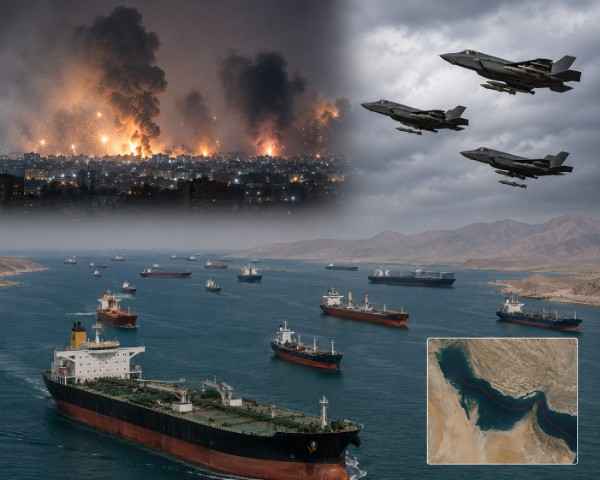
The United States has launched a fresh wave of airstrikes against Iranian military targets after Tehran announced the closure of the Strait of Hormuz, one of the world’s most strategically important maritime routes. The latest military action follows an Iranian attack on a commercial cargo vessel in the Gulf, prompting Washington to respond with strikes aimed at degrading Iran’s military capabilities.
The renewed conflict has sharply increased tensions across the Middle East, with Iran declaring that the Strait of Hormuz will remain closed until further notice. The developments have triggered fresh concerns over global energy supplies, international shipping, and the possibility of a broader regional confrontation.
US Responds with New Airstrikes
According to U.S. Central Command, American forces carried out a new series of precision strikes targeting Iranian missile launch sites, command centres, and military infrastructure linked to recent attacks on commercial shipping. U.S. officials said the operation was intended to reduce Iran’s ability to threaten international maritime traffic and protect freedom of navigation through the Gulf.
Washington described the strikes as a defensive response following Iran’s alleged attack on a cargo ship transiting the Strait of Hormuz. The United States has emphasized that it does not seek a wider conflict but remains prepared to respond to further threats against its forces and commercial vessels.
Iran Declares Strait of Hormuz Closed
In response, Iran announced the closure of the Strait of Hormuz, warning that no unauthorized vessels would be permitted to pass through the strategic waterway. Iranian military officials stated that the measure was necessary to safeguard national security and respond to what they described as continued U.S. aggression.
The Strait of Hormuz handles roughly one-fifth of the world’s oil and liquefied natural gas shipments, making any disruption a major concern for global energy markets. Shipping companies have begun reassessing transit routes while several governments have issued warnings to vessels operating in the region.
Regional Tensions Continue to Escalate
The latest exchange of strikes has further intensified instability across the Gulf. Reports indicate that Iran has launched missiles and drones toward several countries hosting U.S. military forces, prompting air defence systems in multiple Gulf states to intercept incoming threats.
Governments across the region have strengthened security around military installations, ports, and critical infrastructure as fears grow that the conflict could expand beyond Iran and the United States. Diplomatic efforts aimed at reducing tensions have also suffered a setback as both sides continue military operations.
Global Markets and Shipping Under Pressure
The closure of the Strait of Hormuz has created significant uncertainty for global energy markets. Oil traders are closely monitoring developments, while insurers and shipping companies are reviewing security measures for vessels travelling through the Gulf.
Economists warn that any prolonged disruption to maritime traffic could increase transportation costs, affect global fuel prices, and place additional pressure on international supply chains. Many countries dependent on Gulf energy exports are preparing contingency plans should the situation deteriorate further.
Conclusion
The latest U.S. airstrikes and Iran’s decision to close the Strait of Hormuz mark one of the most serious escalations in the ongoing confrontation between the two countries. With military operations continuing and diplomatic efforts showing little progress, concerns are growing over the potential impact on regional stability, global energy security, and international trade. As the situation evolves, governments around the world are urging restraint while closely monitoring developments in one of the world’s most critical strategic waterways.