

Leaders Deepen Strategic Partnership with New Nuclear Energy Agreement and Expanded Defence Cooperation
Summary
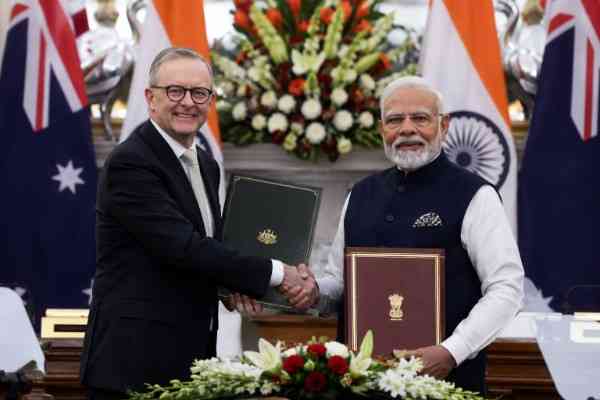
Australia and India have signed a landmark agreement allowing the export of Australian uranium to India for peaceful civilian nuclear energy, marking a major milestone in bilateral relations during Prime Minister Narendra Modi’s official visit to Australia. The agreement ends years of delays in implementing an earlier civil nuclear cooperation framework and reflects the growing strategic partnership between the two Indo-Pacific nations.
Alongside the uranium deal, Prime Minister Modi and Australian Prime Minister Anthony Albanese agreed to strengthen cooperation in defence, critical minerals, renewable energy, supply chains, and investment, highlighting their shared commitment to regional security and long-term economic growth.
Landmark Uranium Agreement Finalized
The newly signed administrative arrangement clears the way for Australia to begin exporting uranium to India for use in its civilian nuclear power program. The agreement includes safeguards to ensure that Australian uranium is used exclusively for peaceful energy generation under international monitoring.
India has set an ambitious goal of expanding its nuclear power capacity to 100 gigawatts by 2047 as part of its strategy to reduce carbon emissions and meet rapidly growing electricity demand. Access to Australia’s vast uranium reserves is expected to play an important role in achieving that objective.
Australia, which holds some of the world’s largest known uranium reserves, views the agreement as an opportunity to strengthen its position as a reliable supplier of clean energy resources while expanding trade with one of the world’s fastest-growing economies.
Broader Strategic Partnership
Beyond nuclear cooperation, the two leaders announced plans to deepen collaboration across several strategic sectors. Discussions focused on expanding trade in critical minerals, accelerating renewable energy projects, promoting green hydrogen development, and improving supply chain resilience.
Defence and security cooperation also featured prominently during the talks. Both countries reaffirmed their commitment to maintaining a free, open, and secure Indo-Pacific region through closer military cooperation, joint exercises, and intelligence sharing.
Officials said the expanded partnership reflects the growing alignment between Canberra and New Delhi on regional and global security issues.
Investment and Economic Cooperation
Prime Minister Modi also encouraged greater Australian investment in India’s rapidly expanding infrastructure and manufacturing sectors. During the visit, major Australian investors announced additional financial commitments to infrastructure projects aimed at supporting India’s long-term economic development.
Trade between the two countries has grown steadily in recent years, with both governments seeking to further increase bilateral commerce through stronger economic cooperation and implementation of existing trade agreements.
Business leaders from both nations welcomed the latest announcements, saying the agreements will create new opportunities across energy, technology, mining, and infrastructure industries.
Regional Significance
The agreement comes at a time of increasing geopolitical competition in the Indo-Pacific, where both Australia and India have strengthened cooperation with regional partners on security and economic resilience.
Analysts believe the uranium export deal represents more than an energy partnership, signalling a broader strategic alignment between the two democracies. Both governments have emphasized the importance of diversified supply chains, energy security, and stronger regional cooperation amid evolving global challenges.
The visit also reinforces the growing role of Australia and India within regional groupings aimed at promoting stability and economic development across the Indo-Pacific.
Conclusion
The uranium export agreement signed during Prime Minister Narendra Modi’s visit marks a historic step forward in Australia-India relations. By opening the door to Australian uranium exports for India’s civilian nuclear program and expanding cooperation in defence, clean energy, critical minerals, and investment, both nations have strengthened a partnership that is expected to play an increasingly important role in the Indo-Pacific. The deal reflects a shared commitment to energy security, sustainable development, and closer strategic collaboration in the years ahead.