

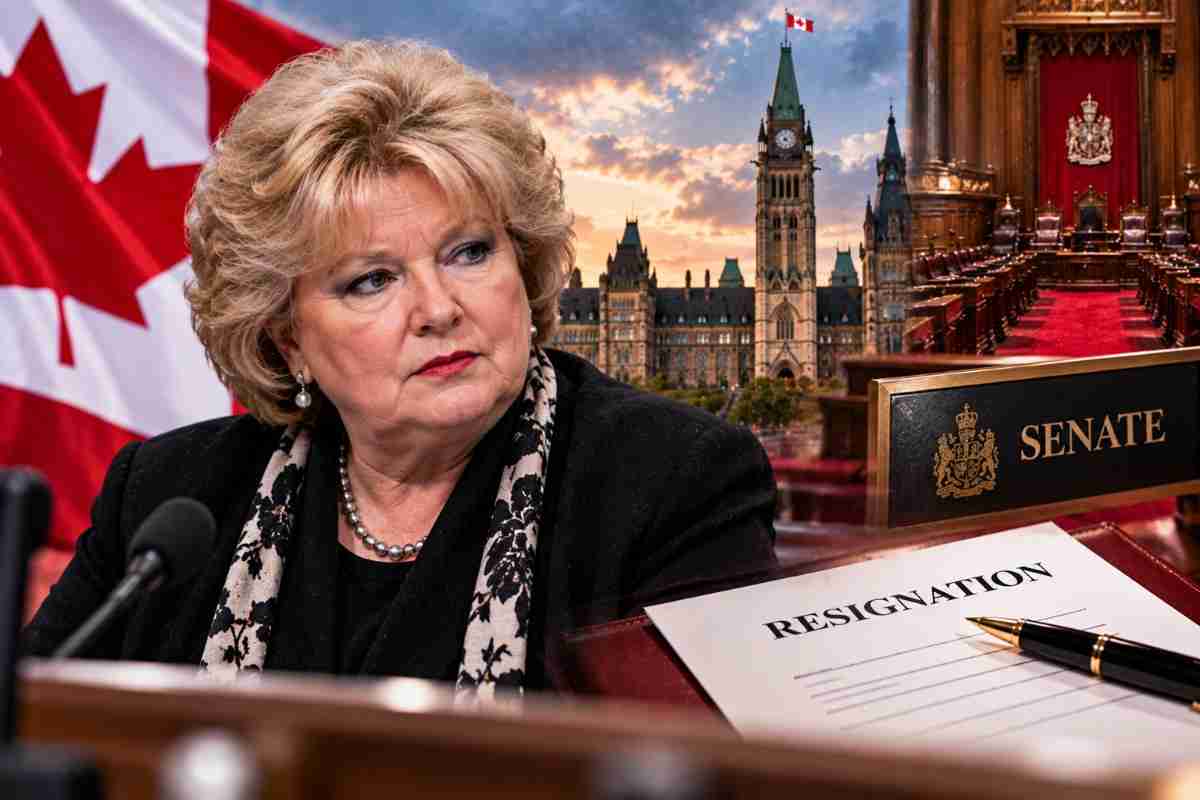
The longtime journalist and Saskatchewan senator has stepped down from Canada’s upper chamber at age 73, ending a political career that included public service, diplomatic work and a high-profile Senate expenses controversy.
Pamela Wallin, the former Canadian broadcaster who represented Saskatchewan in the Senate, has resigned from her position, according to information published on the Senate of Canada’s website on October 19, 2026.
Wallin, 73, was appointed to the upper chamber in 2009 on the advice of former prime minister Stephen Harper. Her resignation comes approximately two years before she would have reached Canada’s mandatory Senate retirement age of 75. The reason for her departure was not immediately specified in the initial reports.
Her departure marks the end of a Senate career that spanned more than 17 years and followed decades of work in journalism, broadcasting and public service.
Pamela Wallin Steps Down From the Senate
Wallin’s resignation was confirmed through the Senate’s official biographical information, according to The Canadian Press.
As a senator, she represented Saskatchewan and served on parliamentary committees examining issues including transportation, communications and other areas of public policy. Her experience in journalism and diplomacy also brought a focus on international affairs and public communication to her work in Parliament.
Canadian senators are appointed rather than directly elected. Under Canada’s constitutional arrangements, senators may serve until reaching the mandatory retirement age of 75, unless they leave office earlier.
Wallin’s decision to step down before that age means her Senate tenure will end earlier than the maximum period permitted under the rules governing the upper chamber. The available initial reports did not provide a detailed explanation for the timing of her resignation.
From Television Journalism to Public Service
Before entering politics, Wallin established a prominent career in Canadian broadcasting.
In 1985, she became the first woman appointed bureau chief for CTV News in Ottawa, a significant position covering federal politics and government affairs. She later became widely known through her work on Canada AM, the national morning television programme.
Her broadcasting career extended across several decades, during which she covered political developments and interviewed public figures. Her work helped establish her profile as one of Canada’s recognisable television journalists.
Wallin subsequently moved into diplomatic and public-service roles. From 2002 to 2006, she served as Canada’s consul general in New York City, representing Canadian interests in the United States.
She was later appointed to the Senate, bringing experience from journalism, international relations and public affairs into federal parliamentary work.
Appointment by Stephen Harper in 2009
Wallin entered the Senate in January 2009 following her appointment by then-prime minister Stephen Harper.
The Canadian Senate reviews legislation passed by the House of Commons, examines public-policy questions and provides regional representation. Senators also participate in committee investigations and studies that can influence public debate and legislative decisions.
Wallin initially sat with the Conservative Senate caucus. However, her political affiliation changed after a controversy over parliamentary expense claims emerged in 2013.
She later returned to Senate duties as an independent senator and subsequently joined the Canadian Senators Group.
Her career therefore included both a prominent appointment under a Conservative government and a later period serving outside the Conservative caucus.
Senate Expenses Controversy in 2013
Wallin’s Senate career was significantly affected by the expenses controversy that emerged in 2013.
An audit found that approximately $140,000 in expenses she had claimed from the Senate were improper, relating to travel associated with her work on corporate boards. The controversy prompted scrutiny of senators’ travel and housing claims and raised broader questions about accountability and the use of public funds.
Wallin was asked to leave the Conservative Senate caucus as the controversy developed. She repaid expenses identified through the review and was among several senators whose claims attracted national attention.
The Royal Canadian Mounted Police later determined that criminal charges would not be laid against her. The findings concerning the expenses were part of an administrative and political controversy, and the absence of criminal charges is an important distinction when describing the case.
The episode contributed to a wider debate about Senate oversight, transparency and the rules governing expenses claimed by appointed legislators.
Her Work Beyond Politics
In addition to her broadcasting and parliamentary work, Wallin has been involved in diplomacy, business and public-policy discussions.
Her appointment as consul general in New York placed her in a role focused on Canadian-American relations. She also worked with the Council of the Americas, an organisation concerned with business and policy issues across the Western Hemisphere.
Wallin has also been involved in discussions about Canada’s military and international commitments. Her public-service work included participation in an independent panel examining Canada’s future role in Afghanistan.
More recently, she hosted No Nonsense with Pamela Wallin, a podcast covering politics and current affairs.
These roles reflect a career that moved between journalism, diplomacy, business and public service over several decades.
What Happens After Her Resignation?
Wallin’s departure leaves a Senate vacancy associated with Saskatchewan.
Under Canada’s appointment system, the process of filling a vacant Senate seat rests with the federal government and the constitutional appointment framework. Senators are appointed by the governor general on the advice of the prime minister.
A successor would be expected to represent the province in the upper chamber and participate in its legislative and committee responsibilities.
The timing of a replacement appointment was not specified in the initial reports announcing Wallin’s resignation.
Her departure also closes a chapter in the Senate’s recent history, spanning debates over accountability, regional representation and the role of appointed legislators in Canada’s parliamentary system.
Conclusion
Pamela Wallin’s resignation marks the end of a long career that included national television journalism, diplomatic service and more than 17 years in the Canadian Senate.
Appointed in 2009 by former prime minister Stephen Harper, she became one of Saskatchewan’s representatives in the upper chamber and participated in parliamentary work on public policy and international affairs.
Her Senate tenure was also shaped by the expenses controversy that emerged in 2013, although police ultimately decided not to bring criminal charges against her.
At 73, Wallin has stepped down before the mandatory retirement age of 75. Her departure creates a vacancy for Saskatchewan and brings to a close a career that crossed journalism, diplomacy and federal politics.