

CK Sharma | World Affairs | NewsBee Media Inc.
Despite fishing boats setting sail, commercial ships sailing through and government statements on peace and cooperation, there are larger issues at play.
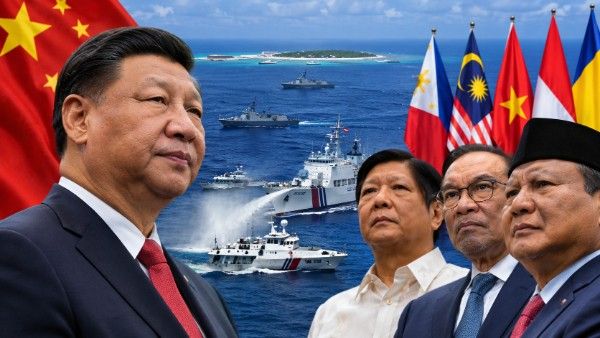
This is exactly what we’re seeing in the South China Sea, which is one of the most significant waterways in Asia and causing a growing rift between China and several Southeast Asian nations.
The latest attempt at getting agreement on how to govern the disputed waters resulted in only partial success. The Philippines confirmed at the ASEAN summit in Manila on 15th November that they had achieved provisional agreements on around 80% of the Code of Conduct between China and ASEAN. However, the talks could not be finalised during the Philippines’ chairmanship meaning that Singapore will have to tackle these issues in 2027.
While an agreement has been achieved, even if it is only 80% done, the last 20% can often be the most challenging part.
A Longstanding Dispute
The South China Sea dispute isn’t anything new. China claims ownership over a large section of the waterway, while the Philippines, Vietnam, Malaysia and Brunei all have overlapping claims. Indonesia also has concerns about activities by China near their North Natuna waters.
Beyond just having disputes over where the borders should be, there are many other factors to be considered. These include fishing rights, resource rights, security and for countries to be able to utilise their recognised maritime zones.
For some countries such as the Philippines and Vietnam this is an incredibly important issue as it relates to their sovereignty and economic interests. For China, it is also very strategically important due to the proximity to key shipping lanes and security in the region.
This has created difficulties when trying to negotiate.
Challenges in Agreements
ASEAN have been negotiating with China on creating a Code of Conduct for over two decades. This aims to create rules that will help minimise escalation of incidents occurring at sea.
However, there are many challenges.
One of the biggest issues being the final agreement on the Code of Conduct being legally binding or not. Countries in Southeast Asia want to put in place an effective agreement based on international law, but China have stuck to their stance.
Another challenge is deciding the geographical areas covered.
Finally, there is difficulty in actually enforcing the agreement. While it may have strong wording, if the governments involved are not willing to adhere to the agreement during times of tension then it won’t really matter.
Therefore, the final talks are important.
Progress by the Philippines
The Philippines were keen to finalise the agreement during their chairmanship in 2026.
“We had substantive progress, we had reached a provisional agreement of about 80 percent of the draft. We now have to spend more time to sort out the rest of the issues,” Foreign Secretary Maria Theresa Lazaro said.
There was good progress made. There were nine rounds of negotiation and two high-level meetings throughout the year.
However, they couldn’t finalise the agreement.
This leaves Manila in a difficult spot. They can say that progress was made, but they still have to deal with maritime disputes with Beijing.
This will now move onto Singapore.
Why This Dispute Matters Outside of Southeast Asia
Many people make the mistake of thinking of the South China Sea as a regional issue.
However, it is a very important shipping lane. If there were any serious disruptions, this could affect how businesses are transporting goods. It could cause problems with supply chains.
For countries who trade internationally, even just having a period of increased tension can cause uncertainty. Shipping companies, insurance and businesses will have to consider the possible delays, changes in routes and increased security.
Due to the overall strategic rivalry in the Indo-Pacific region, countries such as the USA have security partnerships in the region such as the treaty alliance with the Philippines. China are very suspicious of outside interference in their maritime disputes.
This means that if there is an incident with coastguard or fishing boats, it can quickly gain the attention of governments outside of the area.
It doesn’t necessarily mean that there will be a military conflict, but due to the continued incidents, pressure from politicians and differing national interests it can become increasingly difficult to reach a peaceful resolution.
ASEAN’s Greatest Challenge
While ASEAN have always encouraged dialogue and cooperation in the region, they are not a single country with a unified foreign policy. Each country has different economic ties with China, security concerns and opinions on how much to push back against Beijing.
This makes it challenging to have a unified opinion.
Some countries will focus more on economic cooperation while others are more directly impacted by the overlapping maritime claims. Finding common ground will take patience and compromise.
ASEAN will need to ensure that it is not turning into a situation where whoever has the most power will win.
Their reputation will depend on them being able to come up with an agreement that their members see as meaningful and achievable.
What Will Happen Now?
Singapore will take over the negotiations in 2027. There will have been a lot of provisional agreement on the draft but there are still several key issues to be resolved.
They will need to continue the progress made during the Philippines’ chairmanship and try to find common ground on the issues that stopped them finalising the agreement.
This will be tricky as governments will need to be willing to compromise on the difficult issues. Including whether it will be legally binding and how it will be put into practice.
Also, it is important to remember that a Code of Conduct isn’t a final resolution to the conflicting claims, it is simply an agreement to create a framework. It is meant to help reduce the chances of confrontation.
Even if the agreement is successful, there will still be underlying disagreements between China and their neighbours.
Overall, the South China Sea is currently a test of whether diplomacy can keep up with the increasing strategic rivalry in Asia. There has been progress made, but the most sensitive issues are still present.
Next year will show whether this progress can be turned into something more or if the region will continue to be held back by the incomplete agreement.
CK SHARMA TORONTO ( EDITOR IN CHIEF )