

Opening Summary
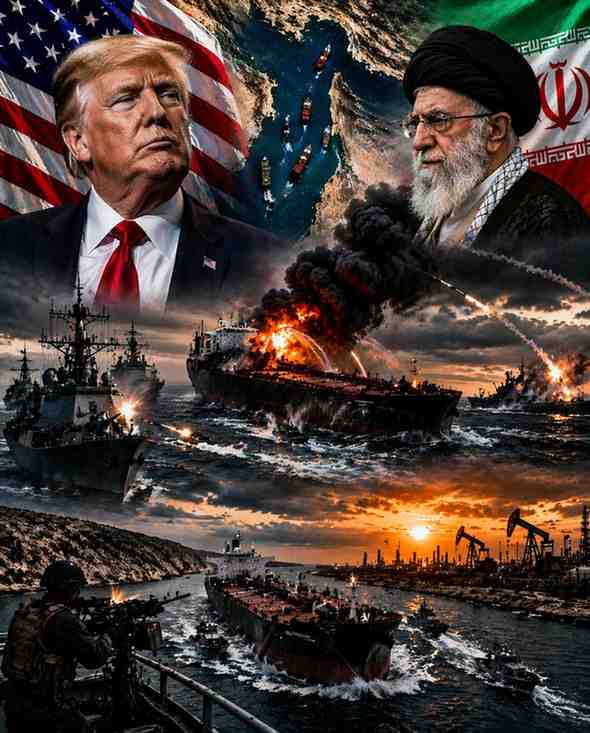
Ships navigating the Strait of Hormuz have reported attacks after Iran moved to close the key waterway again, escalating tensions in the region. U.S. President Donald Trump said the United States “won’t be blackmailed,” signaling a firm response. The situation matters globally as the strait is a critical route for oil shipments and international trade.
Background and Context
The Strait of Hormuz is one of the world’s most important energy corridors, carrying a significant portion of global oil supply.
In recent weeks, the region has seen repeated disruptions due to conflict involving Iran, the United States, and Israel. Iran has alternated between reopening and restricting the strait, often in response to military and economic pressure.
These developments have caused uncertainty in global energy markets, with oil prices rising due to fears of supply disruptions.
The United States has maintained a strong military presence in the region, emphasizing the need to keep shipping routes open.
Latest Developments
Multiple ships have reported coming under attack or facing gunfire near the Strait of Hormuz following Iran’s latest move to close the waterway.
Some vessels were forced to change course or turn back due to safety concerns, while others reported dangerous conditions while attempting to pass through.
Shipping activity in the region has become highly uncertain, with mixed signals about whether vessels can safely transit the strait.
President Donald Trump responded by stating that the United States will not be “blackmailed” by Iran’s actions and will continue its pressure strategy.
Why This Matters
The attacks on ships highlight the increasing risk to global shipping and energy supply chains.
Any disruption in the Strait of Hormuz can lead to higher oil prices, affecting economies worldwide.
The situation also raises concerns about maritime safety and the vulnerability of commercial vessels in conflict zones.
Trump’s strong stance suggests the possibility of further escalation, which could intensify the conflict.
What Happens Next
Tensions are expected to remain high as both sides continue to assert control over the strait.
Iran may continue restricting access, while the United States and its allies could increase naval operations to secure shipping routes.
Diplomatic efforts may continue, but uncertainty remains over whether they will succeed.
Global markets and governments will closely monitor developments, especially regarding oil supply and shipping safety.
Conclusion
Reports of attacks on ships following Iran’s closure of the Strait of Hormuz mark another serious escalation in the ongoing conflict.
With both sides maintaining firm positions, the situation remains volatile, with significant implications for global energy markets and regional stability.